
Shocking housing shortage metrics and worsening structural imbalances have intensified the affordability crisis across the United States real estate market. As median home prices continue to test historic highs, prospective buyers, real estate investors, and financial analysts are grappling with a deepening inventory deficit that refuses to yield. Driven by legacy underbuilding, stubborn macroeconomic headwinds, and structural gridlock, the factors underpinning America’s severe housing deficit have expanded rather than receded. For industry participants and everyday consumers alike, understanding these intensifying dynamics is critical for navigating the current economic climate.
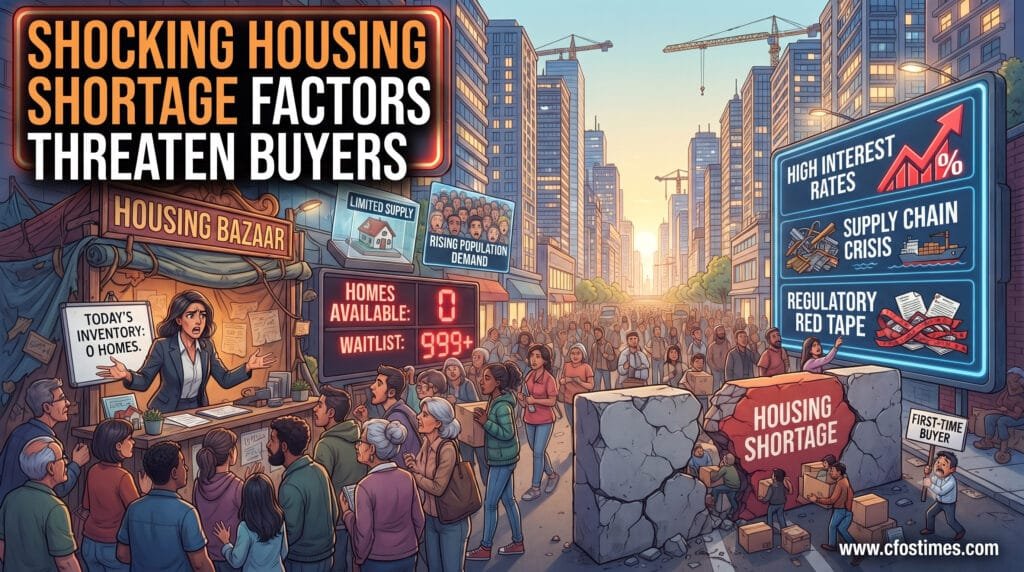
Table of Contents
The Macroeconomic Roots of the Inventory Deficit
The foundation of the current housing crunch was laid over a decade ago following the post-2008 financial crisis, which triggered an unprecedented era of residential underbuilding. While population growth and demographic demand—led by millennials entering their prime homebuying years—surged forward, new residential construction lagged far behind historical baselines. Shocking Housing Shortage Factors Threaten Buyers
Primary Drivers of the Structural Shortfall
- Prolonged Underbuilding: A multi-year deficit in housing completions created a cumulative shortfall of millions of residential units nationwide.
- Regulatory and Zoning Barriers: Strict municipal zoning laws, local land-use restrictions, and lengthy entitlement processes continue to stifle multi-family and affordable single-family developments.
- Escalating Input Costs: Elevated labor expenses, persistent building material inflation, and complex supply chain hurdles have made cost-effective residential development exceptionally difficult for homebuilders.
According to comprehensive market analyses from financial institutions like J.P. Morgan Global Research, home prices remain stubbornly high due to these chronic supply constraints. To review broader economic policy indicators and housing market stability reports, financial professionals frequently examine data published by the U.S. Department of Housing and Urban Development and macroeconomic research from J.P. Morgan Global Research. Shocking Housing Shortage Factors Threaten Buyers
The Lock-In Effect and Secondary Market Paralysis
Beyond new construction bottlenecks, the secondary market has been severely constrained by the persistent “lock-in effect.” Millions of existing homeowners who secured ultra-low mortgage rates during the pandemic era are effectively tethered to their properties. Shocking Housing Shortage Factors Threaten Buyers
Mechanics of Market Stagnation
- Prohibitive Refinancing Costs: With benchmark mortgage rates remaining elevated relative to historical lows, the financial incentive to sell and take on a new, higher-rate loan is practically non-existent for millions of households.
- Sluggish Existing-Home Listings: Existing-home inventories have struggled to return to pre-pandemic normal levels, restricting options for move-up buyers and locking up standard housing turnover.
- Friction in Mobility: Labor market flexibility and regional migration patterns are hindered because workers cannot easily relocate without incurring severe increases in their monthly housing expenses. Shocking Housing Shortage Factors Threaten Buyers
When modeling housing market valuations and regional inventory trends, analysts regularly review data feeds and housing affordability indexes from the National Association of Realtors (NAR) and market reports compiled by Zillow Research. Shocking Housing Shortage Factors Threaten Buyers
Comprehensive Pillar Analysis: 5 Critical Dimensions of the Worsening Shortfall
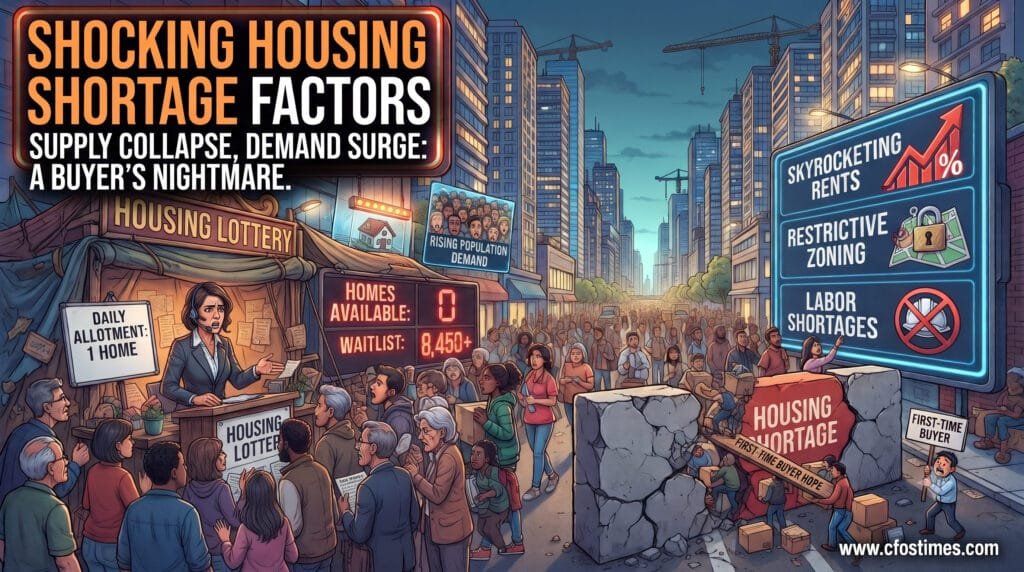
To fully grasp why America’s housing shortage has intensified, market observers must evaluate five interconnected operational and structural pillars.
1. Demographic Peak Demand vs. Restricted Supply
The largest generation in American history—millennials—has reached household formation and peak homebuying age, colliding directly with an inadequate housing stock.
2. Elevated Borrowing Costs and Affordability Walls
Higher interest rates have diminished purchasing power, pushing monthly debt-servicing costs to historic highs relative to median family incomes.
3. Regional Divergence and Sun Belt Pressures
While certain local markets across the Sun Belt have experienced pockets of new construction, high-demand coastal metros and job centers face acute, unyielding deficits.
4. Institutional Investment and Single-Family Rentals
The increased acquisition of single-family residential inventory by institutional investors has altered local supply dynamics, creating additional competition for first-time buyers.
5. Legislative and Regulatory Lag
Although legislative efforts—such as supply-side provisions introduced in federal housing packages—aim to incentivize municipal zoning reforms, their long-term impact remains slow to materialize. Shocking Housing Shortage Factors Threaten Buyers
Comparative Overview of Housing Market Dynamics
Different economic cycles and policy interventions alter the risk-reward profile of residential real estate investments across varying asset classes.
| Market Era / Variable | Post-Pandemic Boom (2020–2022) | Current Market Environment (2026) |
| Inventory Levels | Historic lows driven by panic buying | Modestly improved, but structurally constrained below pre-pandemic norms |
| Mortgage Rate Environment | Ultra-low (sub-3% to 4%) | Elevated and restrictive, hovering near multi-year averages |
| Primary Price Momentum | Rapid, double-digit annual appreciation | Moderating appreciation amid affordability ceilings and stagnant sales volume |
When assessing the shocking housing shortage metrics, financial experts note that while price appreciation has cooled into a more horizontal pattern, structural affordability pressures will likely persist until systemic inventory deficits are resolved. Shocking Housing Shortage Factors Threaten Buyers
Frequently Asked Questions
What are the primary factors driving the American housing shortage?
The shortage is driven by a decade of cumulative underbuilding following the 2008 financial crisis, restrictive local zoning laws, high construction labor costs, and the lock-in effect keeping existing homeowners from selling.
How does the “lock-in effect” worsen the housing crisis?
Homeowners locked into low pandemic-era mortgage rates refuse to list their properties because buying a new home at current elevated rates would dramatically increase their monthly housing costs.
Are home prices expected to crash due to these inventory pressures?
A sudden market crash is considered unlikely by major economic forecasters because homeowner equity levels remain high and underwriting standards are strict, though affordability and sales volumes face ongoing constraints.
What role do legislative reforms play in fixing the shortage?
Federal and state initiatives focusing on supply-side provisions, zoning reform guidance, and incentives for manufactured housing aim to spur construction, though their effectiveness depends heavily on local implementation. Shocking Housing Shortage Factors Threaten Buyers
Conclusion
The persistence of America’s residential inventory deficit underscores a complex web of structural, economic, and regulatory challenges. As the metrics behind the shocking housing shortage continue to evolve, policymakers, developers, and financial institutions must prioritize pragmatic, supply-side solutions to bridge the affordability gap. Until comprehensive zoning reforms and sustained building activity match generational demand, inventory constraints will remain a defining feature of the U.S. real estate landscape. Shocking Housing Shortage Factors Threaten Buyers
Disclaimer:
The analyses, insights, and strategic frameworks presented on cfostimes.com about Shocking Housing Shortage Factors Threaten Buyers are for informational and educational purposes only and do not constitute professional financial, legal, or real estate investment advice. Macroeconomic conditions, real estate valuations, and housing regulations are subject to continuous change. Prospective homebuyers, institutional investors, and financial professionals should conduct independent due diligence and consult with qualified advisors before making major financial commitments or investment decisions. cfostimes.com assumes no responsibility or liability for any financial outcomes resulting from the application of information contained in this publication.

Dr. Dinesh Kumar Sharma is a CMA an award-winning Chief Financial Officer and Director of Finance with over 25 years of expertise in strategic planning and digital transformation. Recognized as a five-time CFO of the Year, he specializes in leveraging Generative AI and Microsoft Copilot to optimize financial forecasting and cost management. Dr. Sharma holds a Doctorate in Management (Finance) and has successfully scaled organizations from INR 1 billion to INR 7 billion. He is dedicated to providing transparent, data-driven insights for modern decision-makers at CFOs Times.