Introduction- Why Bond Yields Drop After Treasury Buybacks
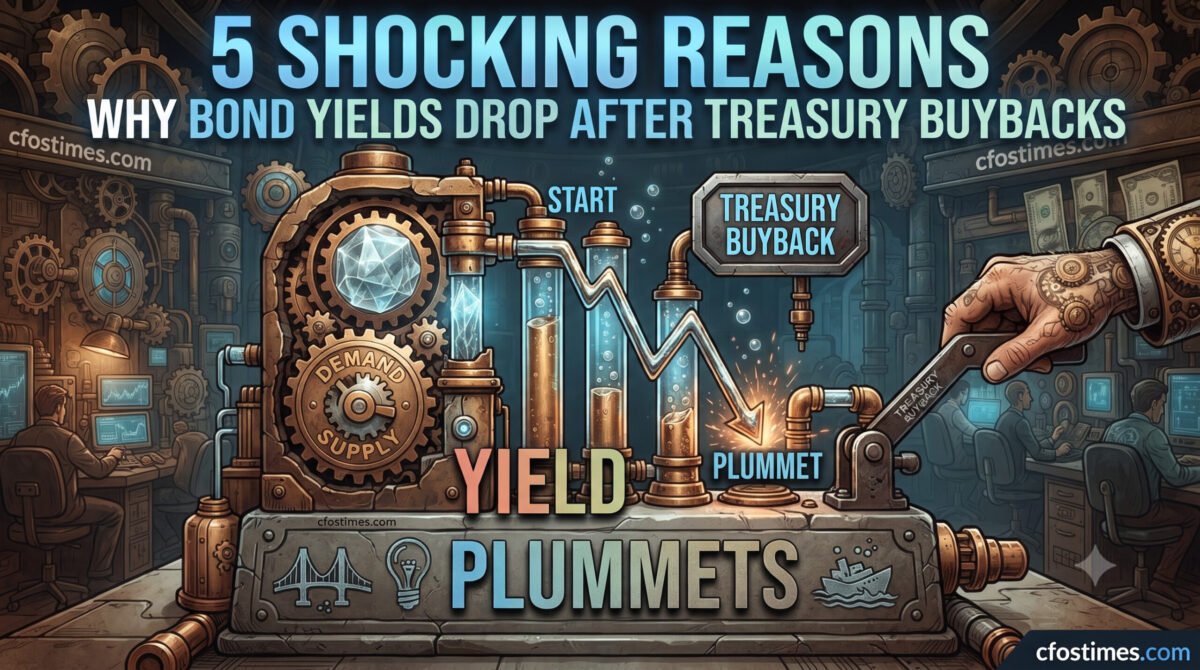
Why bond yields drop after Treasury says it will increase buybacks is one of the most critical questions facing fixed-income investors, institutional portfolio managers, and global macroeconomists today. When the U.S. Department of Treasury steps up its government-debt buyback programs—especially doubling long-dated operations in tenors ranging from 10 to 30 years—financial markets experience an immediate and profound reaction. Bond prices surge, borrowing costs ease, and yields tumble. Understanding the mechanical and psychological drivers behind this phenomenon is essential for navigating modern monetary shifts and debt market volatility.
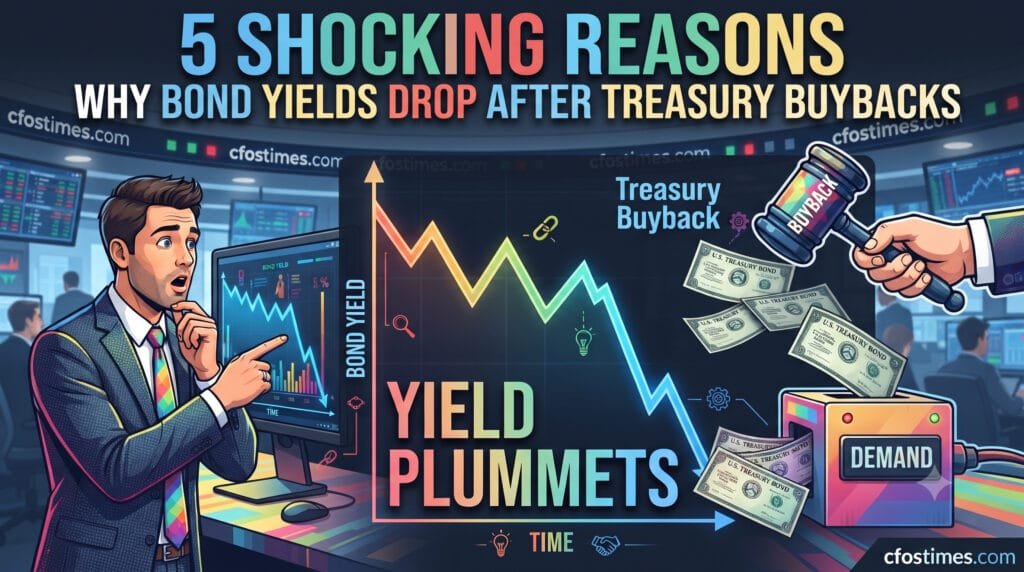
Table of Contents
The Mechanics of Government Debt Buybacks
To understand why yields react so sharply, one must first look at the mechanics of a debt repurchase program. A government debt buyback occurs when the sovereign issuer purchases its previously issued securities from the open market ahead of their maturity date, thereby reducing the total debt outstanding in that specific maturity bucket. 5 Shocking Reasons Why Bond Yields Drop After Treasury Buybacks
Core Operational Dynamics
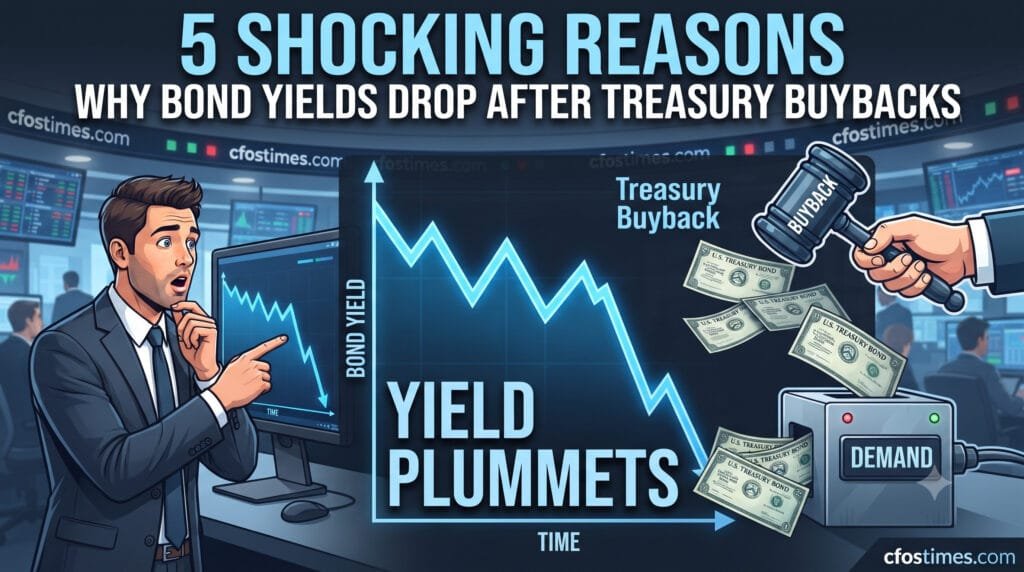
- Direct Demand Injection: When the Treasury enters the secondary market as an active buyer, it creates artificial, guaranteed demand for specific bond issues, directly lifting market prices.
- The Inverse Price-Yield Relationship: Because bond prices and yields move in opposite directions, rising bond prices naturally force yields downward.
- Liquidity Enhancement: Buybacks provide consistent sponsorship and robust liquidity in longer-dated nominal sectors where market participants frequently face depth challenges.
When analyzing debt management strategies, institutional treasurers closely monitor policy disclosures and market analytics published by the U.S. Department of the Treasury and macroeconomic research portals like The Federal Reserve Bank of New York.
Psychological Signaling and Market Confidence
Beyond pure math and order-book mechanics, announcements of expanded buybacks serve as a powerful communication tool from fiscal authorities to nervous capital markets. 5 Shocking Reasons Why Bond Yields Drop After Treasury Buybacks
Key Signaling Channels
- Official Intervention Awareness: Scaling up buybacks during periods of acute upward pressure on long-term rates sends a clear signal that fiscal authorities are monitoring market strain and are prepared to deploy balance-sheet tools.
- Abating Selling Pressure: Battered long-duration sectors often experience immediate short-covering as leveraged funds and primary dealers pare back aggressive short positions.
- Restoring Order in Auctions: By reassuring primary dealers that there is an active buyer of last resort for specific maturities, upcoming Treasury auctions regain sponsorship confidence.
For deeper perspectives on macroeconomic sentiment and fixed-income strategy, institutional researchers frequently reference commentary from economic advisory groups like PIMCO and analysis from Bloomberg Markets. 5 Shocking Reasons Why Bond Yields Drop After Treasury Buybacks
Comprehensive Pillar Analysis: 5 Drivers of Yield Compression
To fully evaluate why bond yields drop following buyback expansions, market participants must examine five distinct operational pillars. 5 Shocking Reasons Why Bond Yields Drop After Treasury Buybacks
1. Duration Extraction from Private Portfolios
When the Treasury buys back long-dated nominal bonds, it permanently removes duration risk from private hands. Investors holding fewer long-term bonds demand less term premium, driving down yields across the curve.
2. Collateral and Cash Rebalancing Effects
Buybacks funded through cash management bills or shifting reserves inject liquidity into the banking system, altering collateral scarcity and encouraging portfolio rebalancing into high-quality fixed income.
3. Mitigating Supply Glut Anxieties
Persistent fiscal deficits create heavy primary issuance schedules. Targeted buybacks offset acute supply indigestion, smoothing out lumpiness in the quarterly refunding calendar. 5 Shocking Reasons Why Bond Yields Drop After Treasury Buybacks
4. Easing Broader Financial Conditions
Lower benchmark yields instantly transmit relief to mortgage rates, corporate debt issuance costs, and consumer lending benchmarks, easing broader macroeconomic tight spots.
5. Tactical Positioning by Leveraged Accounts
Hedge funds and macro traders heavily positioned for rising yields are forced to de-risk when the Treasury shifts policy stance, creating a powerful downward cascade in yields. 5 Shocking Reasons Why Bond Yields Drop After Treasury Buybacks
Comparative Overview of Debt Management Tools
Different fiscal and monetary interventions exert varying degrees of influence over long-term borrowing costs.
| Intervention Tool | Primary Operational Mechanic | Immediate Impact on Yields |
| Targeted Debt Buybacks | Direct repurchase of specific off-the-run or on-the-run securities | Moderate to sharp drop in targeted tenors via demand and signaling |
| Quantitative Easing (QE) | Central bank asset purchases funded via reserve creation | Substantial downward pressure across the entire yield curve |
| Standard Refunding Adjustments | Altering the mix of bill versus coupon issuance | Gradual adjustment based on structural market absorption capacity |
When evaluating Why bond yields drop after Treasury says it will increase buybacks, experts emphasize that while buybacks mimic certain aspects of quantitative easing, their primary power lies in liquidity support and market signaling.
Frequently Asked Questions
Why do bond prices and yields move inversely?
Because a bond pays a fixed coupon payment, paying a higher purchase price for that bond reduces the overall annualized return (yield) received by the investor, and vice versa.
Do Treasury buybacks permanently lower interest rates?
While buybacks can create sharp short-term rallies and push yields down, structural rate trajectories ultimately depend on broader macroeconomic drivers, inflation trends, and the size of the federal budget deficit.
What specific maturities benefit most from buybacks?
Buyback programs frequently target longer-dated nominal securities—such as 10-year to 30-year tranches—where duration risk and liquidity premiums are highest.
Are Treasury buybacks equivalent to Federal Reserve Quantitative Easing?
In terms of duration extraction and cash distribution mechanics, buybacks share similarities with QE, though they are executed by the fiscal authority rather than the central bank. 5 Shocking Reasons Why Bond Yields Drop After Treasury Buybacks
Conclusion-5 Shocking Reasons Why Bond Yields Drop After Treasury Buybacks
The market reaction following announcements of expanded debt repurchases demonstrates that fiscal mechanics matter deeply to modern bond traders. By examining Why bond yields drop after Treasury says it will increase buybacks, investors gain vital clarity on how targeted liquidity operations, duration reduction, and official signaling can temporarily alleviate intense upward pressure on borrowing costs. As sovereign debt issuance expands globally, understanding these tactical debt-management tools will remain paramount for fixed-income success.
Disclaimer:
The insights, analyses, and strategic frameworks presented on cfostimes.com about 5 Shocking Reasons Why Bond Yields Drop After Treasury Buybacks are for informational and educational purposes only and do not constitute professional financial, legal, or investment advice. Global macroeconomic conditions, fixed-income yields, and government debt policies are subject to rapid and continuous change. Institutional investors, corporate treasurers, and financial professionals should conduct independent due diligence and consult with qualified advisors before making capital allocation or portfolio restructuring decisions. cfostimes.com assumes no responsibility or liability for any financial outcomes resulting from the application of information contained in this publication.

Dr. Dinesh Kumar Sharma is a CMA an award-winning Chief Financial Officer and Director of Finance with over 25 years of expertise in strategic planning and digital transformation. Recognized as a five-time CFO of the Year, he specializes in leveraging Generative AI and Microsoft Copilot to optimize financial forecasting and cost management. Dr. Sharma holds a Doctorate in Management (Finance) and has successfully scaled organizations from INR 1 billion to INR 7 billion. He is dedicated to providing transparent, data-driven insights for modern decision-makers at CFOs Times.









3 thoughts on “5 Shocking Reasons Why Bond Yields Drop After Treasury Buybacks”