Introduction
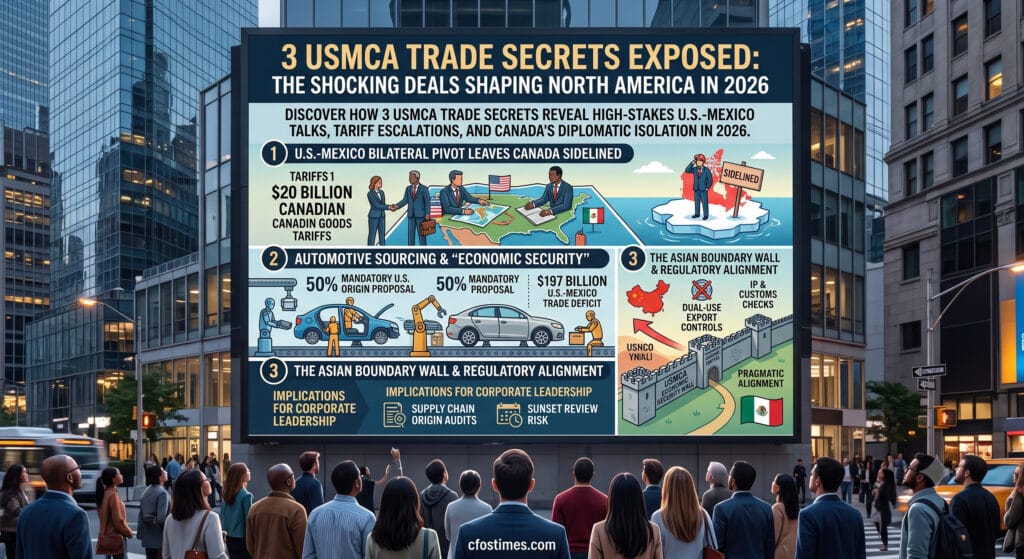
In North American international policy, these 3 USMCA trade secrets reveal how bilateral maneuvers, auto sector origin mandates, and aggressive regional defense barriers are reshaping continental commerce. Unpacking these 3 USMCA trade secrets offers executive leadership an unvarnished view into how current negotiations directly impact cross-border supply chains, corporate balance sheets, and long-term capital strategy.
Cross-border trade within North America is approaching a historic turning point. U.S. and Mexican trade negotiators are gathering in Mexico City for a third round of high-stakes bilateral talks to push forward with revising the North American trade agreement, just as President Donald Trump slaps Canada with a fresh set of punitive duties.
These formal three-day negotiations exclude Canada entirely. They represent the first structured discussions regarding changes to the U.S.-Mexico-Canada Agreement (USMCA) since the Trump administration formally declined to extend the six-year-old regional trade pact on July 1. That decision officially activated a 10-year wind-down clock for the USMCA, subjecting the agreement to annual joint reviews unless all three member states can reach an accord on structural improvements. Major industrial coalitions and corporate trade groups have urgently petitioned Washington to preserve the trilateral structure and largely tariff-free market access that underpins nearly $1.6 trillion in annual cross-border trade. Official executive statements regarding the joint review timeline are documented directly by the Office of the United States Trade Representative.
┌─────────────────────────────────────────────────────────────────────────────────┐
│                    NORTH AMERICAN TRADE NEGOTIATIONS (2026)                     │
├─────────────────────────────────────────────────────────────────────────────────┤
│                                                                                 │
│   ┌───────────────────────┐   USMCA Bilateral Round 3   ┌───────────────────┐   │
│   │     UNITED STATES     │ <─────────────────────────> │      MEXICO       │   │
│   └───────────────────────┘     (Focus: Autos, Steel,   └───────────────────┘   │
│              │                   Econ Security & IP)              │             │
│              │                                                    │             │
│   New Tariffs│$20B Canadian Goods                           Seeking   │Tariff Relief│
│   (25% Autos,│50% Steel/Alum)                             Relief    │(Autos/Steel)│
│              ▼                                                    ▼             │
│   ┌───────────────────────┐                             ┌───────────────────┐   │
│   │        CANADA         │                             │   CHINA IMPACT    │   │
│   │ (Sidelined / Friction)│                             │ (17% Market Share)│   │
│   └───────────────────────┘     [10-Year USMCA Clock]   └───────────────────┘   │
│                                                                                 │
└─────────────────────────────────────────────────────────────────────────────────┘
Table of Contents
Secret 1: The U.S.-Mexico Bilateral Pivot Leaves Canada Sidelined
Understanding the first of these 3 USMCA trade secrets requires examining the structural decision by the U.S. Trade Representative (USTR) to abandon unified trilateral negotiations in favor of distinct bilateral tracks. By conducting formal three-day negotiations directly in Mexico City while explicitly excluding Canadian delegates, U.S. Trade Representative Jamieson Greer and Mexican Economy Minister Marcelo Ebrard are actively forging a bilateral path forward. Detailed breakdowns of these diplomatic agendas are routinely detailed by Reuters News.
USMCA Trade Landscape Breakdown
├── Trilateral Status: Expiration clock ticking (July 1 decline to extend)
├── U.S.-Mexico Bilateral Channel
│   ├── Round 1: Mexico City (May 2026) - Autos, Steel, Economic Security
│   ├── Round 2: Washington, D.C. (June 2026) - Agriculture, Labor, IP
│   └── Round 3: Mexico City (July 2026) - Technical Rules & Deforestation
└── U.S.-Canada Trade Rift
    ├── $20 Billion in New U.S. Tariffs on Canadian Imports
    └── Deep Friction over Canadian Dairy, Liquor, Autos & Metals Tariffs
The Canadian Trade Rift Deepens
This sharp bilateral pivot comes immediately after the Trump administration announced new tariffs on nearly $20 billion worth of Canadian imports. This trade escalation was launched in response to Ottawa’s retaliatory duties on American motor vehicles, steel, aluminum, and liquor, combined with Canada’s long-standing supply-managed dairy tariffs. 3 USMCA trade secrets exposed
USTR Jamieson Greer publicly noted that there has been minimal movement toward concessions from Ottawa, leaving Canada largely sidelined in formal USMCA negotiations. Canadian Prime Minister Mark Carney issued an official statement emphasizing that his government had submitted comprehensive, constructive proposals to settle cross-border trade disputes with Washington. Carney maintained that previous U.S. tariff actions violated the core principles of the North American trade pact. Official records of congressional trade hearings and policy responses can be examined through the U.S. House Committee on Ways and Means.
Mexico’s Pragmatic Strategic Positioning
In stark contrast to Canada’s tense diplomatic standoff with Washington, Mexico has pursued a strategic posture characterized by USTR officials as exceptionally “pragmatic”. Mexico deliberately refrained from implementing retaliatory tariffs on American goods, choosing instead to align its economic and trade controls with U.S. policy priorities. 3 USMCA trade secrets exposed
Mexico’s newly appointed ambassador to the United States, Roberto Lazzeri—a seasoned former investment banker and finance ministry official—publicly underscored the economic imperative of concluding negotiations swiftly:
“Every moment that we’re losing, I think we are losing competitiveness, market share and investment, so it’s in the best interest of all three of us to get to a position of resolution soon.” — Roberto Lazzeri, Mexican Ambassador to the U.S.
Ambassador Lazzeri noted that Mexico fully expects to reach a finalized agreement by the end of the year, expressing confidence that both the U.S. and Canada share that objective. Mexico aligns with the Trump administration’s overarching policy goal of bringing more manufacturing capacity back to North America, including to the United States. Official Mexican diplomatic announcements and bilateral summaries are made public via the Secretaría de Economía de México.
In exchange for this alignment, a primary negotiation target for Mexico is securing relief from Section 232 national security duties imposed by the White House:
- 25% National Security Tariffs currently applied to Mexican automotive exports.
- 50% Tariffs applied to Mexican steel and aluminum products.
Secret 2: Automotive Sourcing & “Economic Security” Restructure Regional Supply Chains
The second of our 3 USMCA trade secrets centers on the technical auto negotiations taking place in Mexico City, paired with a sweeping expansion of “economic security” standards. These proposed adjustments target the operational mechanics of North American manufacturing.
| Policy Directive | Current USMCA Standard | U.S. Proposed Revision | Strategic Objective |
| Regional Value Content (RVC) | 75% North American Origin | Escalated Sourcing Thresholds | Block non-regional supply chain routing through North America. |
| U.S. Value Content Requirement | No National Sub-Quota | 50% U.S.-Specific Component Sourcing | Direct domestic manufacturing investment into the U.S. |
| Section 232 Metals Relief | Blanket 25%/50% Tariffs Applied | Conditional Tariff Waivers | Leverage market access for policy alignment. |
| Dual-Use Export Controls | Independent National Frameworks | Unified Transnational Alignment | Prevent technology transfer to foreign competitors. |
The Proposed 50% U.S. Component Mandate
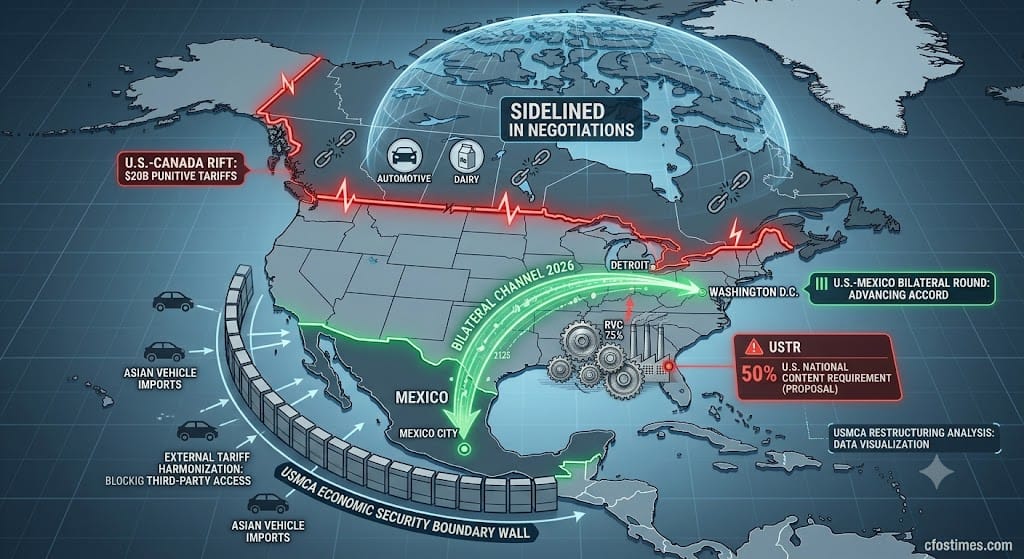
During bilateral USMCA talks held in May, the USTR introduced a proposal requiring that at least 50% of the total value of North American-built vehicles originate specifically within the United States. This mandate represents a major deviation from current rules, which enforce a 75% Regional Value Content (RVC) standard across North America without national sub-quotas. 3 USMCA trade secrets exposed
       PROPOSED VEHICLE VALUE DISTRIBUTION (50% U.S. MANDATE)

 ┌─────────────────────────────────────────┬─────────────────────────────────┐
 │       50% Mandatory U.S. Origin        │  25% Rest of North America      │
 │       (Proposed USTR Rule)             │  (Mexico / Canada Allocation)   │
 └─────────────────────────────────────────┴─────────────────────────────────┘
 ┌───────────────────────────────────────────────────────────────────────────┐
 │               25% Allowable Non-Regional Sourcing Window                  │
 └───────────────────────────────────────────────────────────────────────────┘
Automotive manufacturing coalitions have warned that introducing a national origin sub-quota would disrupt complex supply networks. Modern automotive assembly involves multi-stage cross-border logistics, where specialized components cross North American borders multiple times during production. A rigid 50% U.S. content rule would force OEMs and Tier-1 suppliers to execute expensive supply chain realignments. 3 USMCA trade secrets exposed
Addressing Trade Deficits and Nearshoring Displacements
A primary driver behind Washington’s firm stance is the sharp expansion of the U.S. goods trade deficit with Mexico. While global supply chain shifts have directed foreign direct investment toward Mexico, the resulting trade gap remains a critical concern for American negotiators. Verified macroeconomic metrics and bilateral trade balances are maintained by the U.S. Census Bureau.
- 2025 Trade Deficit: Expanded by $28 billion (a 17% increase) to reach a record $197 billion, according to U.S. Census Bureau figures.
- Policy Position: USTR Jamieson Greer affirmed that reducing this deficit is a core consideration for the administration when evaluating the long-term future of the USMCA.
Secret 3: The Asian Boundary Wall & Regulatory Alignment
The third entry in these 3 USMCA trade secrets involves the implementation of strict third-party trade barriers. The USTR uses the term “economic security” to describe raising regional trade protections. This framework is explicitly designed to prevent non-regional manufacturers from using Mexico or Canada as low-tariff assembly routes into the United States. Comprehensive risk assessments on these trade barriers are published by the Center for Strategic and International Studies (CSIS).
                  THE THIRD-PARTY ACCESS BOTTLENECK

  [ Asian Component Sources ]
               │
               ▼
   ( 50% Import Tariffs )
               │
               ▼
     ┌──────────────────┐       U.S. USMCA Push
     │  MEXICAN MARKET  │ ─────────────────────────┐
     │ (17% Sales Share)│                          │
     └──────────────────┘                          ▼
               │                        ┌────────────────────┐
               │  Transshipment Risk?   │ Strict USMCA Wall: │
               └──────────────────────> │ - Dual-Use Controls│
                                        │ - 50% U.S. RVC Rule│
                                        │ - IP & Customs Check│
                                        └────────────────────┘
Countering Non-Regional Market Penetration
U.S. trade representatives are pressing Mexico and Canada to erect external tariff structures similar to American duty rates on foreign-sourced goods—focusing on automobiles, auto parts, steel, aluminum, and industrial components.
This policy focus is driven by the rapid growth of non-regional automotive brands in Mexico’s retail market:
- 30% Sales Increase: Non-regional vehicle sales rose by 30% in Mexico during the first half of 2026, despite a 50% duty enacted in January.
- Market Share Expansion: Third-party automobile manufacturers expanded their share of Mexico’s domestic car market from 14% to 17% within 12 months.
Regulatory Concessions and Alignment Advances
To address American economic security priorities, Mexican negotiators have advanced structural regulatory adjustments. USTR Greer praised Mexico’s proactive stance, highlighting four key regulatory shifts:
- Export Control Harmonization: Mexico is working to align its national export control framework with U.S. standards to restrict the transshipment of sensitive dual-use technologies.
- Intellectual Property Enforcement: Mexican authorities are strengthening customs enforcement, anti-piracy inspections, and IP protections across commercial entry points.
- Customs Modernization: The implementation of standardized single-window digital verification systems at major ports aims to eliminate fraudulent origin claims.
- Agricultural Sustainability Enforcement: Mexico introduced new administrative tracking rules to curb the export of avocados grown on illegally deforested land. 3 USMCA trade secrets exposed
Strategic Implications for Financial Leadership
For Chief Financial Officers, corporate treasurers, and supply chain operators, these structural negotiations require clear operational risk management and strategic positioning. Legal experts and corporate compliance advisors at global firms like White & Case LLP provide ongoing analysis on managing these regulatory shifts.
                     CORPORATE DECISION FRAMEWORK

            ┌───────────────────────────────────────────┐
            │   USMCA 10-Year Sunset Review Window     │
            └───────────────────────────────────────────┘
                                  │
         ┌────────────────────────┴────────────────────────┐
         ▼                                                 ▼
┌─────────────────────────────────┐       ┌─────────────────────────────────┐
│     SCENARIO A: Full Accord     │       │    SCENARIO B: Protracted Friction   │
│  (Target: End of 2026 Deal)     │       │     (Annual Rollover Reviews)   │
├─────────────────────────────────┤       ├─────────────────────────────────┤
│ • Section 232 Tariff Relief     │       │ • Persistent 25%/50% Metal Fees │
│ • Standardized Supply Chains    │       │ • RVC Compliance Restructuring  │
│ • Long-Term Capital Investment  │       │ • High Customs Audit Exposure   │
└─────────────────────────────────┘       └─────────────────────────────────┘
1. Execute Supply Chain Origin Audits
With the U.S. pressing for stricter component origin rules—including the proposed 50% U.S. national value requirement—enterprises must conduct detailed audits across Tier-1, Tier-2, and Tier-3 suppliers. Corporate audit teams must trace raw material inputs and sub-assemblies to identify components vulnerable to potential tariff reclassifications. 3 USMCA trade secrets exposed
2. Prepare for Dual-Track North American Trade
Corporate financial models should account for a bifurcated North American trade environment. While U.S.-Mexico trade corridors may benefit from streamlined processing if a bilateral accord is finalized, cross-border operations involving Canada face near-term tariff friction and heightened customs checks.
3. Factor Sunset Review Risks into Capital Allocation
Because the U.S. declined to extend the USMCA for a full 16-year term on July 1, the agreement now operates under annual joint reviews within a 10-year sunset window. Long-term capital expenditures for cross-border production facilities must be stress-tested against policy changes during these annual review cycles. 3 USMCA trade secrets exposed
Conclusion-3 USMCA trade secrets exposed
The formal discussions underway in Mexico City mark a decisive shift in North American trade policy. As the United States and Mexico advance negotiations on automotive value content, trade deficit reductions, and regional economic defense, Canada remains in a complex diplomatic position. Analyzing these structural shifts helps financial leaders and corporate officers protect supply chains, ensure regulatory compliance, and navigate North America’s evolving economic landscape. 3 USMCA trade secrets exposed
Key Takeaways for CFOs
- Bilateral Focus: U.S.-Mexico talks are advancing on a separate track while U.S.-Canada tariff disputes persist.
- Sourcing Mandates: Automotive manufacturers face potential U.S.-content requirements that could alter regional supply chains.
- Economic Defense: Regional economic security policies aim to restrict non-regional transshipments and align export controls.
- Planning Horizon: Annual USMCA joint reviews mean cross-border investments must be managed within a 10-year sunset framework.
Frequently Asked Questions (FAQs)
1. Why is Canada excluded from the current USMCA trade negotiations?
The United States has opted to pursue separate bilateral negotiation tracks rather than unified trilateral discussions. Following escalations in retaliatory duties on U.S. goods and disputes over Canadian dairy and liquor policies, the U.S. sidelined Ottawa in favor of direct bilateral talks with Mexico to address pressing trade priorities.
2. Does the refusal to extend the USMCA on July 1 mean the trade agreement has ended?
No, the USMCA remains fully operational with all existing preferential tariffs, rules of origin, and dispute mechanisms intact. However, declining to extend the agreement beyond its initial 16-year term activated a 10-year sunset window. This subjects the pact to annual joint reviews where the three member states can negotiate updates or agree to a full extension before 2036. 3 USMCA trade secrets exposed
3. What is the U.S. proposal for automotive rules of origin?
During bilateral discussions, the U.S. Trade Representative (USTR) proposed that at least 50% of the total value of North American-built vehicles originate specifically within the United States. This national origin requirement is a significant change from the current 75% regional value content threshold for North America.
4. How does “economic security” affect non-regional trade in North America?
“Economic security” refers to establishing unified regional tariff and trade barriers across North America. The strategy aims to prevent third-party countries—particularly non-regional automotive, steel, and aluminum exporters—from routing goods through Mexico or Canada to gain preferential access to the U.S. market. 3 USMCA trade secrets exposed
Disclaimer
This article was published by CFOs Times (cfostimes.com) for informational, educational, and strategic reference purposes only. The views, trade flow metrics, policy evaluations, and geopolitical analyses presented herein reflect North American trade negotiations and regulatory updates as of July 2026. Nothing in this publication constitutes formal legal, financial, tax, or corporate accounting advice. Readers, corporate leaders, and financial officers should consult with certified trade compliance specialists, international tax advisors, and legal counsel before executing capital allocation strategies or adjusting supply chain frameworks based on ongoing USMCA renegotiations. 3 USMCA trade secrets exposed

Dr. Dinesh Kumar Sharma is a CMA an award-winning Chief Financial Officer and Director of Finance with over 25 years of expertise in strategic planning and digital transformation. Recognized as a five-time CFO of the Year, he specializes in leveraging Generative AI and Microsoft Copilot to optimize financial forecasting and cost management. Dr. Sharma holds a Doctorate in Management (Finance) and has successfully scaled organizations from INR 1 billion to INR 7 billion. He is dedicated to providing transparent, data-driven insights for modern decision-makers at CFOs Times.