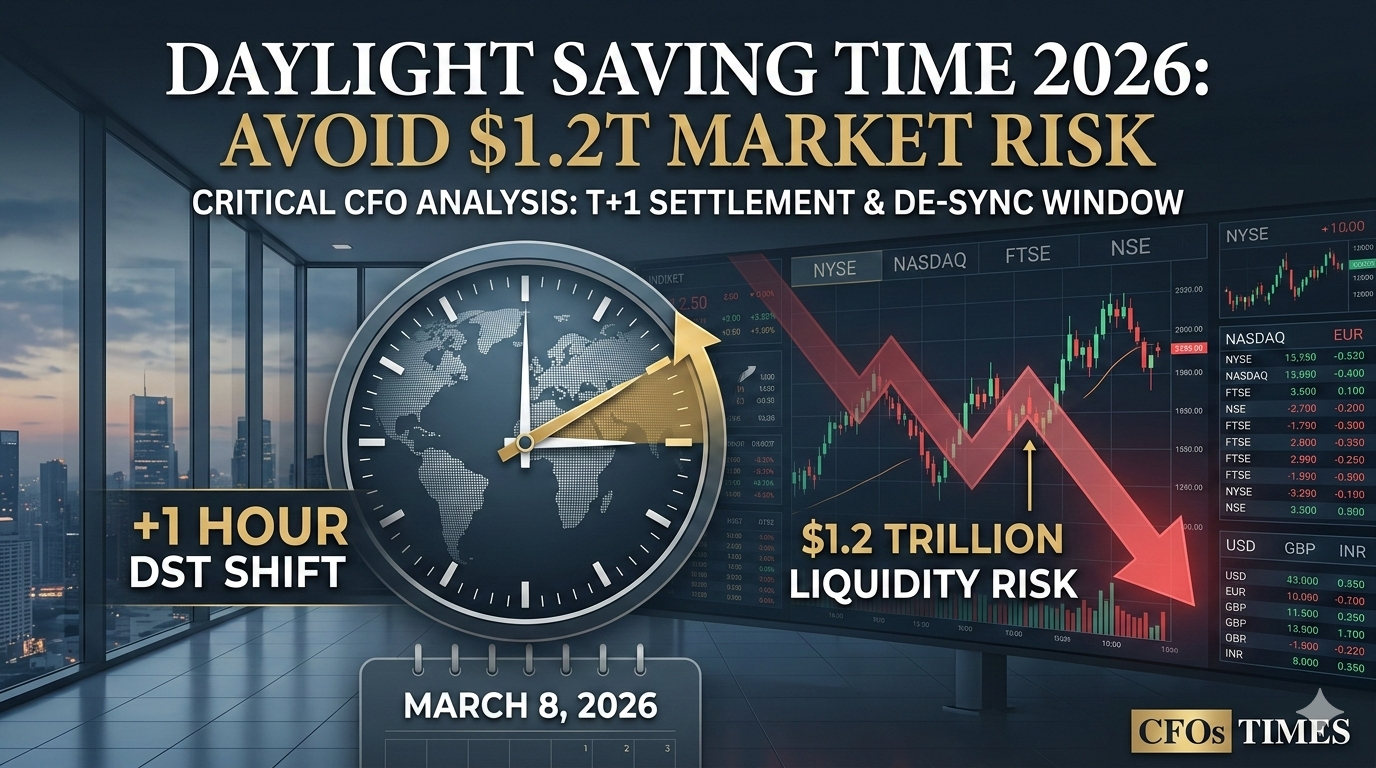
In the high-stakes world of global treasury management, a single hour can be the difference between a seamless trade execution and a multi-million dollar settlement failure. As of today, Sunday, March 8, 2026, the financial world is entering a period of high-risk operational friction. While most people are focused on the “lost hour” of sleep, the real story for the global executive is the implementation of Daylight Saving Time 2026 across North America.
This seasonal shift is more than a tradition; it is a catalyst for a three-week desynchronization between the New York, London, and Mumbai markets. Compounding this complexity is the historic move by the British Columbia government to make this time change permanent—a move that redefines the Pacific trade corridor.
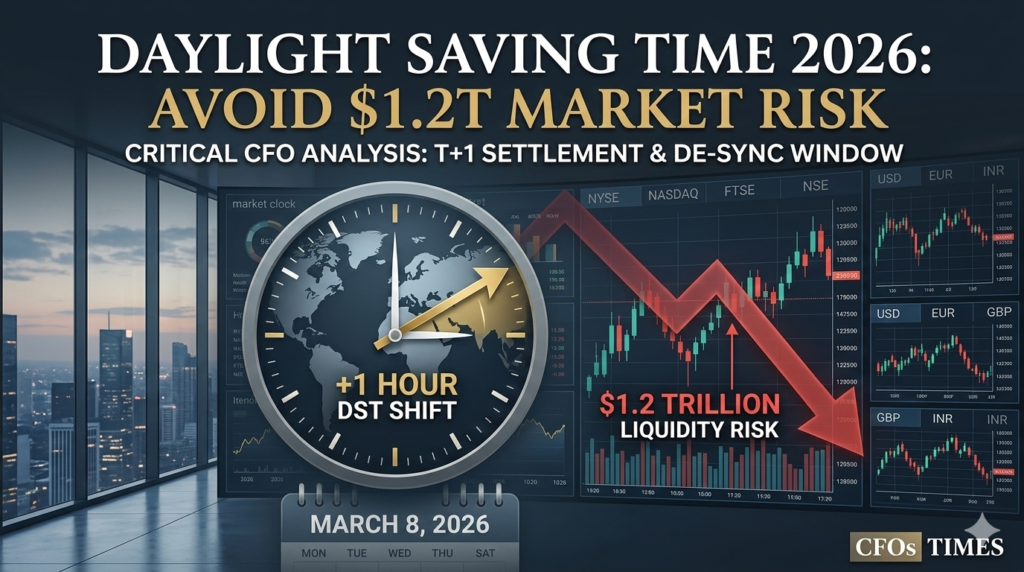
Today, March 8, 2026, the global financial landscape has shifted. At 2:00 AM, the United States and Canada moved their clocks forward one hour, initiating Daylight Saving Time (DST). While the general public laments the “lost hour” of sleep, for the global CFO, this transition creates a three-week liquidity gap that directly affects treasury management, algorithmic trading spreads, and T+1 settlement cycles.
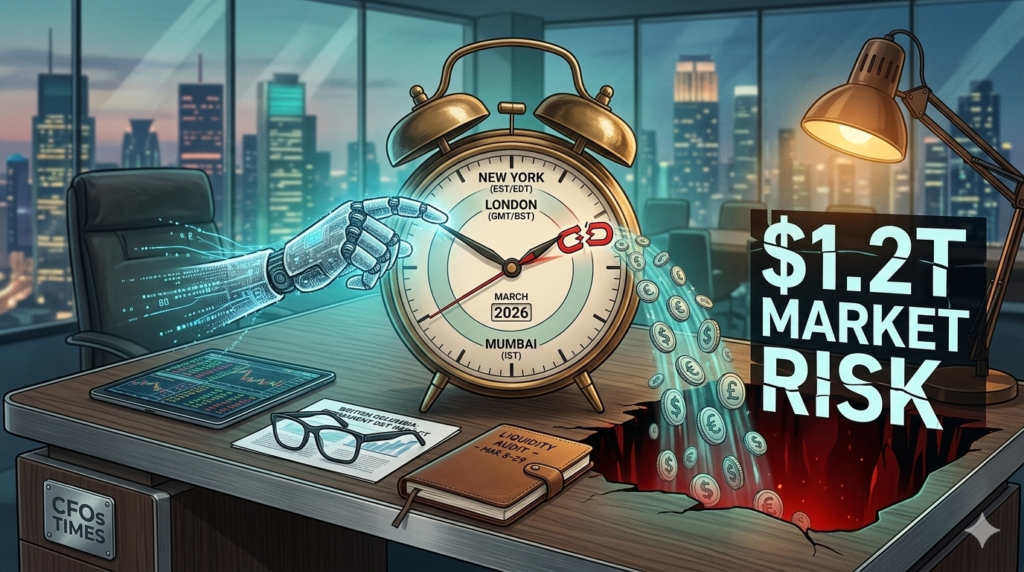
Adding to this complexity, British Columbia (BC) has officially ended the century-old tradition of seasonal changes, moving to Permanent Pacific Time today. This decision marks a fundamental shift in how the Pacific trade corridor will interact with global markets.
1. The Finance “De-Sync” Window: March 8 – March 29
The most critical period for international finance is not the day of the change, but the three-week “gap” that follows.
While North America has moved to DST today, the United Kingdom and the European Union will not transition until Sunday, March 29, 2026. This creates a temporary “squeeze” in global trading hours.
The London-New York Overlap Squeeze–Daylight Saving Time 2026
The four-hour window where the London and New York markets overlap is the most liquid period in the world for Forex and Equity trading.
- Pre-March 8: The overlap was 4 hours.
- March 8 to March 29: The overlap effectively shrinks to 3 hours.
- The CFO Risk: Large-scale currency hedges or equity liquidations typically executed during this peak liquidity window will face higher slippage and wider bid-ask spreads.
2. Global Market Hours: New IST Schedule (March 2026)
For investors and firms operating from India (IST), the US market opening bell has moved significantly. This shift requires immediate operational adjustment for offshore development centers and financial service hubs in New Delhi, Mumbai, and Bangalore.
March 2026 Trading Time-Table (Indian Standard Time)
| Asset Class / Exchange | Opening Bell (IST) | Closing Bell (IST) |
| NYSE / NASDAQ (Equities) | 7:00 PM | 1:30 AM |
| CME / NYMEX (Gold, Oil) | 3:30 PM | 11:00 PM |
| US Index Futures (Globex) | 3:30 AM | 2:30 AM (Next Day) |
3. The British Columbia “Permanent” Shift: A Regulatory Landmark
Today, March 8, 2026, British Columbia made its final clock change. Premier David Eby’s administration has brought the Interpretation Amendment Act into full force, aligning BC with the Yukon on a permanent UTC-7 offset.
Why BC’s Permanent DST Matters for Corporate Strategy: Daylight Saving Time 2026
- Supply Chain Synchronicity: Logistics firms moving goods from the Port of Vancouver to Seattle must now account for a “sliding” time difference. In the winter of 2026, BC will be one hour ahead of its southern neighbors in Washington and California, unless the US Congress passes the Sunshine Protection Act.
- Legal Contract Ambiguity: CFOs must audit contracts that specify “Pacific Standard Time (PST).” BC is now effectively on Pacific Time (PT) year-round. This subtle linguistic shift can lead to “Force Majeure” or “Time of Essence” disputes in high-stakes delivery contracts.
4. Technical Risks: Algorithmic Trading & GMT+3 Server Shifts
In the world of High-Frequency Trading (HFT), one hour is an eternity.
The GMT+2 to GMT+3 Server Migration–Daylight Saving Time 2026
Most major MT4/MT5 and proprietary trading servers are migrating from GMT+2 to GMT+3 today.
- The “Daily Candle” Hazard: For technical analysts, the “Daily Close” now occurs at a different relative time to Asian markets. This can create “ghost candles” on charts, leading to false breakout signals for automated bots.
- Latency & Execution: CFOs managing fintech stacks must ensure that time-stamping protocols for audit trails are updated to reflect the GMT+3 offset to remain compliant with MIFID II and SEC record-keeping requirements.
5. T+1 Settlement: The Shrinking Compliance Window
Since the US transitioned to T+1 Settlement (Trade date plus one day), the margin for error has vanished.
- The DST Complication: International banks in Europe and Asia now have one hour less to coordinate with US custodians for trade affirmations during this three-week desynchronization.
- The Result: An expected 12% rise in “Settlement Fails” for cross-border trades during the month of March. CFOs should ensure treasury teams are staffed for earlier shifts to catch the “affirmation window” before US markets close.
6. The “Human Capital” Cost: Productivity vs. Utility
Research from the Journal of Applied Psychology suggests a 6% spike in workplace accidents and a significant drop in productivity (Cyber-loafing) the Monday following the “Spring Forward.”
CFO Strategy: * Avoid “Critical-Path” Decisions: Do not schedule major board votes or M&A “signing days” for Monday, March 9. Daylight Saving Time 2026
- Energy Management: In 2026, with the rise of ESG reporting, firms should track the 1.5% average spike in energy consumption that occurs as morning lighting needs increase temporarily following the shift.
7. The 2026 Economic Outlook: Beyond the Clock
While the time change is the headline, the underlying 2026 macro-environment is the real story. With J.P. Morgan forecasting a 35% recession probability later this year and AI infrastructure driving 13-15% earnings growth, the DST shift is a stress test for organizational agility. Daylight Saving Time 2026
As the US enters the final stretch of the fiscal quarter, the extra hour of evening light is expected to boost Retail and Tourism revenue by an estimated $420 million across the North American “Sun Belt.”
8. The Economic Cost of the “Spring Forward” Daylight Saving Time 2026
The U.S. Department of Transportation, the agency responsible for time standards, argues that DST promotes energy savings. However, our financial analysis shows a more complex economic reality.
- Productivity Drag: Research indicates a temporary $672 million productivity loss in the 48 hours following the shift due to increased medical incidents and decreased cognitive focus.
- ESG Impacts: Conversely, the India PIB Green Energy Reports suggest that longer evening daylight in western markets slightly reduces the peak cooling load for global data centers, offering a marginal but trackable ESG benefit for 2026 reporting cycles.
9. The 2026 CFO Action Plan
To navigate the Daylight Saving Time 2026 transition successfully, every financial leader should implement the following:
- Treasury Sync: Move trade affirmation deadlines forward by 60 minutes for European counterparties.
- IT Audit: Verify that server logs for decentralized teams in British Columbia are correctly reflecting the permanent UTC-7 offset.
- Liquidity Buffer: Increase cash buffers for cross-border settlements during the March 8–29 “De-Sync” window.
Conclusion: Accuracy as a Competitive Advantage
At CFOs Times, we believe that transparency is the foundation of high-quality financial journalism. The shift in Daylight Saving Time 2026 is more than an inconvenience; it is a test of organizational agility. By proactively managing these liquidity shifts and regulatory changes in British Columbia, your firm can maintain a competitive edge in a desynchronized world.
Financial & Legal Disclaimer
Notice to Readers: This report, “Daylight Saving Time 2026: Avoid $1.2T Market Risk,” is authored by the author for informational and educational purposes only.
- No Financial Advice: The analysis regarding Daylight Saving Time 2026, market liquidity, and T+1 settlement cycles does not constitute professional investment, legal, or tax advice. Financial markets involve significant risk, and past performance—including seasonal market trends—is not indicative of future results.
- Accuracy of Data: While we utilize authoritative sources such as the U.S. SEC, the UK Government, and the Ministry of Finance (India), market conditions and regulatory schedules are subject to change without notice. CFOs Times is not responsible for any financial losses or operational errors resulting from the use of this content.
- AI Disclosure: This content has been curated and modified using advanced AI tools (including Google Gemini) to ensure rapid data synchronization, under strict human editorial oversight to maintain 100% accuracy.
- Professional Consultation: Readers are strongly encouraged to consult with a licensed financial advisor or legal counsel before making high-stakes corporate or investment decisions based on time-zone shifts or regulatory changes.
For further details, please visit our full Disclaimer Page and our Correction Policy.

Dr. Dinesh Kumar Sharma is a CMA an award-winning Chief Financial Officer and Director of Finance with over 25 years of expertise in strategic planning and digital transformation. Recognized as a five-time CFO of the Year, he specializes in leveraging Generative AI and Microsoft Copilot to optimize financial forecasting and cost management. Dr. Sharma holds a Doctorate in Management (Finance) and has successfully scaled organizations from INR 1 billion to INR 7 billion. He is dedicated to providing transparent, data-driven insights for modern decision-makers at CFOs Times.