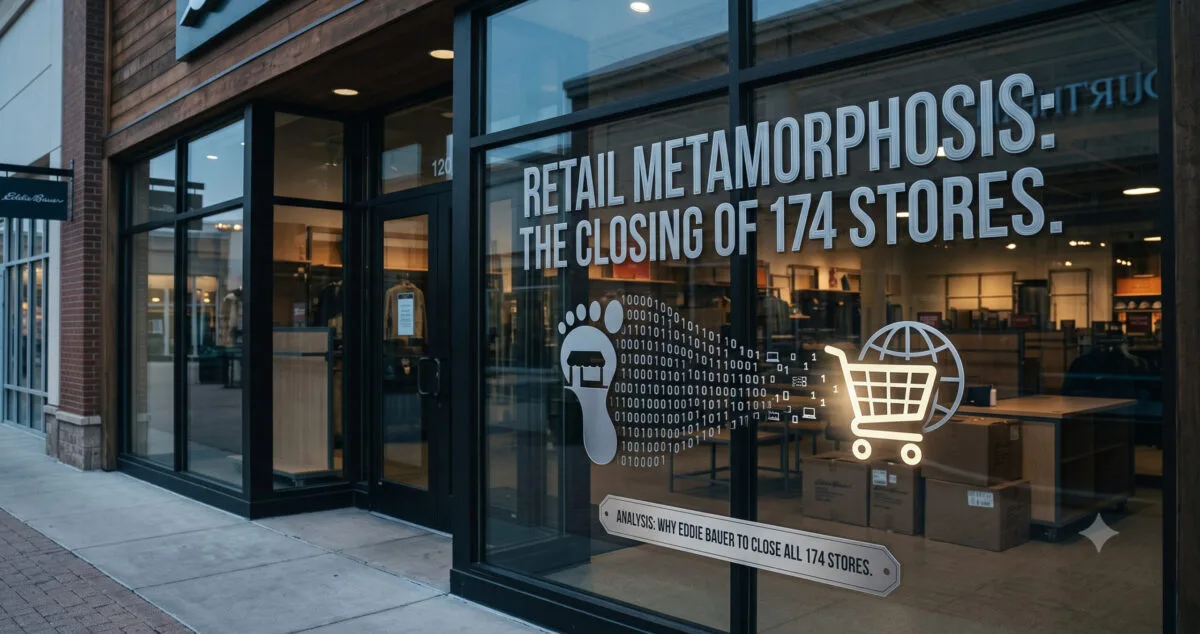
The modern retail environment is experiencing seismic shifts, and even legacy brands rooted in American heritage are not immune. In early 2026, the retail sector was stunned by the announcement that the entity operating physical storefronts for the iconic outdoor outfitter would wind down its brick-and-mortar footprint. If you are wondering why Eddie Bauer to close all 174 stores, the answer lies in a complex web of corporate structure, an unsuccessful bankruptcy auction, shifting consumer habits, and a radical strategic pivot toward a digital-first future.
This comprehensive analysis deconstructs the financial reality behind the headlines, separates corporate fact from consumer fiction, and explains what this major retail liquidation means for the future of the outdoor apparel industry.
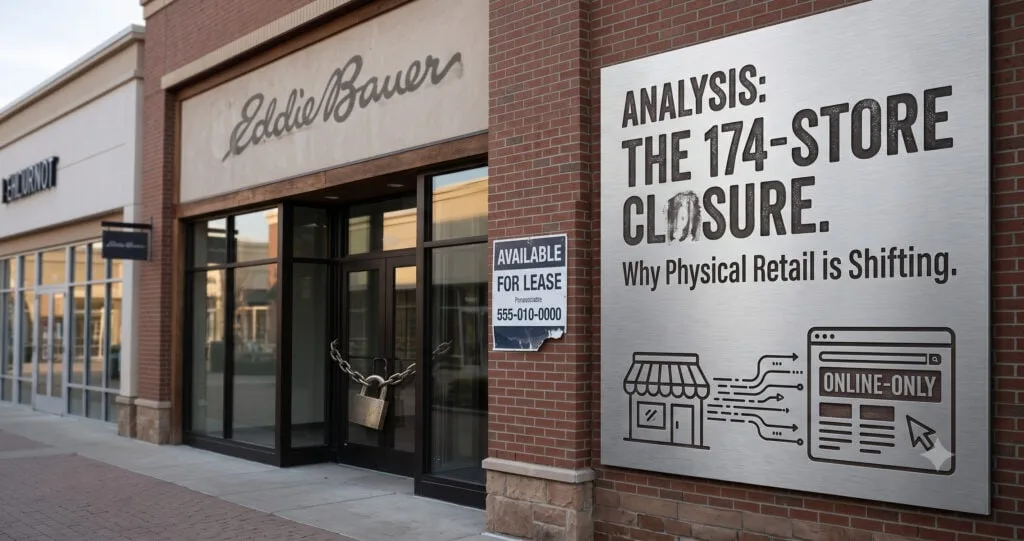
Table of Contents
1. The Core Catalyst: Understanding the Corporate Structure Behind the Closures
To understand why Eddie Bauer to close all 174 stores, one must first understand that the modern retail ecosystem is rarely as simple as a single company owning everything from the fabric to the storefront. The “Eddie Bauer” consumers see in physical malls is structured under complex licensing agreements.
- The Brand Owner: The global intellectual property (IP), trademarks, and international brand rights of Eddie Bauer are owned by Authentic Brands Group (ABG). ABG is a brand management powerhouse that excels in digital expansion, wholesale positioning, and international marketing.
- The Store Operator: The physical brick-and-mortar storefronts in the United States and Canada were operated by a completely separate entity, Eddie Bauer LLC, which sits under the portfolio of Catalyst Brands.
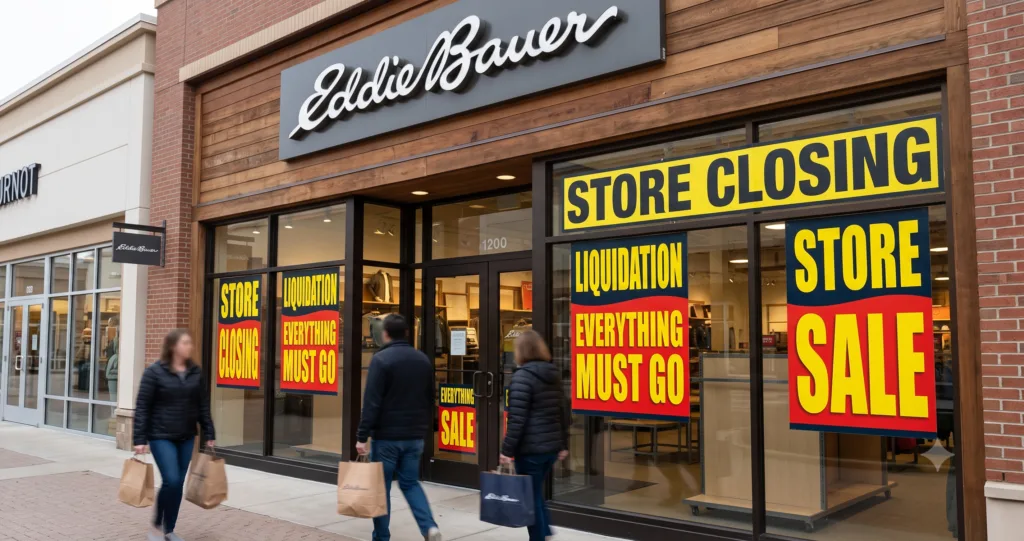
In February 2026, it was the retail store operator (Catalyst Brands’ division) that filed for Chapter 11 bankruptcy protection due to unsustainable retail overhead, supply chain disruptions, and declining physical foot traffic. When the retail operator entered bankruptcy court in New Jersey, the corporate entity listed significant financial distress under the official court docket. According to the live case administrative tracker hosted by Stretto Bankruptcy Administration, no qualified bidders emerged by the mid-March deadline to preserve the physical footprint. With zero buyers willing to inherit the brick-and-mortar liabilities, the planned store lease auction was officially canceled, leaving the operator with no choice but to initiate total store liquidations across all remaining locations.
When the retail operator entered bankruptcy court in New Jersey, they intended to find a buyer to take over the store leases and preserve the physical footprint. However, by the March 2026 deadline, no qualified bidders emerged. With zero buyers willing to inherit the brick-and-mortar liabilities, the planned store lease auction was officially canceled, leaving the operator with no choice but to initiate total store liquidations across all 174 remaining locations. why Eddie Bauer to close all 174 stores
2. Structural Failures: Why Eddie Bauer to Close All 174 Stores Rather Than Downsize
A common question among industry observers is why the retailer chose a total liquidation rather than downsizing to a smaller, more profitable fleet of high-performing stores. The answer highlights the unique financial pressures facing modern mall-based operations.
[Chapter 11 Filing (Feb 2026)]
       │
       ▼
[Search for Retail Buyer] ──(No Qualified Bids by March 3)──► [Cancel Lease Auction]
                                                                      │
                                                                      ▼
                                                            [Total Store Liquidation]
The Heavy Burden of Legacy Leases
The 174 shuttered leases spanned more than 1.08 million square feet across 40 U.S. states and six Canadian provinces. These spaces averaged roughly 6,300 square feet each, frequently located within traditional indoor shopping malls, lifestyle centers, and factory outlet corridors.
Maintaining physical footprints of this scale requires immense capital. The combination of high base rents, common area maintenance (CAM) fees, energy costs, and regional retail labor shortages created an insurmountable break-even threshold for the operating company. Why Eddie Bauer to Close All 174 Stores
Changing Consumer Dynamics in the Outdoor Space
The outdoor apparel sector has faced intense competition. Agile, direct-to-consumer (DTC) brands have captured younger demographics with aggressive social media marketing and highly streamlined online storefronts. Simultaneously, traditional big-box outdoor retailers expanded their private-label offerings. Trapped inside slowly decaying suburban malls, the physical Eddie Bauer stores struggled to maintain the foot traffic metrics required to justify their massive overhead. why Eddie Bauer to close all 174 stores
3. The Digital Blueprint: The Brand Itself Is Not Dying
It is vital for consumers and investors to recognize that the Eddie Bauer brand is not going out of business. While the physical retail spaces are disappearing, the underlying brand equity remains robust.
Prior to the retail operator’s bankruptcy filing, Authentic Brands Group strategically transferred the digital e-commerce and wholesale operating licenses for North America to alternative partners, ensuring that online channels were entirely insulated from the brick-and-mortar liquidation. As detailed in the comprehensive reporting by Retail Dive, the brand itself is pivoting completely toward digital channels, ensuring the online business model survives independently of the physical real estate wind-down. why Eddie Bauer to close all 174 stores
| Operational Channel | Current Status (Post-March 2026) | Responsible Entity |
| Physical Stores (US & Canada) | Permanently Closing / Liquidating | Eddie Bauer LLC (Catalyst Brands) |
| E-commerce Website (EddieBauer.com) | Fully Operational & Growing | Oved Group / Outdoor 5 LLC |
| Wholesale Partnerships | Expanding to Major Retailers | Authentic Brands Group (ABG) |
| International Operations (e.g., Japan) | Unaffected by US Bankruptcy | Local Licensed Operators |
By detaching itself from the financial liabilities of 174 physical storefronts, Authentic Brands Group plans to focus resources on technical fabrics, digital storefront optimizations, and expanding the premium First Ascent high-performance outdoor line through multi-brand wholesale distributors.
4. The Broader Trend: A Clear Signal of the Retail Apocalypse
The reality of why Eddie Bauer to close all 174 stores is also a reflection of an ongoing macroeconomic pattern often referred to as the “Retail Apocalypse”. The year 2026 has seen accelerated retail corporate defaults, driven by stubborn inflationary pressures, elevated interest rates that make debt restructuring expensive, and a fundamental shift in how consumers allocate discretionary spending.
Legacy mid-tier mall brands that rely on impulse foot traffic have faced severe distress. Industry giants like Joann, Big Lots, and Express have walked through similar restructuring or liquidation pipelines. The total closure of Eddie Bauer’s physical stores signals to commercial landlords that the era of relying on massive clothing retailers to anchor multi-acre shopping centers is rapidly drawing to a close.
Trapped inside slowly decaying suburban malls, the physical Eddie Bauer stores struggled to maintain the foot traffic metrics required to justify their massive overhead. Granular location analytics from the Placer.ai Retail Analytics Blog revealed a widening demographic mismatch, indicating that the brand’s core customer base had been steadily underperforming the broader apparel sector in physical mall traffic well before the corporate default. Why Eddie Bauer to Close All 174 Stores
5. What Consumers Need to Know: Gift Cards, Returns, and Final Sales
For loyal patrons of the brand, the immediate impact of the liquidation involves strict logistical adjustments dictated by bankruptcy court protections.
Critical Notice for Shoppers: As of March 12, 2026, liquidating Eddie Bauer retail locations officially stopped accepting corporate gift cards and Adventure Points. Because the e-commerce infrastructure migrated to a different operating partnership, store-issued gift cards are no longer valid for online purchases.
Furthermore, all store-closing transactions executed during the liquidation window are deemed final sales. Physical stores will no longer accept returns, process exchanges, or issue refunds for previous purchases. Shoppers looking for bargains can find significant markdown incentives as stores clear out remaining inventory, fixtures, and interior styling units over the standard 13-week wind-down timeline. why Eddie Bauer to close all 174 stores
Conclusion: Adapting to Survive in a Digital Era
Ultimately, the explanation for why Eddie Bauer to close all 174 stores provides a masterclass in modern retail evolution. The structural failure of the brick-and-mortar operating company does not spell the end for Eddie Bauer’s century-old legacy. Instead, it marks the painful, systemic shedding of an outdated distribution channel.
As the brand pivots completely to an asset-light, digital-first model centered around online distribution and strategic wholesale partnerships, it stands a strong chance of finding long-term financial stability. While the loss of local storefronts is a blow to traditional mall culture, it ensures the survival of the Eddie Bauer name in the global marketplace for years to come.
Disclaimer:
The analysis and financial details provided in this article on cfostimes.com about why Eddie Bauer to close all 174 stores are intended strictly for informational, educational, and journalistic purposes. While corporate structures, bankruptcy filings, and operational updates are based on public records and market research available at the time of publication, corporate situations can evolve rapidly. This article does not constitute formal financial, legal, or investment advice for investors, commercial landlords, or consumers. For official updates regarding gift cards, retail liquidations, and e-commerce policies, please refer directly to the official corporate announcements from Authentic Brands Group or the designated bankruptcy administration site.

Dr. Dinesh Kumar Sharma is a CMA an award-winning Chief Financial Officer and Director of Finance with over 25 years of expertise in strategic planning and digital transformation. Recognized as a five-time CFO of the Year, he specializes in leveraging Generative AI and Microsoft Copilot to optimize financial forecasting and cost management. Dr. Sharma holds a Doctorate in Management (Finance) and has successfully scaled organizations from INR 1 billion to INR 7 billion. He is dedicated to providing transparent, data-driven insights for modern decision-makers at CFOs Times.