The “Buy Now” button is becoming a relic of the past. As of January 29, 2026, the global retail landscape has officially shifted from human-led browsing to machine-led execution. This shift is powered by Agentic commerce payment protocols 2026, a suite of specialized communication and financial standards that allow AI agents to research, negotiate, and complete transactions autonomously.
In 2025, we saw the rise of AI personal assistants; in 2026, those assistants have become “Autonomous Transaction Agents.” Whether it is a Google Gemini agent booking a multi-city travel itinerary or a ChatGPT-powered shopping assistant securing a limited-edition drop, the underlying engine is the same: a secure, cryptographically verifiable payment protocol. McKinsey projects that by the end of this decade, agentic commerce will orchestrate nearly $3 trillion in global retail revenue.
This pillar post explores the technical architecture, the “protocol wars” between Google and OpenAI/Stripe, and the security frameworks ensuring that these “robotic consumers” remain safe and accountable.
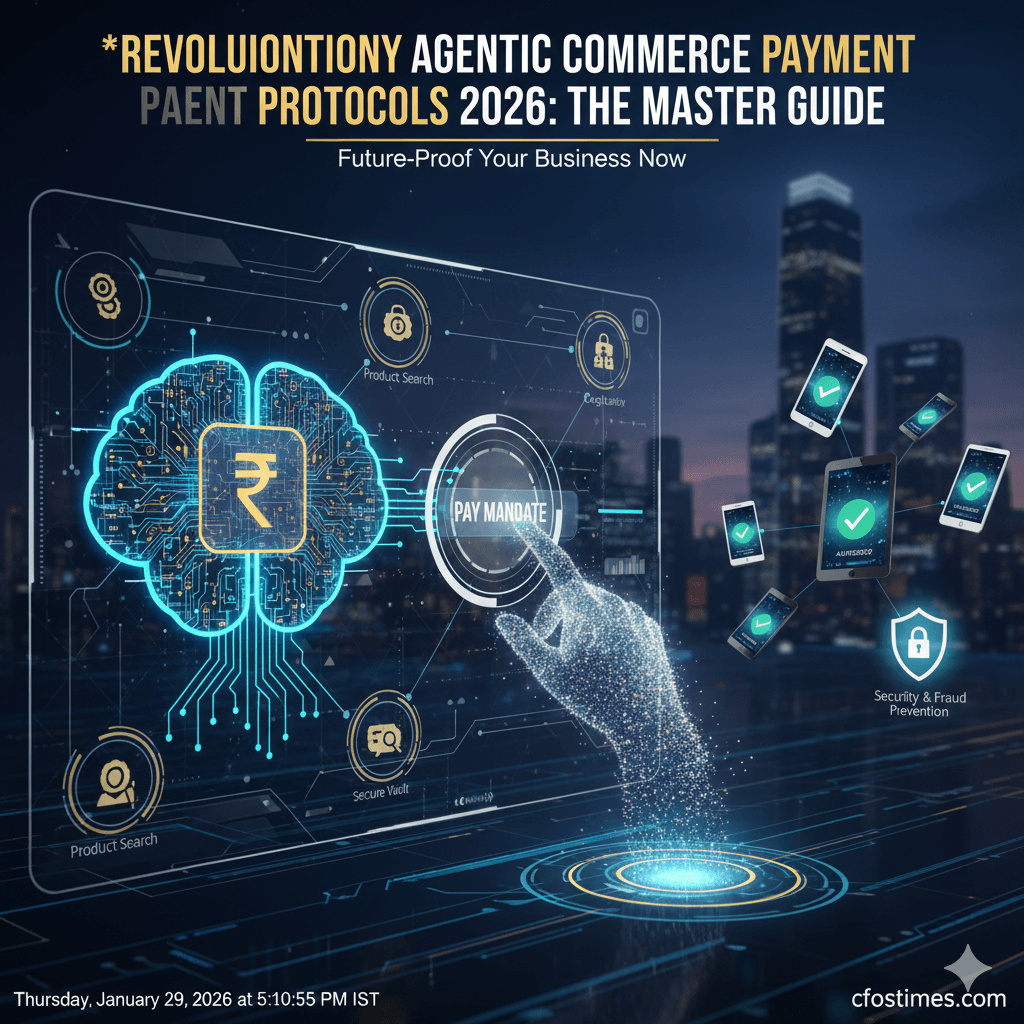
Table of Contents
The Core Standards: Defining Agentic Commerce Payment Protocols 2026
To understand the 2026 economy, one must understand the three dominant protocols that have emerged as the “TCP/IP” of shopping.
1. Google’s Agent Payments Protocol (AP2)
The Agent Payments Protocol (AP2) is a significant non-proprietary standard in the Agentic commerce payment protocols 2026 space. It provides a payment-agnostic layer that allows agents to make verifiable purchases using digital “mandates.”
- Agnostic Nature: Supports traditional credit cards, real-time bank transfers, and even stablecoins.
- The “Mandate” System: Instead of sharing a CVV, the agent presents a cryptographically signed “Intent Mandate” that proves the user authorized a specific spending limit.
2. OpenAI & Stripe: Agentic Commerce Protocol (ACP)
While Google’s AP2 focuses on the payment layer, the Agentic Commerce Protocol (ACP) focuses on the transaction flow. Developed by Stripe as part of their Agentic Commerce Suite, this protocol allows AI to move from “chatting about a product” to “executing the checkout.”
- Programmatic Intent: ACP provides the functional hooks for an AI to invoke merchant tools like shipping calculators and tax engines without leaving the interface.
3. The Universal Commerce Protocol (UCP)
The Universal Commerce Protocol is the “connective tissue.” It allows AI agents to discover what a business can do. Through a standardized manifest file, a merchant can broadcast their pricing and inventory to any passing AI crawler.
How Agentic Commerce Payment Protocols 2026 Work: The 3-Step Mandate
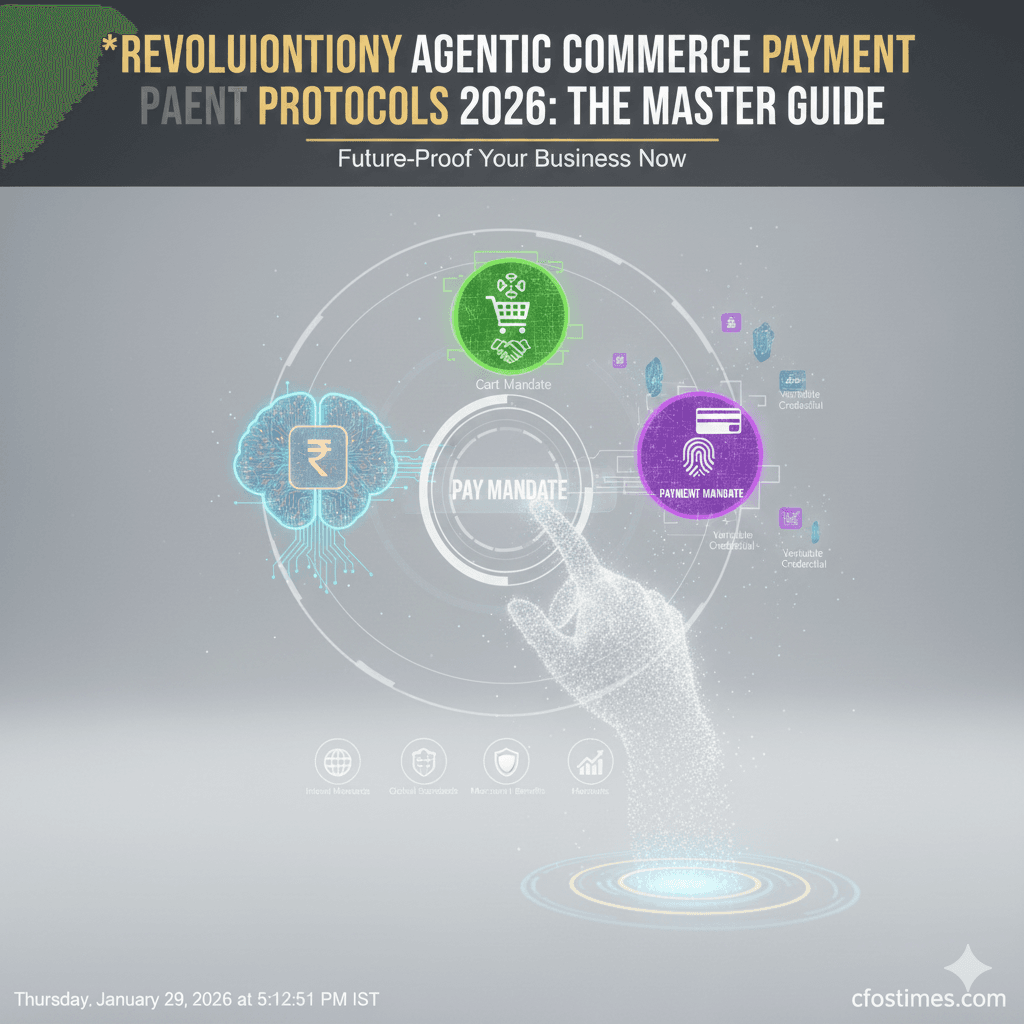
The breakthrough of the Agentic commerce payment protocols 2026 is solving the “Trust Gap.” How does a bank know it was your AI agent that bought those shoes and not a hacker? The solution lies in the Triple Mandate Architecture.
Step 1: The Intent Mandate
When you give your AI a task—“Find me a green jacket under $200”—you sign an Intent Mandate. This is a tamper-proof digital contract stored in your secure enclave (like Google Wallet). It defines the “Guardrails” of the transaction.
Step 2: The Cart Mandate
The agent finds the jacket. Before paying, it generates a Cart Mandate. This links the specific item and price back to your original Intent Mandate. If the price exceeds $200, the protocol blocks the transaction.
Step 3: The Payment Mandate
Once the Cart matches the Intent, the protocol issues a Payment Mandate. This is a one-time-token sent to the merchant’s payment processor. The merchant never sees your card number—they only see a “Verifiable Credential” that the payment is guaranteed.
Security and Fraud Prevention in Agentic Commerce Payment Protocols 2026
One of the biggest hurdles for Agentic commerce payment protocols 2026 was fraud. Traditional fraud detection looks for “unusual human behavior.” But agents are unusual; they shop at 3:00 AM and make 500 requests per second.
Verifiable Credentials (VCs)
The 2026 protocols rely on W3C Verifiable Credentials. Every agent must carry a “identity token” issued by a trusted provider. If an agent attempts a transaction without a valid, signed VC, the merchant’s gateway automatically rejects it.
Proof of Consent
Under the Agentic commerce payment protocols 2026, every payment authorization includes cryptographic proof of user consent. This prevents “Agent Hijacking,” where a malicious script tries to take over a shopping bot.
Authorized Link: For global standards on AI and digital economy safety, visit theOECD Artificial Intelligence Policy Observatory.
Global Implementation: The West vs. The East
The rollout of Agentic commerce payment protocols 2026 has followed two distinct paths:
- The “Silent” Model (US/Europe): Relies on Network Tokens and pre-authorized credit card mandates. The agent is “Autonomous by Default.”
- The “Interactive” Model (India/SE Asia): Since UPI is the dominant rail, the Agentic commerce payment protocols 2026 in India often use “Delegated Mandates.” This allows the agent to pay small amounts autonomously but requires a biometric “nudge” for larger purchases.
FAQs: Mastering Agentic Commerce Payment Protocols 2026
Q1: What is the main difference between AP2 and ACP? AP2 (Google) is a payment-agnostic security layer that handles how money moves securely. ACP (Stripe/OpenAI) is an execution layer that handles the checkout flow.
Q2: Can I set spending limits for my AI agent? Yes. All Agentic commerce payment protocols 2026 are built on the concept of “Guardrails.” You can set daily or per-transaction spending limits in your digital wallet.
Q3: Is Agentic Commerce safe from hackers? The use of Cryptographic Mandates and Verifiable Credentials makes it significantly more secure than traditional “Auto-fill” features.
Conclusion: Embracing the Agentic Era
The Agentic commerce payment protocols 2026 represent the most significant architectural change to the internet since the introduction of SSL/HTTPS. By providing a secure, standardized way for machines to transact on behalf of humans, we have unlocked a new level of economic efficiency.
As global retail summits have highlighted, the winners will be the brands who embrace these “invisible” pipes of commerce. Understanding the Agentic commerce payment protocols 2026 is your first step toward mastering the future of the digital economy.
Authorized Link: Stay updated with the latest in digital trade via theWorld Trade Organization (WTO) Digital Trade portal.
Disclaimer
The information provided in this article is for educational and informational purposes only. “Agentic Commerce” and “Payment Protocols” refer to emerging technological standards as of January 2026. This content does not constitute financial, legal, or investment advice. While we strive for accuracy, users and developers should consult official documentation from protocol maintainers (such as Google, OpenAI, or Stripe) and qualified legal counsel regarding autonomous financial transactions.

Dr. Dinesh Kumar Sharma is an award-winning Chief Financial Officer and Director of Finance with over 25 years of expertise in strategic planning and digital transformation. Recognized as a five-time CFO of the Year, he specializes in leveraging Generative AI and Microsoft Copilot to optimize financial forecasting and cost management. Dr. Sharma holds a Doctorate in Management (Finance) and has successfully scaled organizations from INR 1 billion to INR 7 billion. He is dedicated to providing transparent, data-driven insights for modern decision-makers at CFOs Times.