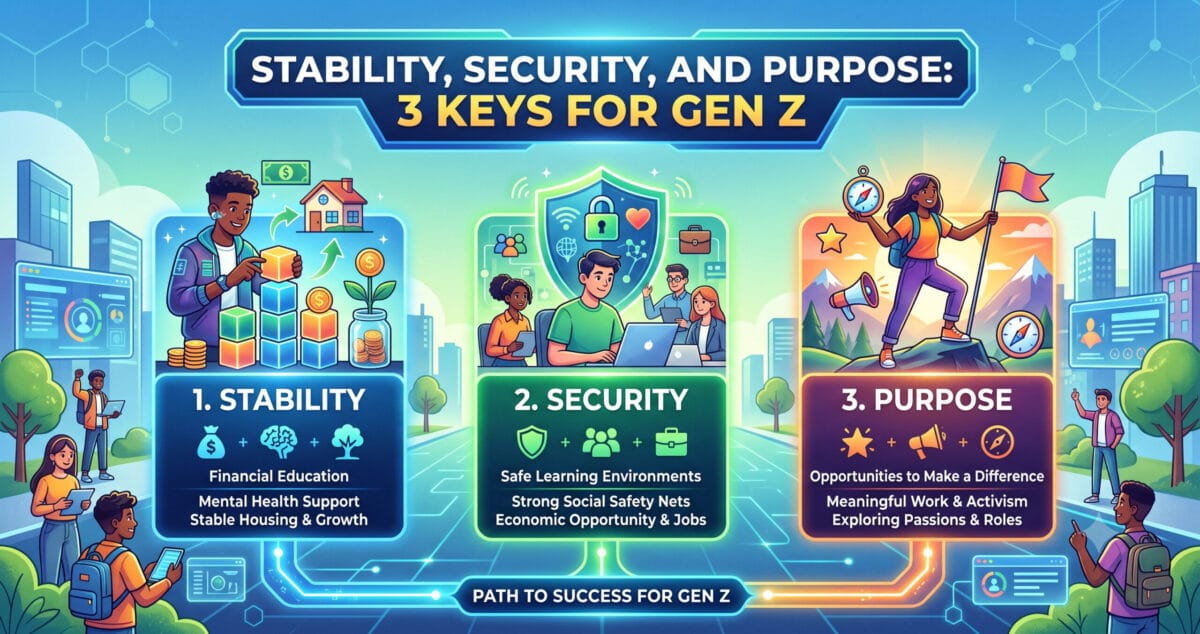
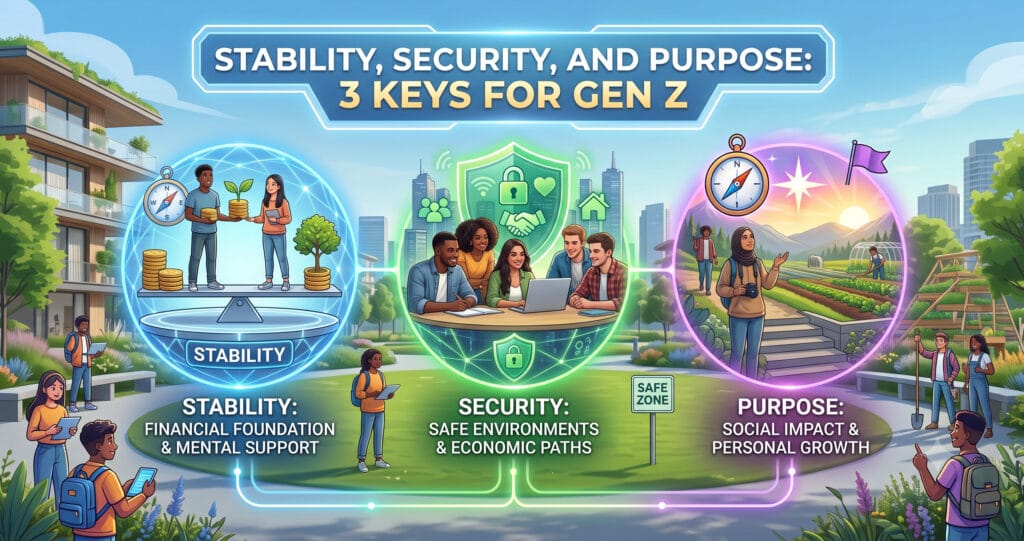
Stability, security, and purpose are no longer optional perks for the modern workforce—they are the primary drivers for attracting, engaging, and retaining Generation Z talent. Born between 1997 and 2012, this demographic entered the labor market during an unprecedented era of economic inflation, rapid technological transformation, and shifting workplace norms. Unlike previous generations that often prioritized fast-tracked title promotions or high-stress hustle culture, Gen Z favors sustainable growth, psychological and financial peace of mind, and alignment with organizational values.
Leaving a job is no longer viewed as a failure by Gen Z; it is a calculated strategy to scope out better environments. However, professional accounting entities sit on a massive opportunity: by offering stability, security, and purpose, the profession can serve as an anchor against early-career chaos and shape the next generation of business leaders.
Understanding how these three pillars intersect allows forward-thinking organisations to build resilient talent pipelines, lower early-career turnover, and build a culture where young professionals thrive.
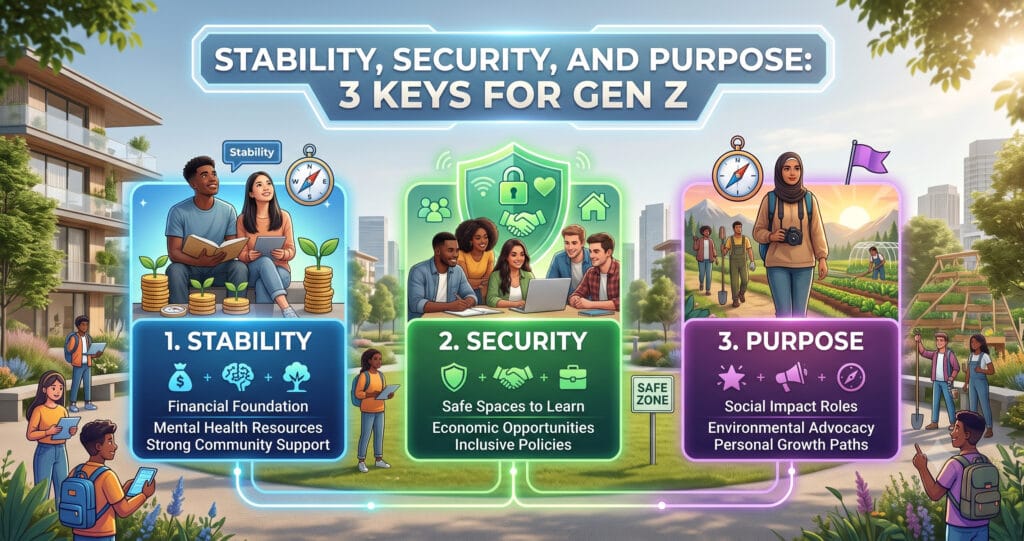
Table of Contents
Why Gen Z Approaches Work Differently
Understanding Gen Z requires looking at the digital landscape and socio-economic pressures that shaped their upbringing.
                  ┌─────────────────────────────────────────┐
                  │          Gen Z Workforce Drivers        │
                  └────────────────────┬────────────────────┘
                                       │
            ┌──────────────────────────┼──────────────────────────┐
            ▼                          ▼                          ▼
   ┌─────────────────┐        ┌─────────────────┐        ┌─────────────────┐
   │ Digital Nativeness│      │ Macro Economic  │        │   Relational    │
   │ Fast AI upskilling│      │   Uncertainty   │        │   Priorities    │
   │ Feedback-driven │      │ Inflation & debt│        │ Mentorship focus│
   └─────────────────┘        └─────────────────┘        └─────────────────┘
1. True Digital Nativeness
Unlike Millennials, who can recall an analogue workplace, Gen Z grew up fully immersed in a digitalized world. They treat technology as an immediate problem-solving tool rather than a novelty. According to Randstad, 75% of Gen Z professionals actively use AI to upskill—a rate significantly higher than older generations. Because they rely on fast-paced digital platforms, Gen Z expects continuous feedback, rapid skill development, and agile environments.
2. Economic & Global Upheavals
Persistent economic inflation, student debt, and the tailwinds of global political and health crises have deeply impacted Gen Z’s mindset. These events served as a stark reminder that life extends beyond office hours. Consequently, they reject “living solely for work” and actively guard against workplace burnout by demanding a balance between virtual flexibility and meaningful real-world experiences.
3. High Demand for Mentorship
Despite their digital fluency, 86% of Gen Z professionals emphasize the need for on-the-job mentorship and guidance. They do not want isolated remote tasks; they seek genuine human relationships, hands-on learning, and empathetic, ethical leadership.
The Accounting Profession as a Strategic Counterweight
Amid general job volatility, accounting entities offer three distinct anchors that directly answer Gen Z’s core desires:
| Core Pillar | What Gen Z Seeks | How Accounting Delivers |
|---|---|---|
| Stability | Predictability & sustainable pacing | Clear career progression pathways with achievable goals |
| Security | Financial & emotional peace of mind | Steady employment demand, market resilience, and professional community |
| Purpose | Alignment with public good & ethics | Serving the public interest, protecting market integrity, and driving ESG |
Modernizing the Accounting Curriculum for Tomorrow’s Leader
To capitalize on this generational shift, accounting entities worldwide must coordinate to modernize academic and professional training programs. Transitioning away from a traditional, content-centered model toward a skills-based approach ensures future accountants are prepared for complex, dynamic markets.
       ┌────────────────────────────────────────────────────────┐
       │             Traditional Accounting Education            │
       │           (Rote learning & content-heavy focus)        │
       └───────────────────────────┬────────────────────────────┘
                                   │
                                   ▼
       ┌────────────────────────────────────────────────────────┐
       │             Modernized Skills-Based Model              │
       └───────────────────────────┬────────────────────────────┘
                                   │
         ┌─────────────────────────┼─────────────────────────┐
         ▼                         ▼                         ▼
  ┌──────────────┐          ┌──────────────┐          ┌──────────────┐
  │ Tech & Data  │          │ Governance   │          │ Soft Skills  │
  │ Digital AI & │          │ ESG & Risk   │          │ Ethics &     │
  │ analytics    │          │ management   │          │ collaboration│
  └──────────────┘          └──────────────┘          └──────────────┘
A modernized curriculum should integrate:
- Digital Transformation & AI: Teaching young accountants to leverage automation, data analytics, and artificial intelligence for strategic forecasting.
- ESG & Risk Management: Embedding Environmental, Social, and Governance (ESG) principles into corporate reporting and decision-making.
- Core Soft Skills: Prioritizing adaptability, collaborative problem-solving, communication, and critical thinking alongside technical mastery.
Relevant Legal & Compliance Guidelines
When adjusting workplace policies, training frameworks, and employment terms for early-career professionals, organizations should reference established global and regional standards:
- U.S. Equal Employment Opportunity Commission (EEOC): Guidance on fair hiring, non-discrimination, and equal opportunity standards across all age groups.
- U.S. Department of Labor – Fair Labor Standards Act (FLSA): Federal compliance rules regarding fair compensation, exempt vs. non-exempt status, and workplace hour limits.
- International Labour Organization (ILO) Standards: Global workplace guidelines promoting decent work conditions, occupational health, and young worker rights.
Frequently Asked Questions (FAQs)
Why is Gen Z’s average job tenure shorter than previous generations?
Gen Z averages a 1.1-year tenure primarily because they view early-career roles as stepping stones for growth, learning, and lateral skill-building rather than lifelong commitments. If an employer lacks clear progression, purpose, or mentorship, Gen Z will move on to preserve their career trajectory and well-being.
Randstad+ 1
How can accounting firms reduce early-career turnover among Gen Z?
Firms can increase retention by offering structured mentorship programs, providing continuous real-time feedback, ensuring competitive starting pay, and creating clear pathways for internal skill development (including AI fluency and strategic advisory roles).
Randstad
What role do soft skills play in modern accounting education?
Soft skills—such as critical communication, adaptability, ethical leadership, and collaboration—transform accountants from traditional bookkeepers into strategic business advisors capable of navigating complex economic environments.
Conclusion
Retaining Generation Z requires moving away from rigid, transactional models of management. By offering stability, security, and purpose, alongside a modernized, skill-centered educational framework, accounting entities can turn a period of workplace disruption into a golden opportunity. In doing so, they will not only attract top young talent but also prepare an ethical, technological, and resilient generation of professionals to lead the future.
Disclaimer:
The views, analysis, and data presented in this article are intended solely for general informational and educational purposes. Nothing published on cfostimes.com constitutes professional accounting, legal, financial, or employment advisory services.
Although content is thoroughly researched and compiled from reliable sources, cfostimes.com makes no warranties or guarantees regarding the completeness, accuracy, or timeliness of the information provided. Hyperlinks to external legal or regulatory sites (e.g., EEOC, DOL, ILO) are provided for reader convenience and reference only; cfostimes.com does not endorse or assume responsibility for third-party content.

Dr. Dinesh Kumar Sharma is a CMA an award-winning Chief Financial Officer and Director of Finance with over 25 years of expertise in strategic planning and digital transformation. Recognized as a five-time CFO of the Year, he specializes in leveraging Generative AI and Microsoft Copilot to optimize financial forecasting and cost management. Dr. Sharma holds a Doctorate in Management (Finance) and has successfully scaled organizations from INR 1 billion to INR 7 billion. He is dedicated to providing transparent, data-driven insights for modern decision-makers at CFOs Times.






1 thought on “Stability, Security, and Purpose: 3 Keys for Gen Z”