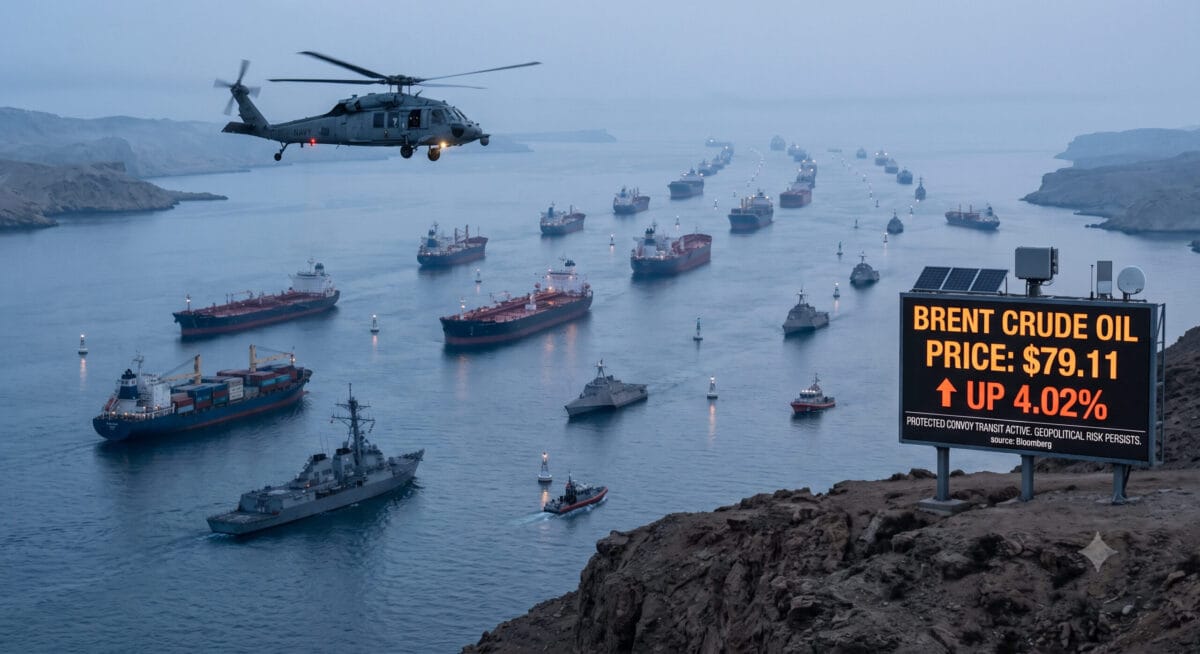
Crude oil price today jumped sharply on Monday, July 13, 2026, as global energy markets reacted to a massive escalation in the Middle East. The fragile interim ceasefire signed between Washington and Tehran has effectively collapsed after a volatile weekend of direct military confrontations. Commodity desks are rushing to price in a heavy geopolitical risk premium as shipping activity inside the world’s most critical energy corridor falls to its lowest point in over a month.
With conflicting claims regarding the open status of global supply channels and an ongoing squeeze on refined products, energy leadership across the globe is preparing for an extended period of high operational volatility.
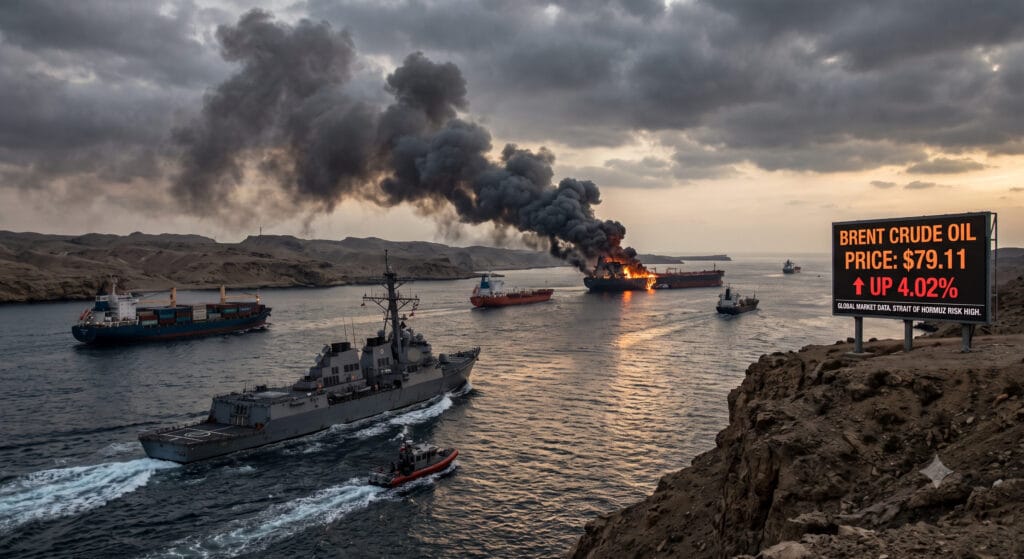
Table of Contents
Crude Oil Price Today Breaks Out Past Major Benchmarks
The crude oil price today registered an immediate 4% to 5% intraday surge during early trading sessions. International benchmark Brent crude futures gained $3.10 per barrel, climbing up to $79.11, while the U.S. West Texas Intermediate (WTI) crude futures tracks closely behind, rising 4.11% to hover at $74.36 a barrel.
[Pre-War Baseline: $72.48] ---> [June Ceasefire Relief: ~$75.00] ---> [Crude Oil Price Today: $79.11]
This sudden price movement effectively reverses the market cooling observed throughout June. Speculative short positions are closing rapidly as hedge funds adjust exposure away from a peaceful negotiation scenario toward an active maritime conflict posture.
Crude Oil Price Today Driven Higher by Shipping Chokepoint Crises
The primary driver pushing the crude oil price today upward is the escalating maritime warfare surrounding the Strait of Hormuz. Over the weekend, the Islamic Revolutionary Guard Corps (IRGC) targeted the M/V GFS Galaxy, a Cyprus-flagged container vessel transiting the region. The ship sustained severe engine room damage and an active onboard fire, forcing the civilian crew to abandon the vessel in lifeboats.
               [IRGC Strike on M/V GFS Galaxy]
                             │
                             ▼
         [U.S. CENTCOM Retaliatory Precision Strikes]
                             │
                             ▼
     [Iran Declares Strait of Hormuz Waterway Closed]
                             │
                             ▼
[Daily Ship Crossings Plummet to 6 (5-Week Market Low)]
In immediate retaliation, U.S. Central Command (CENTCOM) launched a massive third wave of precision airstrikes, hitting dozens of Iranian military targets across multiple regional locations to degrade their asymmetric launch capabilities.
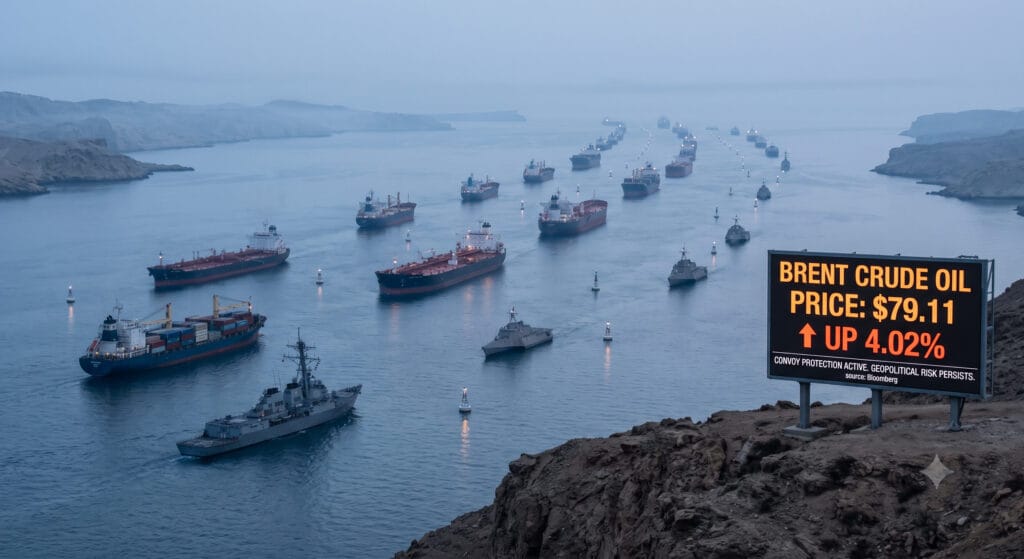
Following the American strikes, Iran formally declared the Strait of Hormuz “closed until further notice”. Although U.S. CENTCOM explicitly counters this by stating that the waterway remains open and traffic continues to move via protected southern corridors, tracking data indicates structural slowing. Ship-tracking intelligence platform Kpler reported that only six commercial vessels transited the strait on Sunday, marking a critical five-week low in volume.
Crude Oil Price Today Impacted by Deep Refining Deficits
Beyond raw extraction disruptions, the crude oil price today is heavily supported by acute pressures in downstream product markets. Enterprise decision-makers face a challenging supply outlook due to a combination of maritime transit bottlenecks and unexpected trade policies:
- Middle Eastern Crude Procurement Delays: Complex logistical routing adjustments around the Persian Gulf are raising baseline shipping expenses and war-risk insurance premiums.
- Russia’s Diesel Export Ban: The recent domestic export restrictions imposed by Russia have instantly tightened global diesel and fuel inventories.
According to the International Energy Agency (IEA), global refining capacity remains tightly constrained. While the brief June truce allowed global oil supply to recover by 4.1 million barrels per day (bpd) to reach 98.8 million bpd, total global output sits roughly 9.4 million bpd lower than its pre-war average baseline. Consequently, the margin difference between raw crude costs and processed industrial fuels has jumped to a multi-year high, expanding systemic transport inflation risks.
Crude Oil Price Today: Strategic Market Comparison
To contextualize how the crude oil price today shapes the current energy landscape, the table below provides a breakdown of international Brent crude milestones recorded during the ongoing 2026 economic period:
| Strategic Market Milestone | Brent Crude Valuation (Per Barrel) | Geopolitical Drivers & Structural Context |
| Pre-War Market Baseline | ~$72.48 | General macro conditions before regional escalation. |
| Historical Conflict Peak | $126.00 | Peak market premium due to widespread infrastructure threats. |
| Post-Ceasefire Relief Window | ~$75.00 | Brief correction following the June interim agreement. |
| Crude Oil Price Today (Current) | $79.11 | Immediate breakout following vessel strikes & IRGC countermoves. |
Summary: Market Outlook and Strategic Enterprise Risks
The market trajectory of the crude oil price today indicates that the era of a stable geopolitical risk premium has returned. Enterprise leaders must anticipate sustained pressure on transportation lines and fuel procurement costs. While an outright push back to the historic $126 peak remains unlikely unless a multi-week total physical blockade of the Strait of Hormuz occurs, a sustained floor near $80 a barrel is establishing itself as the new operational normal.
Frequently Asked Questions (FAQs)
What caused the crude oil price today to spike by 4%?
The crude oil price today surged due to heavy retaliatory military strikes exchanged between the U.S. and Iran over the weekend. These strikes occurred after an attack on the container ship M/V GFS Galaxy, reigniting concerns over the safety of global energy transit channels.
Is the Strait of Hormuz officially closed to commercial shipping?
While Iranian authorities announced the waterway is closed “until further notice,” U.S. Central Command maintains that the strait remains open and trade continues to flow under military protection. However, ship-tracking data shows daily crossings have dropped to a low of just six vessels.
How does Russia’s diesel ban influence the crude oil price today?
Russia’s temporary restrictions on diesel exports have removed significant volumes of refined fuel from the global market. This structural deficit keeps international refining capacity tight, driving up refined product margins and placing upward pressure on the underlying crude oil price today.
Where can I monitor reliable global energy market updates?
For institutional macro data and inventory changes, professionals rely on official resource platforms including the International Energy Agency and military shipping notices via U.S. Central Command.
Disclaimer
The information provided on cfostimes.com is for general informational, educational, and journalistic purposes only. It does not constitute formal financial, investment, legal, or professional trading advice. Energy markets are highly volatile and subject to rapid geopolitical shifts. Readers should consult with a licensed financial adviser before making any enterprise risk management or commodity trading decisions based on this content.

Dr. Dinesh Kumar Sharma is a CMA an award-winning Chief Financial Officer and Director of Finance with over 25 years of expertise in strategic planning and digital transformation. Recognized as a five-time CFO of the Year, he specializes in leveraging Generative AI and Microsoft Copilot to optimize financial forecasting and cost management. Dr. Sharma holds a Doctorate in Management (Finance) and has successfully scaled organizations from INR 1 billion to INR 7 billion. He is dedicated to providing transparent, data-driven insights for modern decision-makers at CFOs Times.









1 thought on “Crude Oil Price Today Surges 4% Amid US-Iran Strikes”