Global central banks hawkish stance has returned with full force. In a decisive policy shift over the past 48 hours, the world’s most influential central banks have abandoned expectations of interest rate cuts, embracing a global central banks hawkish posture driven by escalating energy costs from the Iran war. For households, investors, and businesses, this global central banks hawkish pivot means borrowing costs will remain elevated through 2026—a stark reversal from earlier forecasts of monetary easing.
This comprehensive analysis examines why global central banks hawkish sentiment has replaced rate cut optimism, incorporating official government data, central bank statements, and actionable personal finance guidance.
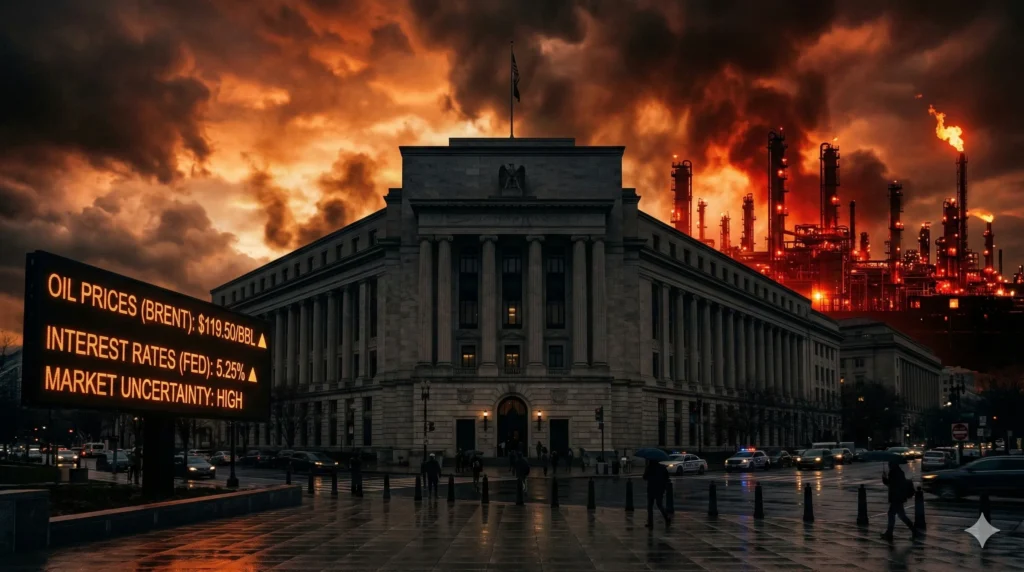
Table of Contents
The Hawkish Pivot: What Changed?
On March 18–19, 2026, following emergency consultations among G7 central bankers, the Federal Reserve, European Central Bank (ECB), and Bank of England (BoE) issued coordinated statements emphasizing inflation vigilance over growth support. Market pricing has since eliminated any expectation of 2026 rate cuts, with some analysts now pricing potential hikes.
According to the Federal Reserve’s official summary of its March meeting, policymakers noted that “geopolitical developments, particularly in energy markets, introduce significant upside risks to inflation.” Similarly, ECB President Christine Lagarde stated that the council stands “ready to adjust all instruments” if inflation expectations de-anchor.
The Iran War Energy Shock: Official Data
The primary catalyst is the sustained energy price shock resulting from the US-Israeli conflict with Iran. Official data from the U.S. Energy Information Administration (EIA) shows:
| Metric | Value (March 2026) | Change (YoY) |
|---|---|---|
| Brent Crude Price | $105.43/barrel | +42% |
| U.S. Regular Gasoline | $4.21/gallon | +38% |
| European Natural Gas (TTF) | €58/MWh | +210% |
Source: U.S. Energy Information Administration, ICE Endex
The International Energy Agency (IEA) reported that global oil supply faces “the most significant disruption risk since the 1970s,” with approximately 3.5 million barrels per day of Middle Eastern supply potentially at risk.
Central Bank Policy Tracker (Official Sources)
| Central Bank | Current Rate | Official Stance | Source |
|---|---|---|---|
| Federal Reserve | 3.50%–3.75% | Hawkish Hold; inflation focus | federalreserve.gov |
| European Central Bank | 2.00% (deposit) | Data-dependent; prepared to act | ecb.europa.eu |
| Bank of England | 3.75% | Tightening bias remains | bankofengland.co.uk |
| Bank of Japan | 0.75% | Cautious; monitoring FX | boj.or.jp |

Market Impact: Real-Time Data
Bond Markets
Global government bonds have suffered their steepest selloff since 2022. The yield on the 10-year U.S. Treasury note—the benchmark for global borrowing costs—rose 24 basis points this week to 4.68%, according to data from the U.S. Department of the Treasury.
Currency Markets
The U.S. Dollar Index (DXY) fell 1.2% this week as traders priced in relatively more aggressive tightening abroad. The euro strengthened to $1.1570, its highest level since 2023.
Equity Markets
The S&P 500 is down 3.8% month-to-date, with rate-sensitive sectors like real estate and utilities underperforming. Energy stocks, conversely, have gained 12% amid elevated oil prices. global central banks hawkish
Personal Finance: What This Means for You
1. Mortgage Rates
According to Freddie Mac’s Primary Mortgage Market Survey, the average 30-year fixed mortgage rate was 5.99% as of February 27, 2026. However, the recent bond market selloff suggests rates will climb back toward 6.5% in coming weeks.
Action: If you’re refinancing or purchasing, consider locking rates immediately. Consult the Consumer Financial Protection Bureau (CFPB) for mortgage shopping guidance.
2. Credit Card Debt
With the Federal Reserve maintaining its target rate, credit card APRs will remain near record highs. The average credit card interest rate stood at 21.5% in February 2026, per Federal Reserve data.
Action: Prioritize paying down variable-rate debt. The FDIC offers resources on debt management strategies.
3. Savings Accounts
High-yield savings accounts continue to offer attractive returns. According to FDIC data, average savings account rates are 0.46%, but online banks offer rates between 4.0% and 5.0%.
Action: Compare rates across federally insured institutions. Use the FDIC’s BankFind Suite to verify insurance coverage.
4. Retirement Planning
Higher-for-longer rates impact both bond and stock portfolios. The U.S. Department of Labor’s Employee Benefits Security Administration provides guidance on 401(k) and IRA investment options during volatile markets.
Official Government Resources-global central banks hawkish
Readers seeking authoritative information should consult these government sources:
| Topic | Agency | URL |
|---|---|---|
| Inflation Data | Bureau of Labor Statistics | bls.gov |
| Interest Rate Policy | Federal Reserve | federalreserve.gov |
| Mortgage Guidance | Consumer Financial Protection Bureau | consumerfinance.gov |
| Bank Rates & Insurance | FDIC | fdic.gov |
| Energy Prices | Energy Information Administration | eia.gov |
| Retirement Plans | DOL/EBSA | dol.gov/agencies/ebsa |
| ECB Policy | European Central Bank | ecb.europa.eu |
Comparative Analysis: Then vs. Now
| Indicator | January 2026 | March 20, 2026 | Change |
|---|---|---|---|
| Fed Funds Rate Expectation (Dec 2026) | 2.75%–3.00% | 3.50%–3.75% | +75 bps |
| 10-Year Treasury Yield | 4.02% | 4.68% | +66 bps |
| WTI Crude Oil | $72/barrel | $102/barrel | +42% |
| Market Pricing: 2026 Rate Cuts | 3 cuts priced | 0 cuts priced | -3 cuts |
Chart: Central Bank Policy Rates (2023–2026)
| Year / Period | Monetary Policy Phase | Key Details |
|---|---|---|
| 2023 | Peak Interest Rates | • Fed: 5.25%–5.50% (peak) • ECB: 4.00% (peak) • BoE: 5.25% (peak) |
| 2024 | Rate Cuts Begin | • All major central banks begin easing cycle • Inflation shows initial signs of cooling |
| 2025 | Steady Rates | • Rates stabilize at lower levels • Inflation continues gradual decline toward targets |
| Mar 2026 | Hawkish Pivot | • Rate cut expectations eliminated • Energy shock from Iran war drives reversal • Central banks prioritize inflation over growth |
Alternatively, if you prefer a more detailed breakdown: global central banks hawkish
| Year | Fed Rate Range | ECB Deposit Rate | BoE Rate | Policy Context |
|---|---|---|---|---|
| 2023 | 5.25% – 5.50% | 4.00% | 5.25% | Peak tightening cycle; inflation fighting |
| 2024 | 5.00% – 5.25% ↓ | 3.50% ↓ | 4.75% ↓ | Rate cuts begin across all major banks |
| 2025 | 3.75% – 4.00% | 2.25% | 3.50% | Steady rates; inflation cools |
| Mar 2026 | 3.50% – 3.75% | 2.00% | 3.75% | Hawkish pivot; cuts removed; energy shock |
Expert Analysis-global central banks hawkish
Carsten Brzeski, Global Head of Macro at ING Research, noted: “The energy shock has fundamentally altered the policy calculus. Central banks cannot declare victory over inflation when energy prices are spiking 40%.”
Alicia Garcia-Herrero, Chief Asia-Pacific Economist at Natixis, added: “Even if diplomatic efforts succeed, oil prices will not return to pre-conflict levels anytime soon. The shock is unavoidable.”
Conclusion: Navigating Higher-for-Longer
As of March 20, 2026, the global monetary policy landscape has fundamentally shifted. The global central banks hawkish pivot means households and investors must adjust expectations. Borrowing costs will remain elevated, savings yields will stay attractive, and energy prices will continue pressuring household budgets.
For individuals, the path forward involves:
- Refinancing only if rate savings are substantial
- Paying down high-interest variable debt
- Maintaining emergency funds in high-yield accounts
- Consulting official government sources for accurate data
Stay informed through official channels—the Federal Reserve, ECB, and Bureau of Labor Statistics—as this situation evolves.
Frequently Asked Questions-global central banks hawkish
Q1: What does “hawkish” mean?
A: “Hawkish” describes a central bank prioritizing inflation control over growth, typically favoring higher interest rates. Source: Federal Reserve Education.
Q2: Will mortgage rates go up in 2026?
A: Based on the bond market selloff following central bank statements, mortgage rates are expected to rise. Monitor Freddie Mac’s weekly survey for official rate data.
Q3: Where can I find official inflation data?
A: The Bureau of Labor Statistics publishes monthly Consumer Price Index (CPI) reports at bls.gov/cpi.
Q4: How does the Iran war affect U.S. gas prices?
A: The U.S. Energy Information Administration tracks gasoline prices and publishes weekly updates at eia.gov/petroleum/gasdiesel.
Q5: Are my bank deposits safe?
A: Deposits at FDIC-insured banks are protected up to $250,000 per depositor. Verify bank insurance at fdic.gov/BankFind.
Disclaimer
This article is for informational purposes only and does not constitute financial, investment, legal, or professional advice. cfostimes.com is not a licensed financial advisor. All information is based on publicly available data as of March 20, 2026, and may change without notice. Readers should consult qualified professionals and verify information through official government sources before making financial decisions. Past performance does not guarantee future results. This website may earn revenue from ads; however, all editorial content is independent and not influenced by advertisers.

Dr. Dinesh Kumar Sharma is a CMA an award-winning Chief Financial Officer and Director of Finance with over 25 years of expertise in strategic planning and digital transformation. Recognized as a five-time CFO of the Year, he specializes in leveraging Generative AI and Microsoft Copilot to optimize financial forecasting and cost management. Dr. Sharma holds a Doctorate in Management (Finance) and has successfully scaled organizations from INR 1 billion to INR 7 billion. He is dedicated to providing transparent, data-driven insights for modern decision-makers at CFOs Times.