Introduction-sheltered linkway to connect Tanjong Pagar CC to MRT
Urban connectivity and pedestrian-centric infrastructure form the backbone of modern, liveable cities. In dense metropolitan areas like Singapore’s Central Business District (CBD), seamless transitions between public transit nodes, community amenities, and residential zones are vital for everyday life. Recent announcements regarding urban enhancements in the region have highlighted an upcoming infrastructure project that will significantly upgrade local foot traffic networks: a planned sheltered walkway designed to bridge the gap between the community hub and rapid transit.
This comprehensive analysis explores the background, engineering goals, community impacts, and broader urban planning strategies behind the initiative to build a sheltered linkway to connect Tanjong Pagar CC to MRT station over the next few years.
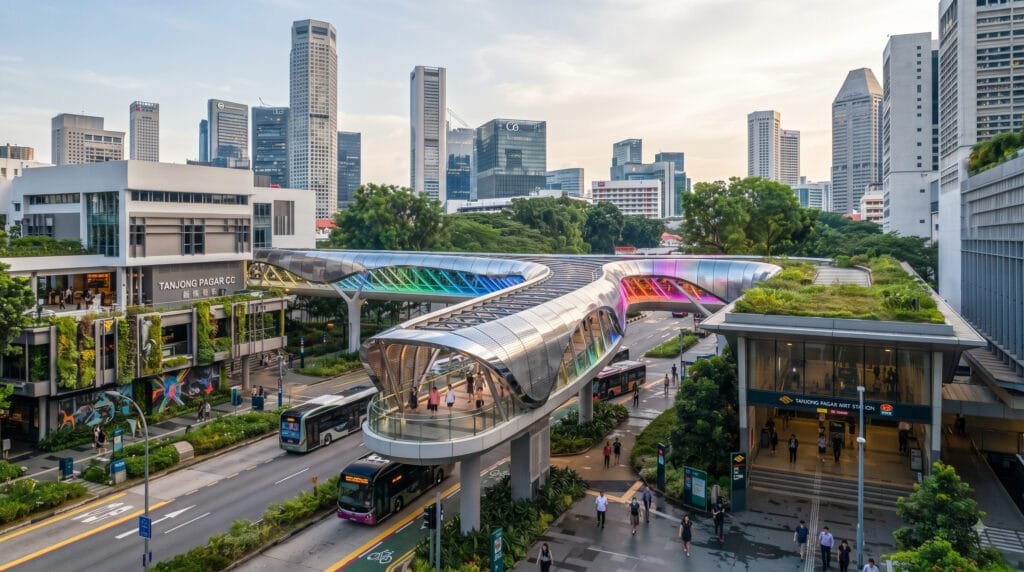
Table of Contents
1. Project Overview: Bridging Community and Transit
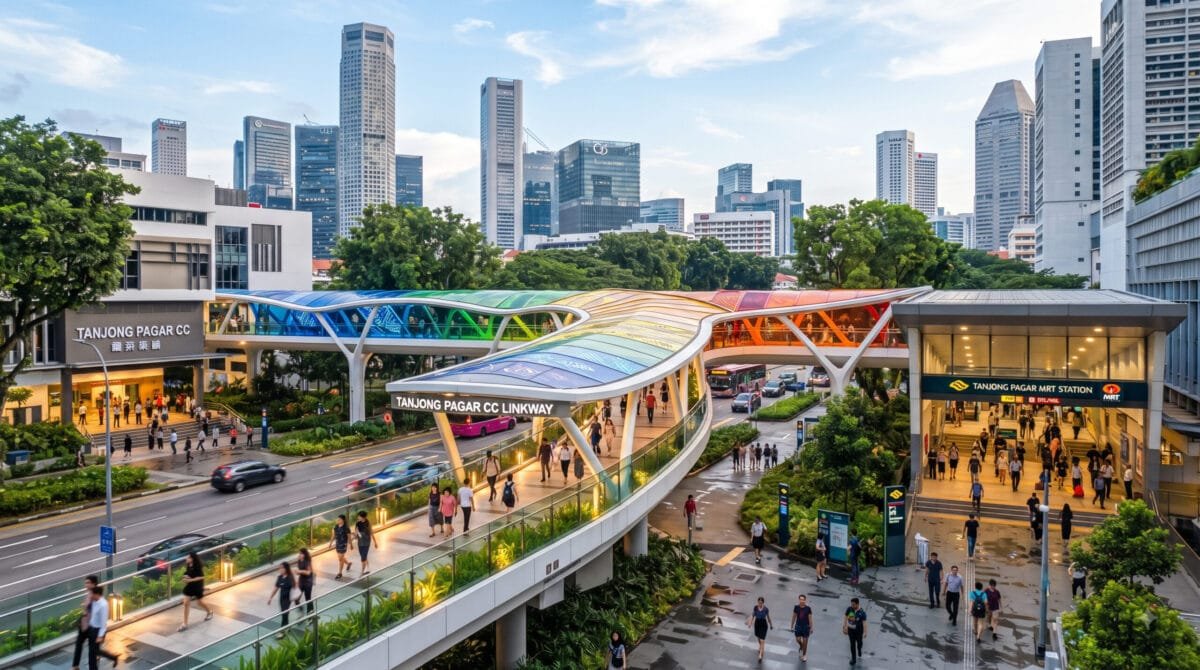
The core objective of this urban development initiative is to link the Tanjong Pagar Community Club (CC)—situated along Cantonment Road—directly to Exit A of the Tanjong Pagar Mass Rapid Transit (MRT) Station.
By creating a fully covered, weather-protected pedestrian thoroughfare, the project aims to eliminate the friction caused by tropical downpours and intense equatorial heat for daily commuters. Announced during a National Day dinner by district representatives such as Tanjong Pagar GRC MP Foo Cexiang, the scheme is structured to integrate tightly with surrounding residential and commercial complexes. Amazing Sheltered Linkway to Connect Tanjong Pagar CC to MRT Station
2. Benefiting Surrounding Developments and Residents
Infrastructure upgrades of this magnitude deliver immediate value to surrounding residents and commercial workers. Key housing and commercial estates that stand to gain enhanced accessibility include:
- The Pinnacle@Duxton: Thousands of residents residing in this iconic public housing development will enjoy seamless, protected walking routes toward the East-West Line transit network.
- Tanjong Pagar Plaza: Shoppers, diners, and local business patrons navigating the commercial flats and retail shops will experience improved pedestrian safety and comfort.
- Cantonment and Spottiswoode Enclaves: The initiative is designed to complement existing pedestrian networks, tying together multiple community nodes across older and newer residential pockets.
3. Engineering and LTA’s “Friendly Streets” Initiative
Designing pedestrian infrastructure within a dense, bustling historical district requires meticulous planning. The implementation of this linkway closely aligns with the Land Transport Authority’s (LTA) “Friendly Streets” initiative, which prioritizes inclusive mobility, walkability, and safety.
High-Clearance Crossings Across Major Thoroughfares
To ensure continuous shelter without disrupting vehicular flow or emergency services, the project incorporates specialized engineering requirements:
- Road Crossings: Plans outline the construction of high-clearance covered crossings spanning four key district thoroughfares: Yan Kit Road, Tanjong Pagar Road, Tras Street, and Peck Seah Street.
- Universal Design: In line with national accessibility standards, the pathways will cater smoothly to senior citizens, families with strollers, and individuals with physical mobility challenges. Amazing Sheltered Linkway to Connect Tanjong Pagar CC to MRT Station
4. Dual-Line Integration: East-West Line Meets Circle Line
A critical advantage of this upcoming linkway is how it nests into Singapore’s broader rail expansion strategy. The pathway will complement existing sheltered routes that connect the Spottiswoode and Cantonment residential zones to the newly operational Cantonment station on the Circle Line.
Once all phases of this network are finalized, commuters will enjoy fully sheltered, inclusive access bridging two major rapid transit pillars:
- Tanjong Pagar Station on the East-West Line (EWL)
- Cantonment Station on the Circle Line (CCL)
This dual-line integration significantly expands transit optionality for CBD workers and local residents alike, reducing reliance on feeder bus services for short neighborhood trips. Additional insights on nationwide public transit developments and infrastructure mapping can be found via The Straits Times.
Frequently Asked Questions
When will the sheltered linkway to connect Tanjong Pagar CC to MRT station be completed?
While official announcements indicate that construction will take a few years to come to fruition, authorities are currently advancing planning and architectural layouts to integrate seamlessly with the LTA’s Friendly Streets framework.
Which specific stations and locations will be connected?
The project will link the Tanjong Pagar Community Club on Cantonment Road directly to Exit A of the Tanjong Pagar MRT Station, incorporating high-clearance crossings over intermediate local roads.
How does this project support local residents and seniors?
The fully sheltered design protects pedestrians from extreme weather conditions, making daily commutes, visits to community club activities, and marketing trips safer and more accessible for seniors and families.
Conclusion
The announcement of a sheltered linkway to connect Tanjong Pagar CC to MRT station underscores Singapore’s continuous commitment to pedestrian-first urban design. By weaving together community facilities, high-density residential estates like The Pinnacle@Duxton, and multi-line rail connectivity, the project enhances both quality of life and commercial vibrancy in the heart of the city. As construction unfolds over the coming years, it will stand as a model of thoughtful, inclusive municipal development. Comprehensive urban tracking resources are also available through Urban Redevelopment Authority (URA).
Disclaimer
The information provided in this article—“Sheltered linkway to connect Tanjong Pagar CC to MRT station”—is for general informational, educational, and analytical purposes only and does not constitute formal urban planning, real estate, engineering, or legal advice.
The author, editorial team, and cfostimes.com are not affiliated with the Land Transport Authority (LTA) or any government agency. Project timelines, engineering specifications, and architectural plans discussed herein are subject to change based on official government announcements and municipal developments.
Readers should consult official government portals and transport authorities for up-to-date project updates. cfostimes.com assumes no responsibility or liability for any inaccuracies, omissions, or actions taken based on the information presented in this publication.

Dr. Dinesh Kumar Sharma is a CMA an award-winning Chief Financial Officer and Director of Finance with over 25 years of expertise in strategic planning and digital transformation. Recognized as a five-time CFO of the Year, he specializes in leveraging Generative AI and Microsoft Copilot to optimize financial forecasting and cost management. Dr. Sharma holds a Doctorate in Management (Finance) and has successfully scaled organizations from INR 1 billion to INR 7 billion. He is dedicated to providing transparent, data-driven insights for modern decision-makers at CFOs Times.