Agentic AI banking transformation is currently leading the most profound structural shift across global financial institutions, reshaping how corporate balance sheets, compliance frameworks, and everyday transactions operate. As traditional banking systems move past basic conversational interfaces, institutional lenders and fintech leaders are deploying autonomous digital co-workers capable of executing complex multi-step workflows with minimal human oversight. For enterprise executives, institutional investors, and financial analysts, understanding this leap from passive AI assistance to active transactional authority is crucial for evaluating long-term market positioning and operational efficiency.

Table of Contents
The Evolution from Conversational Chatbots to Autonomous Agents
For years, artificial intelligence in the financial sector was largely restricted to back-office text summarization, customer service chatbots, and rudimentary data tagging. However, the operational landscape has accelerated dramatically. agentic AI banking transformation
Core Drivers of the Agentic Shift
- Transactional Authority: Modern systems are stepping beyond mere recommendations, gaining the technical capacity to settle routine trades, onboard clients, and verify compliance under strict human supervision.
- Operational Scale: Tier-1 banking institutions are deploying autonomous frameworks enterprise-wide to handle multi-million-dollar verification processes and fraud investigations.
- Cost Efficiency: Automating high-friction, data-intensive tasks drastically reduces transaction times and operational expenditure across core banking operations.
Major global institutions are spearheading these deployments. For instance, financial giants like Goldman Sachs are developing autonomous agents powered by advanced large language models to streamline core trade accounting and client onboarding. Similarly, enterprise-wide deployments at institutions like Lloyds Banking Group are projected to yield massive capital savings by automating complex compliance and fraud investigations. To explore broader regulatory guidelines and international banking standards, financial professionals frequently consult resources published by the Bank for International Settlements and regulatory updates from the Financial Stability Board. agentic AI banking transformation
The Intersection of Agentic AI and Private Credit Markets
Another critical dimension driving modern financial markets is the concurrent expansion of private credit alongside automated underwriting ecosystems. As traditional bank lending remains constrained by tighter capital standards, private credit is rapidly reshaping a massive addressable funding market. agentic AI banking transformation
Synergies Between AI and Alternative Lending
- Streamlined Deal Sourcing: Autonomous data scrapers and machine-learning models evaluate thousands of data points to identify lucrative private debt opportunities instantly.
- Risk Monitoring: Real-time algorithmic oversight allows private funds to track borrower health metrics continuously, mitigating default risks before they materialize.
- Secondary Market Liquidity: The market for trading private deal stakes has surged to record volumes, supported by digital verification and transparent ledger technologies.
For comprehensive research on private market liquidity, deal secondaries, and global credit expansion, market participants frequently reference white papers from Evercore and market analyses by Bloomberg. agentic AI banking transformation

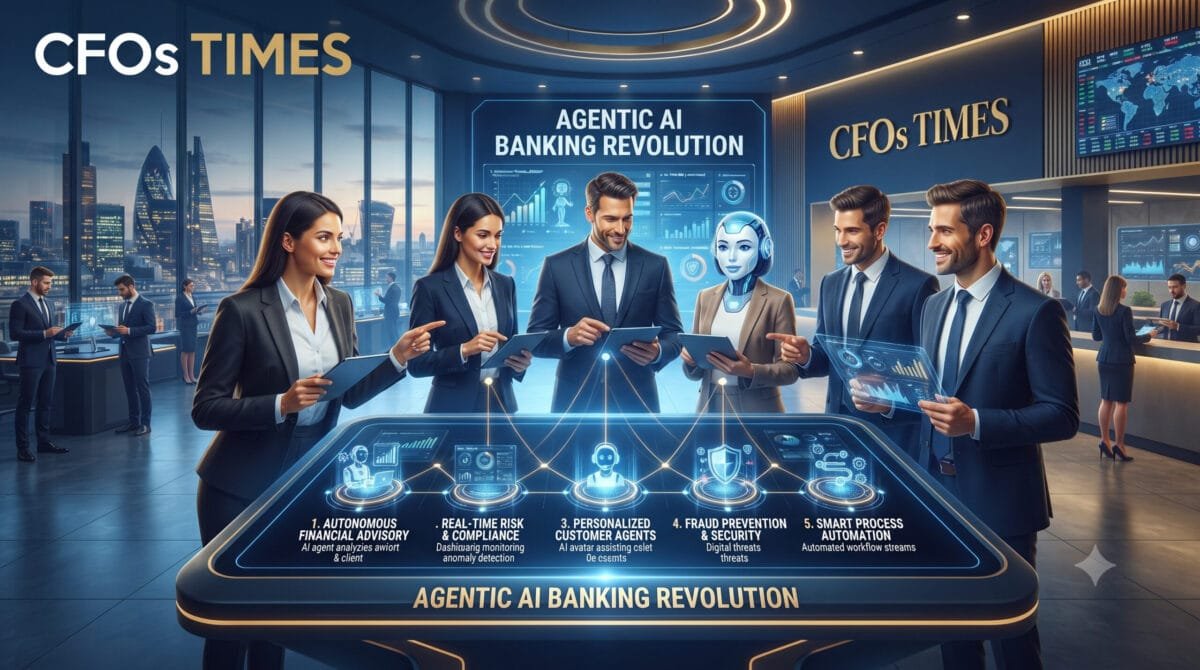
Comprehensive Pillar Analysis: 5 Critical Dimensions of Agentic Banking
To evaluate whether financial institutions can successfully capitalize on autonomous technologies, market participants must examine five distinct operational and strategic dimensions.
1. Autonomous Trade Settlement and Compliance
By delegating routine trade accounting and regulatory onboarding to autonomous digital workers, banks eliminate human bottlenecks and drastically shorten settlement windows.
2. Advanced Fraud Detection and Risk Mitigation
Agentic frameworks analyze anomalous transactional patterns in real time, executing complex multi-variable fraud investigations faster and more accurately than traditional rules-based engines.
3. Regulatory Scrutiny and Systemic Interconnections
As central banks and international regulators monitor the proliferation of autonomous execution models, financial institutions must maintain rigorous oversight frameworks to prevent systemic errors.
4. Human-in-the-Loop Governance
Successful deployments pair autonomous execution with strict human escalation protocols, ensuring that high-risk client exceptions and nuanced decisions remain under expert guidance.
5. Capital Allocation and Margin Expansion
Automating core administrative and compliance functions frees up vital capital and human talent, allowing institutions to redirect resources toward strategic advisory and high-margin client services. agentic AI banking transformation
Comparative Overview of Banking Technology Paradigms
Different technological eras in banking exhibit contrasting operational models, altering risk profiles and efficiency gains across financial institutions.
| Technology Era | Core Operational Mechanic | Primary Strategic Objective |
| Legacy Manual Processing | Paper-heavy, siloed human data entry and verification | Basic administrative record-keeping and ledger balancing |
| Generative AI Assistance | Conversational text generation and document summarization | Employee productivity enhancement and report drafting |
| Agentic AI Automation | Semi-autonomous execution of multi-step workflows and trades | End-to-end process automation, trade settlement, and compliance verification |
When analyzing agentic AI banking transformation, market experts recognize that moving from passive assistance to autonomous execution represents a fundamental structural advantage for early adopters. agentic AI banking transformation
Frequently Asked Questions
What is agentic AI in banking?
Agentic AI refers to advanced autonomous artificial intelligence systems capable of executing multi-step workflows, settling routine trades, and handling complex compliance checks with minimal human intervention.
How do autonomous agents differ from traditional banking chatbots?
While traditional chatbots only answer basic user queries or summarize text, agentic AI systems possess transactional authority to execute actions and manage end-to-end processes under supervision.
What are the primary risks associated with agentic banking systems?
Key risks include potential algorithmic errors, data quality vulnerabilities, and the regulatory need for robust human oversight to prevent systemic failures in financial settlements.
How does agentic AI impact bank operating margins?
By automating labor-intensive compliance, onboarding, and fraud investigation tasks, banks can significantly reduce operational costs and redeploy staff to high-value activities.
Conclusion-agentic AI banking transformation
The rapid deployment of autonomous systems marks a definitive turning point in modern financial technology. By embracing agentic AI banking transformation, forward-thinking institutions are redefining operational efficiency, risk management, and client service standards. As regulatory frameworks evolve and autonomous capabilities mature, execution across these strategic pillars will dictate competitive leadership in the global financial sector.
Disclaimer:
The insights, analyses, and strategic frameworks presented on cfostimes.com about agentic AI banking transformation are for informational and educational purposes only and do not constitute professional financial, legal, or investment advice. Global banking regulations, technology standards, and macroeconomic conditions are subject to rapid and continuous change. Enterprise leaders, institutional investors, and financial professionals should conduct independent due diligence, evaluate their organization’s specific risk profile, and consult with qualified advisors before making capital allocation or technological restructuring decisions. cfostimes.com assumes no responsibility or liability for any financial outcomes or operational consequences resulting from the application of information contained in this publication.

Dr. Dinesh Kumar Sharma is a CMA an award-winning Chief Financial Officer and Director of Finance with over 25 years of expertise in strategic planning and digital transformation. Recognized as a five-time CFO of the Year, he specializes in leveraging Generative AI and Microsoft Copilot to optimize financial forecasting and cost management. Dr. Sharma holds a Doctorate in Management (Finance) and has successfully scaled organizations from INR 1 billion to INR 7 billion. He is dedicated to providing transparent, data-driven insights for modern decision-makers at CFOs Times.