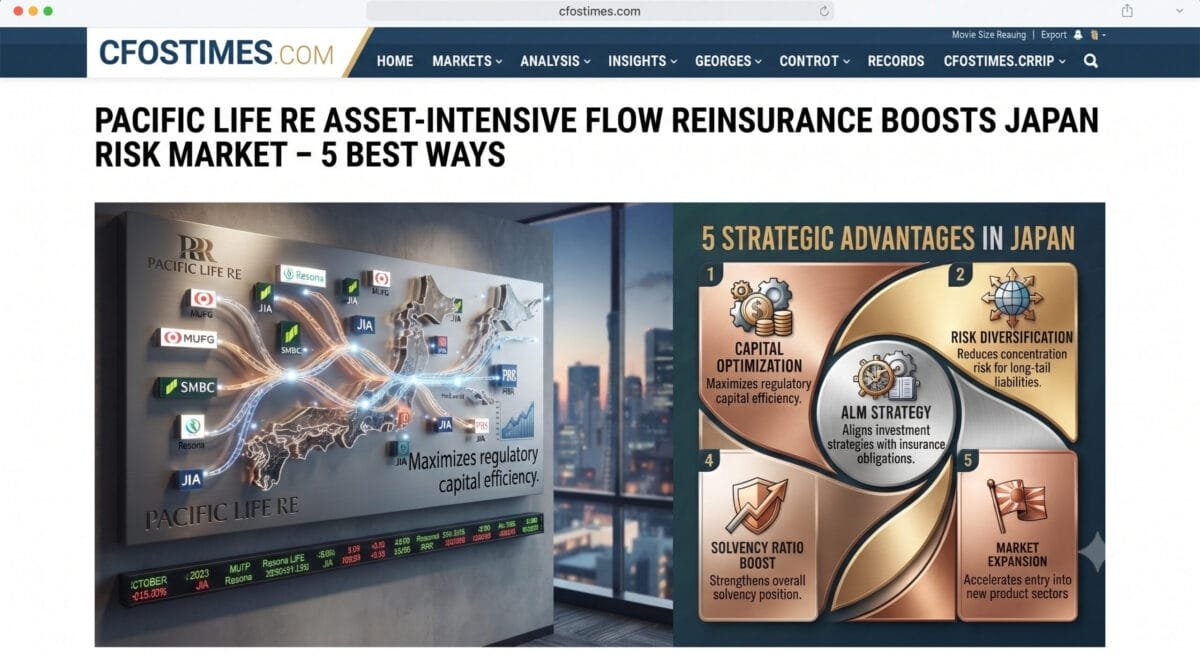
Pacific Life Re asset-intensive flow reinsurance solutions have achieved a major market milestone with the successful completion of a third landmark transaction in Japan. As global financial environments fluctuate and regulatory landscapes undergo sweeping transformations, Japanese life insurers are actively seeking sophisticated capital solutions to optimize balance sheets. This latest execution underscores Pacific Life Re’s growing dominance in managing complex whole-of-life liabilities, providing crucial risk transfer mechanisms that empower primary insurers to enhance product competitiveness and navigate stringent solvency requirements.
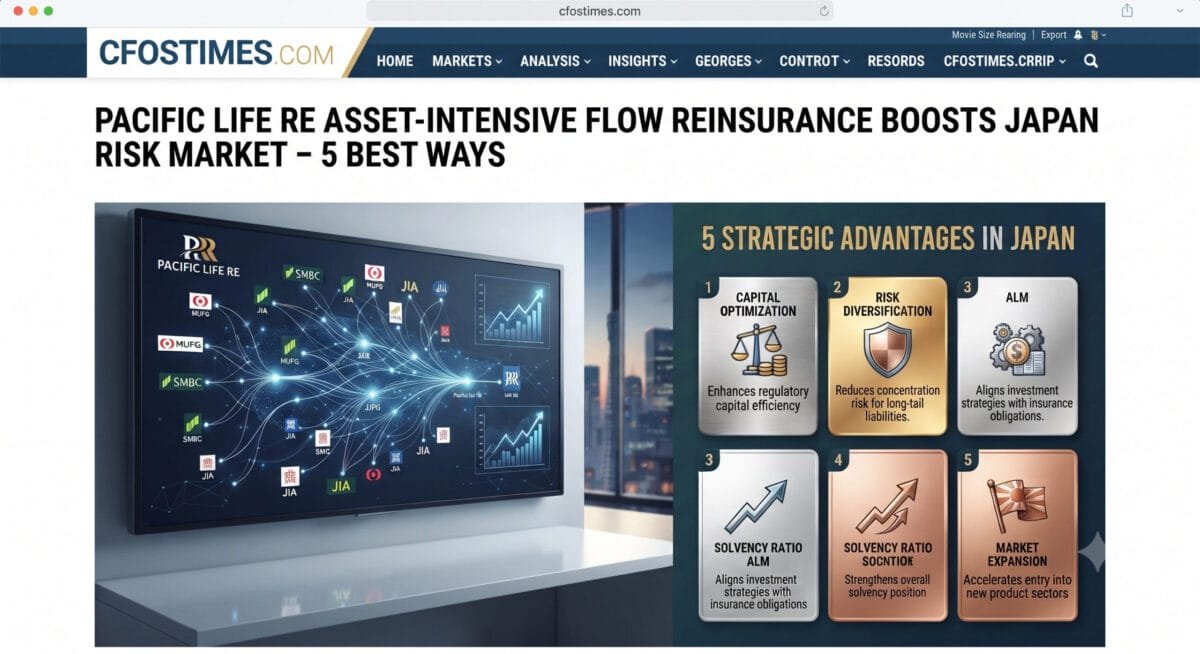
Table of Contents
The Evolving Japanese Reinsurance Landscape
Japan’s life insurance sector represents one of the largest and most mature markets globally, featuring trillions of dollars in in-force reserves. However, legacy portfolios carrying long-dated guarantees written during historical high-rate eras face unique pressures under modern economic parameters.
Core Drivers of Asset-Intensive Reinsurance
- Solvency Framework Evolution: The implementation of Japan’s economic value-based solvency regime, known as J-ICS, calibrates required capital against rigorous 1-in-200-year stress scenarios.
- Interest Rate Risk Mitigation: Primary insurers are aggressively pursuing risk-transfer options to protect portfolios from prolonged interest rate volatility and asset-liability mismatches.
- Capital Efficiency: Flow reinsurance structures allow ceding companies to manage capital dynamically, supporting ongoing, repeatable cessions rather than isolated balance-sheet cleanups.
Industry analysts estimate that asset-intensive block and flow life reinsurance transactions in Japan represent a massive addressable market, with projections pointing toward hundreds of billions of dollars in potential capacity over the coming years. To review international regulatory standards and global solvency guidelines, financial professionals frequently examine frameworks published by the International Monetary Fund and regulatory updates via the Financial Services Agency of Japan. Pacific Life Re asset-intensive flow reinsurance
Mechanics and Strategic Value of Flow Reinsurance
Unlike traditional lump-sum block transactions, flow reinsurance structures provide a continuous, scalable mechanism for primary insurers to cede new or existing blocks of whole-of-life liabilities over time. Pacific Life Re Asset-Intensive Flow Reinsurance
Key Advantages for Cedants
- Flexibility in Risk Exposure: Insurers gain immediate relief from capital strain, allowing them to free up resources for core business expansion and innovation.
- Enhanced Product Competitiveness: By offloading intensive asset-liability burdens, primary companies can design and market more attractive, sustainable products for policyholders.
- Operational Repeatability: Proven execution frameworks enable seamless integration between global reinsurers and local Japanese life insurance partners, reducing administrative friction.
When structuring these complex cross-border agreements, global professional services firms play a vital advisory role. For comprehensive research on global reinsurance trends and credit rating evaluations, market participants routinely reference data from AM Best and reports by Standard & Poor’s. Pacific Life Re asset-intensive flow reinsurance
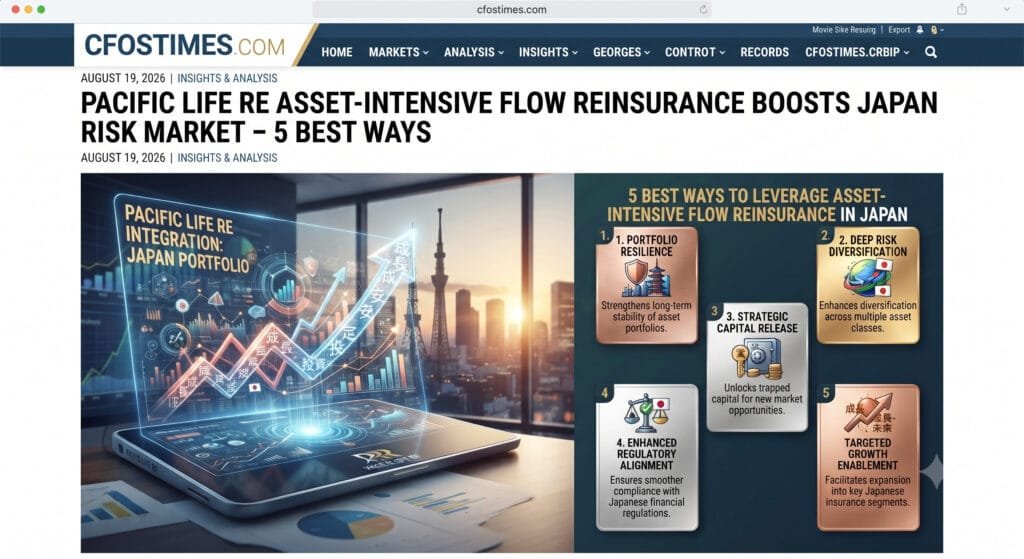
Comprehensive Pillar Analysis: 5 Dimensions of Japan’s Reinsurance Expansion
To fully grasp the significance of Pacific Life Re’s strategic footprint in East Asia, industry observers must examine five vital operational dimensions. Pacific Life Re asset-intensive flow reinsurance
1. Advanced Capital Optimization Frameworks
Asset-intensive reinsurance bridges the gap between long-term insurance liabilities and matching asset portfolios, ensuring stable solvency ratios under rigorous economic value regimes.
2. Deepening Local Market Partnerships
Building trust and long-term relationships with leading Japanese life insurers requires responsive, partner-centric operational models tailored to local market nuances.
3. Scalable Execution Capabilities
The ability to transition smoothly from initial block transactions to repeatable flow structures demonstrates sophisticated underwriting, actuarial precision, and robust operational readiness.
4. Supporting Policyholder Value
Ultimately, transferring complex interest rate and longevity risks enables primary insurers to maintain financial strength, ensuring that multi-decade policyholder promises are securely honored.
5. Cross-Border Legal and Structural Precision
Executing multi-party transactions involving international legal counsel—such as support from global firms like Debevoise & Plimpton—ensures strict regulatory compliance across jurisdictions. Pacific Life Re asset-intensive flow reinsurance
Comparative Overview of Reinsurance Structures
Different risk-transfer models offer distinct advantages depending on an insurer’s balance sheet objectives and capital goals.
| Reinsurance Model | Core Structural Mechanic | Primary Strategic Objective |
| Traditional Quota Share | Proportional ceding of mortality/morbidity risk | Capital relief on underwriting margins and peak risk reduction |
| Asset-Intensive Flow | Ongoing, repeatable cessions of whole-of-life reserves | Dynamic asset-liability management and interest rate risk mitigation |
| Block Assumption Reinsurance | One-time portfolio transfer of legacy in-force liabilities | Comprehensive balance sheet de-risking and capital restructuring |
When evaluating Pacific Life Re asset-intensive flow reinsurance strategies, market experts recognize that continuous flow formats provide superior long-term adaptability compared to static legacy transfers. Pacific Life Re asset-intensive flow reinsurance
Frequently Asked Questions
What is asset-intensive flow reinsurance?
It is a specialized reinsurance structure where a primary insurer cedes ongoing blocks of long-term liabilities—such as whole-of-life policies—alongside matching assets to a reinsurer, enabling continuous capital relief.
Why is the Japanese reinsurance market expanding rapidly?
New economic value-based solvency regulations, such as J-ICS, require higher capital calibrations for long-dated guarantees, prompting insurers to seek offshore risk transfer solutions.
How do policyholders benefit from these transactions?
By optimizing capital and reducing long-term interest rate exposure, primary insurers can offer more competitive, stable, and sustainable insurance products to consumers.
What distinguishes flow transactions from block transactions?
While block transactions involve a one-time transfer of an existing static portfolio, flow structures enable ongoing, repeatable cessions over time, offering greater operational flexibility. Pacific Life Re asset-intensive flow reinsurance
Conclusion
The successful execution of Pacific Life Re’s latest milestone highlights the growing maturation and sophistication of Japan’s life insurance risk market. By leveraging Pacific Life Re asset-intensive flow reinsurance capabilities, Japanese insurers are uniquely positioned to optimize their product portfolios, meet stringent regulatory demands, and safeguard long-term policyholder commitments. As cross-border financial collaboration deepens, these innovative risk-transfer mechanisms will remain central to modern corporate finance and insurance stability.
Disclaimer:
The insights, analyses, and strategic overviews presented on cfostimes.com about Pacific Life Re asset-intensive flow reinsurance are for informational and educational purposes only and do not constitute professional financial, legal, or investment advice. Global reinsurance markets, regulatory solvency frameworks, and macroeconomic conditions are subject to continuous evolution. Enterprise leaders, institutional investors, and insurance professionals should conduct independent due diligence and consult with qualified advisors before engaging in corporate restructuring, capital allocation, or reinsurance transactions. cfostimes.com assumes no liability for any financial outcomes resulting from the application of information contained in this publication.

Dr. Dinesh Kumar Sharma is a CMA an award-winning Chief Financial Officer and Director of Finance with over 25 years of expertise in strategic planning and digital transformation. Recognized as a five-time CFO of the Year, he specializes in leveraging Generative AI and Microsoft Copilot to optimize financial forecasting and cost management. Dr. Sharma holds a Doctorate in Management (Finance) and has successfully scaled organizations from INR 1 billion to INR 7 billion. He is dedicated to providing transparent, data-driven insights for modern decision-makers at CFOs Times.