
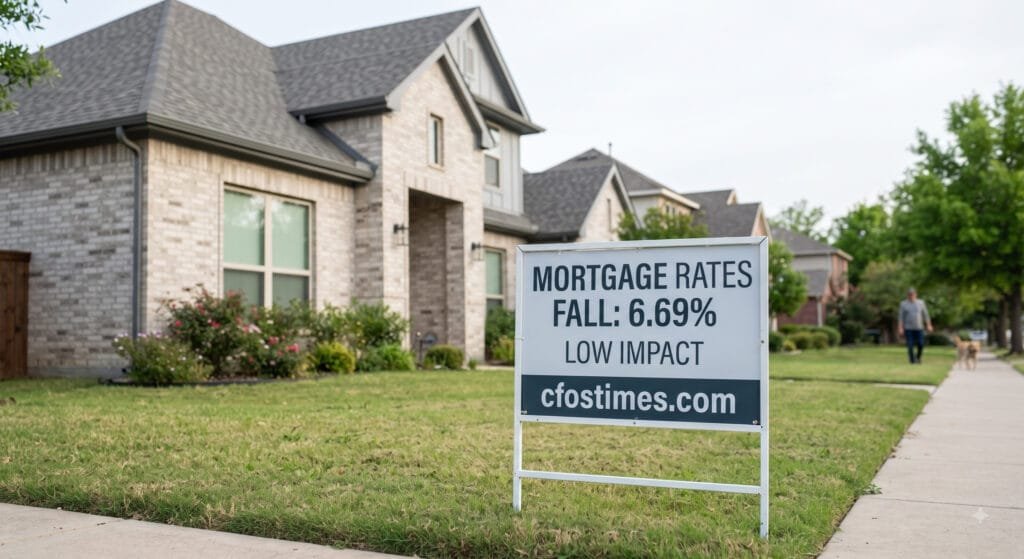
Mortgage rates fell to 6.69% mark represents a welcome psychological and financial breathing room for prospective homebuyers and residential real estate investors navigating an otherwise restrictive borrowing environment. As macroeconomic shifts ripple through bond markets and central banking policies continue to evolve, understanding the underlying drivers of these fluctuations is critical for managing real estate portfolios. This historic movement breaks a multi-week upward streak, sparking renewed interest across primary purchase and refinancing channels.

Table of Contents
The Macroeconomic Mechanics Behind Housing Market Shifts
The broader economic framework governing residential lending is directly tied to fixed-income movements, inflation reports, and Federal Reserve policy expectations. Long-term home loans traditionally track the trajectory of the 10-year Treasury yield, which serves as the foundational benchmark for institutional lenders.
Core Drivers of Recent Rate Adjustments
- Bond Yield Fluctuations: As 10-year Treasury yields ease from previous multi-month highs, primary lenders gain the flexibility to compress retail loan pricing.
- Inflation Moderation: Incremental cooling in consumer price indices helps anchor long-term inflation expectations, reducing the term premium demanded by bond investors.
- Housing Affordability Pressures: Sustained periods of elevated borrowing costs previously slowed down existing-home sales, pushing market participants to respond sensitively to even minor downward ticks.
When analyzing how mortgage rates fell to 6.69%, financial analysts examine the correlation between bond market liquidity and consumer borrowing behavior. These adjustments dictate whether prospective buyers re-enter the housing market or continue holding out for deeper monetary easing. To evaluate broader monetary policy frameworks and macroeconomic indicators, market professionals regularly consult data published by the Federal Reserve Bank of St. Louis and the Federal Housing Finance Agency. Mortgage Rates Fell To 6.69%
Strategic Implications for Homebuyers and Refinancing
A downward movement in long-term lending benchmarks alters the financial calculus for both new purchasers and current homeowners evaluating debt restructuring options.
Key Evaluation Metrics for Borrowers
- Monthly Payment Optimization: Even a fractional reduction in interest rates translates to significant savings on principal and interest obligations over a standard 30-year amortization schedule.
- Refinance Viability Windows: Homeowners locked into higher rates during previous quarters actively monitor these dips to determine if refinancing points and closing fees justify restructuring existing debt.
- Purchasing Power Expansion: Lower borrowing costs expand maximum loan eligibility thresholds, providing buyers with increased flexibility across competitive regional housing markets.
When mortgage rates fell to 6.69%, savvy market participants look beyond headline averages to evaluate total annual percentage rates (APRs) and lender fee structures. For authoritative updates on national housing finance trends and lending standards, analysts frequently review resources provided by Freddie Mac. Mortgage Rates Fell To 6.69%
Comparative Analysis of Loan Structures
Navigating current residential debt markets requires comparing traditional 30-year fixed loans against alternative amortization terms and specialized financing vehicles.
| Loan Product Category | Average Interest Rate | Key Strategic Consideration |
| 30-Year Fixed-Rate Mortgage | ~6.69% | Provides long-term payment stability and predictable budgeting |
| 15-Year Fixed-Rate Mortgage | ~5.96% | Offers accelerated equity accumulation with higher monthly payments |
| Adjustable-Rate Mortgages (ARMs) | Variable | Lower initial rates with future exposure to benchmark interest rate resets |
When mortgage rates fell to 6.69%, borrowers must weigh the stability of fixed-rate structures against the potential short-term savings of alternative loan products. Careful alignment with personal cash flow projections ensures sustainable debt management across varying economic cycles.
Frequently Asked Questions
What does it mean when mortgage rates fell to 6.69%?
It signals a temporary easing in long-term bond yields and lending costs, providing a brief window of improved affordability for residential property buyers and refinancers.
How do 15-year fixed loans compare to 30-year options during rate dips?
15-year fixed mortgages typically offer lower interest rates than 30-year loans, though they require higher monthly payments due to the condensed repayment schedule.
Should homeowners refinance immediately when rates drop slightly?
Homeowners should calculate their break-even point by comparing closing costs and lender fees against total monthly interest savings before initiating a refinance.
Conclusion
The recent environment where mortgage rates fell to 6.69% highlights the dynamic interplay between fixed-income markets and residential real estate affordability. While minor rate contractions offer valuable relief, prospective buyers and homeowners must maintain a disciplined, analytical approach to debt management, balancing short-term market movements against long-term financial objectives.
Disclaimer:
The insights, analyses, and strategic frameworks presented on cfostimes.com are for informational and educational purposes only and do not constitute professional financial, legal, or investment advice. Global macroeconomic conditions, central bank policies, and financial markets are subject to rapid and continuous change. Enterprise leaders, corporate treasurers, and financial professionals should conduct independent due diligence, evaluate their organization’s specific risk profile, and consult with qualified advisors before making capital allocation, debt restructuring, or strategic investment decisions. cfostimes.com assumes no responsibility or liability for any financial outcomes or operational consequences resulting from the application of information contained in this publication.

Dr. Dinesh Kumar Sharma is a CMA an award-winning Chief Financial Officer and Director of Finance with over 25 years of expertise in strategic planning and digital transformation. Recognized as a five-time CFO of the Year, he specializes in leveraging Generative AI and Microsoft Copilot to optimize financial forecasting and cost management. Dr. Sharma holds a Doctorate in Management (Finance) and has successfully scaled organizations from INR 1 billion to INR 7 billion. He is dedicated to providing transparent, data-driven insights for modern decision-makers at CFOs Times.









3 thoughts on “Why Mortgage Rates Fell To 6.69% For The First Time In 6 Weeks”