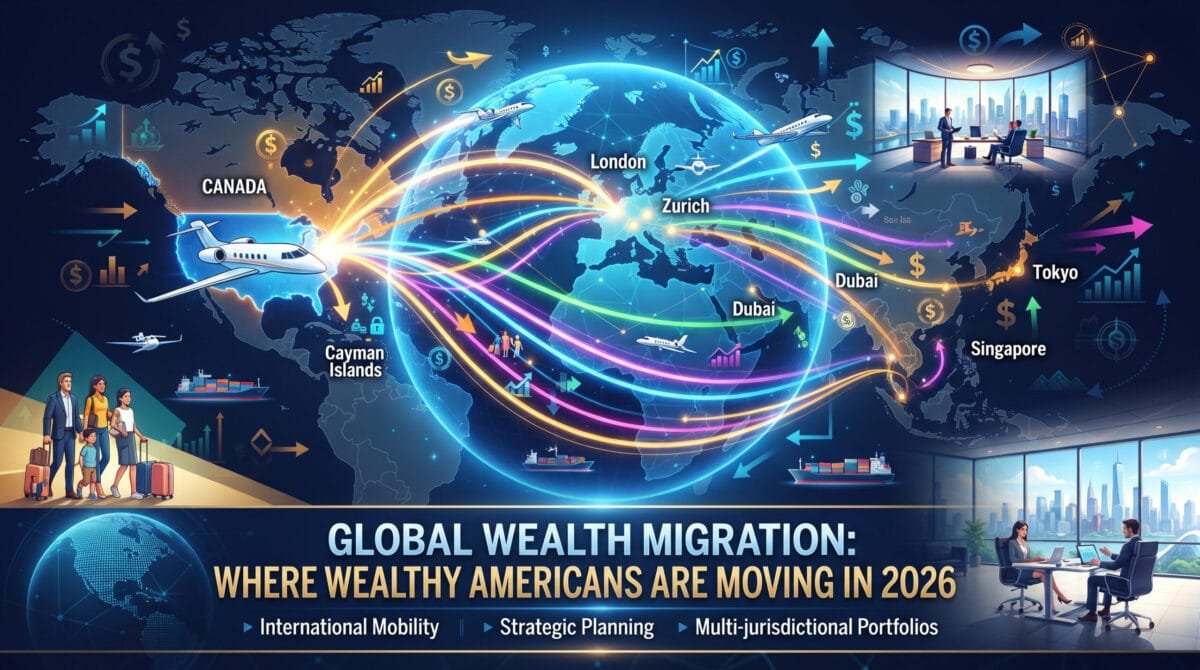
Introduction-Why and where wealthy Americans are moving
Discover why and where wealthy Americans are moving in 2026. Explore international wealth migration trends, global mobility portfolios, and top offshore destinations.
For affluent Americans, moving abroad is rarely about packing suitcases and leaving the country behind forever. Instead, it represents strategic optionality, risk mitigation, and lifestyle flexibility. As global dynamics evolve, flexibility has become a foundational component of modern wealth management and international mobility.
The United States has emerged as the largest source market for residence and citizenship planning at Henley & Partners, a leading global investment migration consultancy. Application volumes roughly doubled in 2025 and continue to remain at elevated heights. Yet, the more compelling narrative lies behind what these statistics represent: affluent U.S. citizens are not seeking a single destination to replace their home country. Rather, they are deliberately expanding the number of jurisdictions where they can live, work, invest, and spend their time.

Understanding this phenomenon requires a deep dive into the underlying drivers compelling affluent families to look beyond domestic borders, as well as the specific international jurisdictions capturing this outbound capital. Comprehensive data and global wealth tracking reports from organisations such as Henley & Partners
and insightful market analysis via Forbes illuminate the structural shifts defining private capital movement today.
Table of Contents
1. The Shifting Mindset: Why Wealthy Americans Are Re-Evaluating Home
The acceleration of outbound wealth migration inquiries from U.S. high-net-worth households is driven by several compounding factors. Rather than acting on impulsive reactions to short-term news cycles, wealthy families make strategic decisions that outlast individual political terms. Several core concerns shape their decision-making process:
- Fiscal Pressures and National Debt: Persistent federal budget deficits, escalating interest costs on national debt, and potential adjustments to estate and income tax frameworks create long-range tax anxiety. Families managing generational wealth are increasingly concerned about future tax exposure.
- Political Polarization and Policy Volatility: Shifting regulatory environments and polarized political climates cause long-term planning friction for entrepreneurs, venture capitalists, and family office executives.
- The Rise of the “Sovereign Portfolio”: Much like institutional portfolio managers diversifying asset classes to mitigate risk, wealthy families are constructing multi-jurisdictional frameworks. By combining residence rights, secondary citizenships, offshore banking, and global business interests, they insulate their estates from localized shocks.
2. Where Wealthy Americans Are Moving: Top Global Destinations
As affluent U.S. citizens seek greater global optionality, specific regions have positioned themselves as premier magnets for international capital, lifestyle enhancement, and asset protection. Why and where wealthy Americans are moving
Southern Europe and the Mediterranean
European jurisdictions offering favorable residency-by-investment frameworks continue to attract considerable American interest.
- Spain: Renowned for its Mediterranean climate, exceptional global connectivity, and vibrant coastal communities, Spain remains a top destination for Americans establishing a European lifestyle foothold.
- Italy: Italy’s structured tax regime for new residents—offering a flat charge on foreign income alongside exemptions from foreign wealth taxes—has proven highly resilient, drawing affluent families seeking regulatory predictability. Additional European mobility trends and data are regularly updated by advisory bodies like Immigrant Invest. Why and where wealthy Americans are moving
The Dynamic Gulf and the UAE
The Middle East, spearheaded by the United Arab Emirates, has established itself as an epicenter for internationally mobile wealth. Driven by business-friendly policies, state-of-the-art infrastructure, zero personal income tax incentives, and robust safety measures, Dubai and broader Gulf cooperation council nations capture substantial inflows of global millionaires. Why and where wealthy Americans are moving
Asia-Pacific Havens: New Zealand and Singapore
For technology entrepreneurs and venture capitalists—particularly from hubs like California—the Asia-Pacific region offers unique appeal. New Zealand combines English-speaking infrastructure, dramatic outdoor landscapes, and geographic isolation from northern hemisphere geopolitical flashpoints, making it an ideal destination for dual-residence planning. Meanwhile, Singapore remains a gold standard for wealth structuring, transparent governance, and capital market efficiency. Why and where wealthy Americans are moving

3. Domestic Migration: Moving Within U.S. Borders
It is important to note that international relocation is only one facet of the equation. A massive volume of domestic wealth migration continues to reshape the American map. High-net-worth individuals and successful businesses continue to vote with their feet by relocating from high-tax, densely regulated states (such as New York, California, and Illinois) to low-tax or zero-income-tax jurisdictions.
States offering business-friendly regulations, favorable property tax structures, and pro-growth environments—such as Texas, Florida, Nevada, Tennessee, and Wyoming—continue to absorb billions of dollars in domestic capital and executive talent. Why and where wealthy Americans are moving
Frequently Asked Questions-Why and where wealthy Americans are moving
Why are wealthy Americans exploring international relocation?
Affluent Americans are increasingly diversifying their residence and citizenship options to hedge against domestic fiscal pressures, potential tax reforms, regulatory shifts, and political polarization, thereby creating long-term family security.
What is a “sovereign portfolio” in wealth management?
A sovereign portfolio refers to the modern strategy employed by high-net-worth families who diversify their lives across multiple jurisdictions—holding residence in one country, citizenship in another, and business assets elsewhere—to maximize legal and financial resilience.
Which international regions are most popular for U.S. expatriates?
European residency and citizenship programs capture nearly half of all U.S. demand, followed closely by Latin American and Caribbean options, alongside dynamic hubs in the Middle East and Asia-Pacific.
Conclusion
The active relocation patterns of affluent Americans reflect a fundamental shift in how private wealth views security and opportunity. Driven by the desire for legal redundancy, tax optimization, and lifestyle flexibility, wealthy families are moving beyond traditional domestic boundaries. Whether relocating within the United States to business-friendly states or establishing global sovereign portfolios across Europe, the Gulf, and the Asia-Pacific, modern capital mobility is defined by strategic diversification. Navigating these complex waters requires careful coordination with international tax, legal, and estate planning professionals. Why and where wealthy Americans are moving
Disclaimer
The information provided in this article—“1 Ultimate Guide: Why and Where Wealthy Americans Are Moving”—is for general informational, educational, and analytical purposes only and does not constitute formal financial, tax, legal, or immigration advice.
The author, editorial team, and cfostimes.com are not registered financial advisors, immigration lawyers, or tax consultants. Global tax laws, immigration policies, and residency-by-investment frameworks change frequently. Readers should conduct their own independent research and consult with qualified, licensed professionals before making any international relocation, investment, or estate planning decisions. cfostimes.com assumes no responsibility or liability for any financial or legal consequences arising directly or indirectly from the use of this publication.

Dr. Dinesh Kumar Sharma is a CMA an award-winning Chief Financial Officer and Director of Finance with over 25 years of expertise in strategic planning and digital transformation. Recognized as a five-time CFO of the Year, he specializes in leveraging Generative AI and Microsoft Copilot to optimize financial forecasting and cost management. Dr. Sharma holds a Doctorate in Management (Finance) and has successfully scaled organizations from INR 1 billion to INR 7 billion. He is dedicated to providing transparent, data-driven insights for modern decision-makers at CFOs Times.









1 thought on “Why and where wealthy Americans are moving in 2026”