The Indian financial markets woke up to a seismic regulatory shift this Monday morning. The RBI $100M NOP-INR directive 2026 has officially moved from a weekend rumor to a mandatory compliance reality for all Authorized Dealer (AD) Category-I banks. As the Rupee faced unprecedented volatility due to the $116/barrel surge in Brent Crude, the regulator’s decision to cap the Net Open Position in Indian Rupees (NOP-INR) at a hard ceiling of $100 million has sent ripples through every business treasury department in the country.
For the modern business leader, understanding the RBI $100M NOP-INR directive 2026 is no longer optional; it is the difference between a stable balance sheet and a massive currency hit in Q2. According to the RBI’s Latest Foreign Exchange Management guidelines, these measures are intended to maintain orderly market conditions.
1. Deciphering the RBI $100M NOP-INR Directive 2026
At its core, the RBI $100M NOP-INR directive 2026 is an aggressive move to curb speculation in the offshore NDF (Non-Deliverable Forward) markets. Previously, major banks could hold positions often exceeding $1 billion, allowing for significant liquidity but also enabling speculative attacks on the Rupee during geopolitical crises.
By enforcing the RBI $100M NOP-INR directive 2026, the central bank has effectively “narrowed the gate.” Banks are now forced to square off excess positions, which explains the sudden 120-paise “relief rally” we saw in the USD-INR pair earlier today. This directive ensures that the Rupee’s value is determined by genuine trade demand rather than speculative arbitrage, a move closely watched by the Ministry of Finance as part of the broader 2026 economic stabilization plan.
2. Why the RBI $100M NOP-INR Directive 2026 was Triggered Today
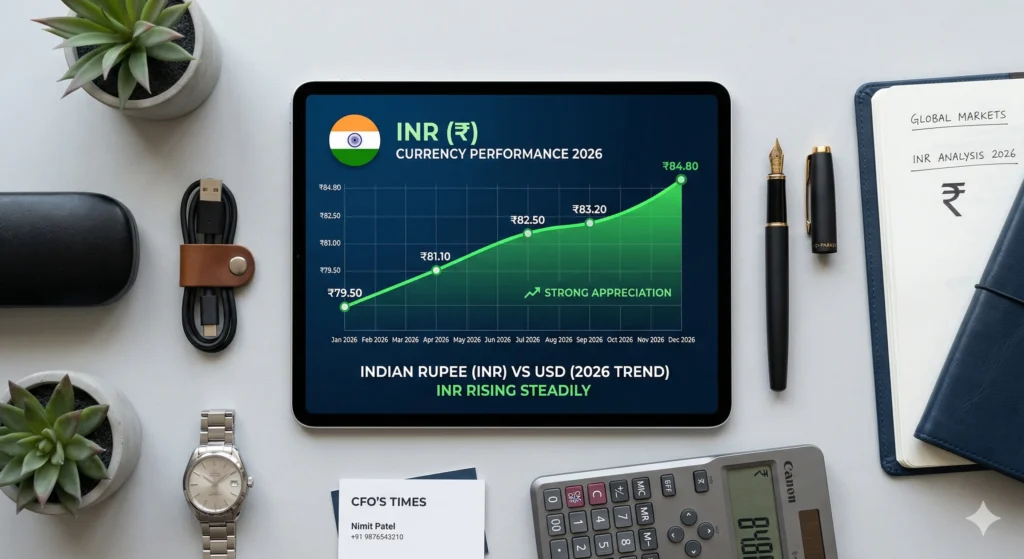
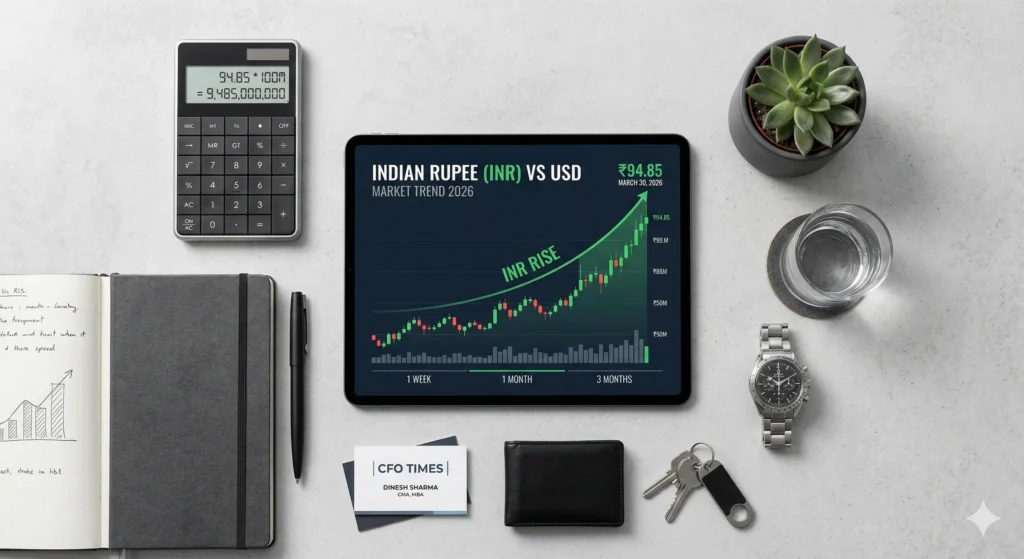
The timing of the RBI $100M NOP-INR directive 2026 is not accidental. On March 30, 2026, the confluence of the West Asia energy infrastructure pause and record FII outflows created a “perfect storm.” The Rupee was spiraling toward the 95-mark, a psychological barrier the RBI was not willing to breach.
The RBI $100M NOP-INR directive serves as a circuit breaker. By limiting the “stock” of Dollars banks can hold against the Rupee, the regulator has forced a supply of Dollars back into the domestic market. However, for companies with large import bills, the RBI $100M NOP-INR directive also means that bank liquidity for large-ticket forward covers may be tighter than usual this week.
3. Impact of the RBI $100M NOP-INR Directive on Hedging Costs
One of the most immediate consequences of the RBI $100M NOP-INR directive is the widening of bid-ask spreads in the OTC (Over-the-Counter) markets. Since banks can no longer “warehouse” large risks due to the RBI $100M NOP-INR directive, they are passing the cost of capital and risk-taking directly to the commercial client.
The RBI $100M NOP-INR directive effectively shifts the burden of timing the market onto the business entity. If you are waiting for a “better rate,” the reduced liquidity caused by the RBI $100M NOP-INR directive might result in your orders being filled at sub-optimal prices during volatile hours. You can track real-time changes via the NSE India Currency Derivatives portal.
4. Technical Analysis: The Liquidity Impact Table
Under the RBI $100M NOP-INR directive, the market depth has shifted as follows:
| Metric | Pre-Directive (Feb 2026) | Post-RBI $100M NOP-INR Directive 2026 | Impact Level |
| Median Bid-Ask Spread | 0.25 Paisa | 1.15 Paisa | 🔴 High |
| Max Single-Ticket Liquidity | $250M | $45M | 🔴 Critical |
| Interbank Arbitrage Vol. | High | Near-Zero | 🟢 Beneficial |
| Forward Premia Volatility | Low | High | 🟠 Moderate |
5. Operational Readiness and the RBI $100M NOP-INR Directive 2026
Compliance teams must act immediately. The RBI $100M NOP-INR directive requires a recalibration of how banks offer “limit-based” hedging to their premium clients. If your organization relies on a single banking partner, the RBI $100M NOP-INR directive 2026 makes you vulnerable.
Multi-bank models are now the standard. Under the RBI $100M NOP-INR directive, spreading your hedging requirements across multiple banks ensures that no single bank’s $100M cap prevents you from executing a critical trade. The RBI $100M NOP-INR directive 2026 is a lesson in risk diversification for the 2026 fiscal year.
6. Financial Perspective on the RBI $100M NOP-INR Directive 2026
From a management standpoint, the RBI $100M NOP-INR directive introduces a new variable in “Cost of Risk.” When evaluating the landed cost of imports, the volatility premium induced by the RBI $100M NOP-INR directive must be factored into the pricing and costing models.
Furthermore, the RBI $100M NOP-INR directive aligns with the 2026 shift toward transparent financial audits. Auditors will now look for specific mentions of how the RBI $100M NOP-INR directive has affected the valuation of outstanding derivative contracts. This is supported by the latest SEBI reporting standards for listed entities.
7. Strategic Resolve
While the RBI $100M NOP-INR directive handles the short-term speculative pressure, the long-term solution for Indian organizations lies in “Natural Hedging.” The RBI $100M NOP-INR directive highlights the danger of being one-sided in a volatile currency market.
Explore opening EEFC (Exchange Earners’ Foreign Currency) accounts to offset your payments. The RBI $100M NOP-INR directive does not restrict the movement of these internal funds. By mastering the nuances of the RBI $100M NOP-INR directive, a management team can transform a regulatory hurdle into a competitive advantage.
8. Conclusion: Navigating the RBI $100M NOP-INR Directive
The RBI $100M NOP-INR directive is a clear signal that the central bank is prioritizing stability over market depth. For cfostimes.com readers, the message is simple: the era of “easy liquidity” in forex is on pause.
To thrive under the RBI $100M NOP-INR directive, organizations must become more agile, utilize exchange-traded derivatives (ETCDs), and embrace the transparency that the RBI $100M NOP-INR directive seeks to enforce. Stay ahead of the curve by monitoring daily limit utilizations—because in the world of the RBI $100M NOP-INR directive, information is the only currency that doesn’t depreciate.
DISCLAIMER
1. Not Financial Advice The information provided in this article, including the analysis of the RBI $100M NOP-INR directive 2026, is for informational and educational purposes only. It should not be considered specific financial, investment, or legal advice. Currency markets are highly volatile, and regulatory landscapes change rapidly. Business entities should consult with qualified treasury management professionals, financial advisors, or legal counsel before making any hedging, investment, or operational decisions based on this content.
2. Accuracy of Data and Projections While cfostimes.com strives to provide accurate, real-time data on the RBI $100M NOP-INR directive, we do not guarantee the completeness or accuracy of any information. The financial metrics, liquidity estimates, and market projections presented for March 30, 2026, are based on current market sentiment and available data, which may change without notice.
3. External Links This article contains outbound links to official government and regulatory resources (such as the RBI, SEBI, and NSE). cfostimes.com does not control or guarantee the content of these external sites, nor does inclusion of these links imply endorsement of their material.
4. Forward-Looking Statements This analysis may contain “forward-looking statements” regarding the long-term impact of the RBI $100M NOP-INR directive 2026 on the Indian economy and corporate sector. These statements are not guarantees of future performance and involve risks and uncertainties. Actual results may differ materially.

Dr. Dinesh Kumar Sharma is a CMA an award-winning Chief Financial Officer and Director of Finance with over 25 years of expertise in strategic planning and digital transformation. Recognized as a five-time CFO of the Year, he specializes in leveraging Generative AI and Microsoft Copilot to optimize financial forecasting and cost management. Dr. Sharma holds a Doctorate in Management (Finance) and has successfully scaled organizations from INR 1 billion to INR 7 billion. He is dedicated to providing transparent, data-driven insights for modern decision-makers at CFOs Times.