The global technology workforce is navigating an aggressive, structurally profound transformation. For enterprise executives, financial strategists, and technology professionals alike, monitoring the real-time patterns of AI role replacement in IT sector 2026 has evolved into a mandatory board-level directive.
The historical era of software service conglomerates trimming headcount merely to normalize “pandemic over-hiring” has completely concluded. In 2026, the global corporate ecosystem is steering through an unprecedented, deliberate reallocation of operational capital. Forward-thinking technological giants are actively flattening intermediate workforce layers to unlock massive liquidity for specialized graphics processing units (GPUs), accelerated high-performance computing clusters, and autonomous agentic system frameworks.
According to consolidated data compiled by global workforce intelligence portals, global tech layoffs have reached a staggering milestone in the first half of 2026. Yet, unlike typical macroeconomic downturns, corporate regulatory disclosures reveal that these organizations are simultaneously generating record-breaking revenues and robust operating margins. The underlying truth of AI role replacement in IT sector 2026 is not an industry contraction, but a permanent structural decoupling of human headcount from corporate production capacity. This detailed pillar post analyzes exactly which traditional positions are dissolving, where enterprise infrastructure budgets are shifting, and how professionals can structurally insulate their technical careers in an era dominated by automated software models.
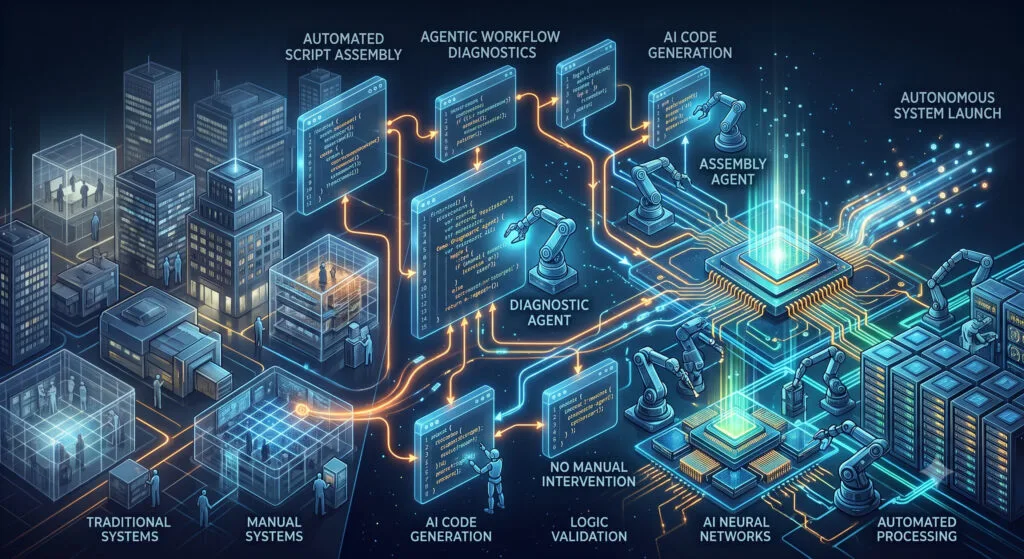
Table of Contents
1. The Operational Numbers: Deconstructing the 2026 Tech Realignment
To evaluate the true velocity of AI role replacement in IT sector 2026, financial leaders must scrutinize the raw statutory data released by global enterprise giants over the last two quarters. The data proves that large-cap tech organizations are rapidly installing automated processing architectures as their baseline operating layer.
Global Corporate Resizing Trends
The magnitude of this ongoing structural overhaul spans the entire geography of software integration, telecommunications, and digital application providers:
- Oracle Corporation: Disclosed a historic headcount optimization of approximately 21,000 workers. The executive leadership stated explicitly in its official corporate filings that the deployment and scaling of machine learning architectures directly decreased the human capital required to run complex operations. Detailed structural records can be evaluated via The Hindu Business Technology Desk. The Hindu
- Meta Platforms: Streamlined its core operational teams by roughly 8,000 engineering and support roles, while concurrently transitioning an additional 7,000 highly technical professionals straight into foundational artificial intelligence engineering tracks.
- Microsoft Corporation: Executed a structured restructuring program affecting thousands of active roles. Chief Financial Officer Amy Hood confirmed that overall institutional headcount would continue trending lower as the company aggressively allocates capital into deep-tech AI physical infrastructure. Dataquest
- Intuit Inc.: Optimized its workforce by cutting 3,000 professional roles (roughly 17% of its total global human capital). The management directly cited the necessity to systematically purge operational redundancies and pour capital into customer-centric generative AI modules. Financial leaders can view the original statutory filings on the U.S. Securities and Exchange Commission (SEC) Database. CFO Dive
| Enterprise | Recorded Workforce Impact (2026) | Stated Strategic Infrastructure Objective |
|---|---|---|
| Oracle | ~21,000 Positions Extinguished | AI tool integration and cloud automation scaling |
| Meta Platforms | ~8,000 Traditional Roles Cut | Infrastructure resource shifting into core LLM design |
| Microsoft | Multi-Tiered Position Restructuring | Shifting resources toward hardware data layers |
| Intuit | ~3,000 Positions Extinguished | Total cost-structure optimization for GenAI modules |
The clear takeaway for any analyst tracking AI role replacement in IT sector 2026 is that traditional, linear human staffing models are being replaced by high-margin software intelligence engines.
2. Target Vectors: The Specific Positions Most Exposed to Automation
A primary characteristic of the current structural evolution is that AI role replacement in IT sector 2026 is directly targeting analytical, white-collar knowledge workers who historically considered their functions safe from technological disruption. The maturity of “Agentic AI”—software configurations capable of planning workflows, validating code quality, and executing multi-step diagnostic sequences autonomously—has fundamentally altered traditional operational dependencies.
[Traditional Linear Engineering Pipeline]
  Product Manager ──► Junior Dev (Boilerplate) ──► QA Specialist (Manual Testing) ──► System Deployer

[2026 Agentic System Architecture Pipeline]
  Product Manager ──► Enterprise AI Agent (Code Generation + Autonomous QA + Continuous Deployment)
Junior Developers and Script Assembly Workers
The widespread enterprise installation of advanced code-generation assistants has changed the economics of software development. Because senior engineers can now generate complex boilerplate segments, draft functional modules, and translate legacy syntax using automated systems in real time, the need for entry-level script assembly workers has declined precipitously. Consequently, junior engineering roles are experiencing significant AI role replacement in IT sector 2026.
Manual Software Testing and Quality Assurance (QA)
Regression testing, continuous system monitoring, and threat-vector simulations are tasks perfectly aligned with machine learning algorithms. Automated checking models execute complete software code diagnostics at high speed. This has resulted in a marked reduction in manual QA engineering positions across enterprise software houses. AI role replacement in IT sector 2026
Tier-1 Database Administrators and Network Support Staff
Basic system configuration, structured routine script executions, database schema modifications, and tier-1 server log diagnostics are now largely managed by self-healing autonomous software layers. Helpdesks that formerly required multi-tiered human review frameworks are now operated by responsive, context-aware AI orchestration systems.
3. Financial Reallocation: Shifting Human Payroll Overheads into Silicon
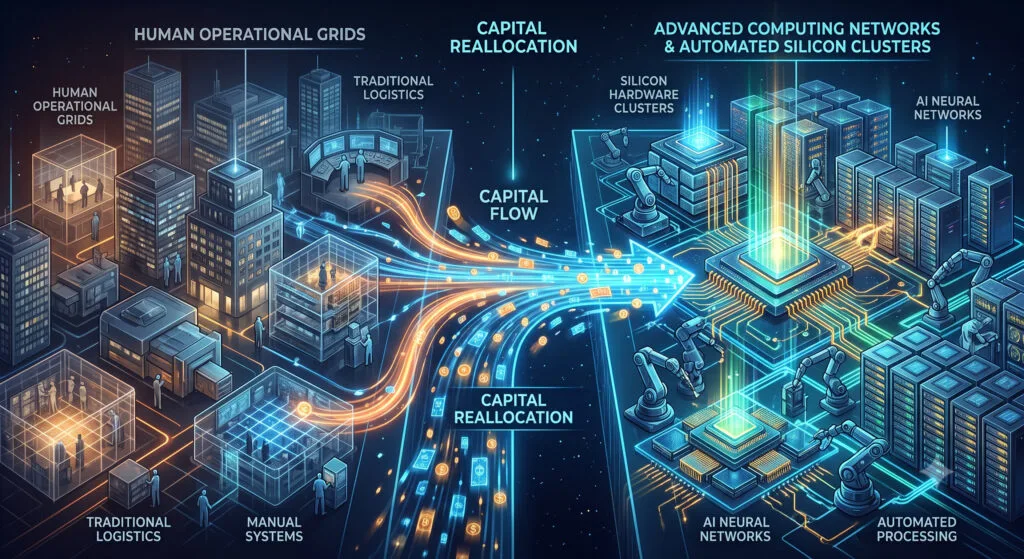
A major strategic pattern revealing the true nature of AI role replacement in IT sector 2026 is that technology spending is not declining; rather, it is undergoing a profound structural re-indexing.
Operating modern, enterprise-grade AI clusters requires significant financial resources. To acquire cutting-edge computing architecture and license premium foundation models, technology corporations must free up immense capital. This is accomplished by optimizing human payroll frameworks. Executive strategic breakdowns on these shifting models can be found via CFO Dive Editorial Analysis.
[Legacy Operational Cost Allocation]
  ┌───────────────────────────────────────────────────────────┐
  │ Human Capital & Payroll Expenses (70%)                    │ Tech Infrastructure (30%)
  └───────────────────────────────────────────────────────────┘

[2026 AI-First Corporate Budget Allocation]
  ┌─────────────────────────────┬─────────────────────────────┐
  │ Human Capital (40%)         │ AI Processing & Silicon (60%)│
  └─────────────────────────────┴─────────────────────────────┘
By substituting vast engineering teams with leaner, highly specialized architecture units supported by agentic code generation tools, tech enterprises can scale software output without expanding their human payroll obligations. The primary driver behind AI role replacement in IT sector 2026 is this exact opportunity for structural margin expansion.
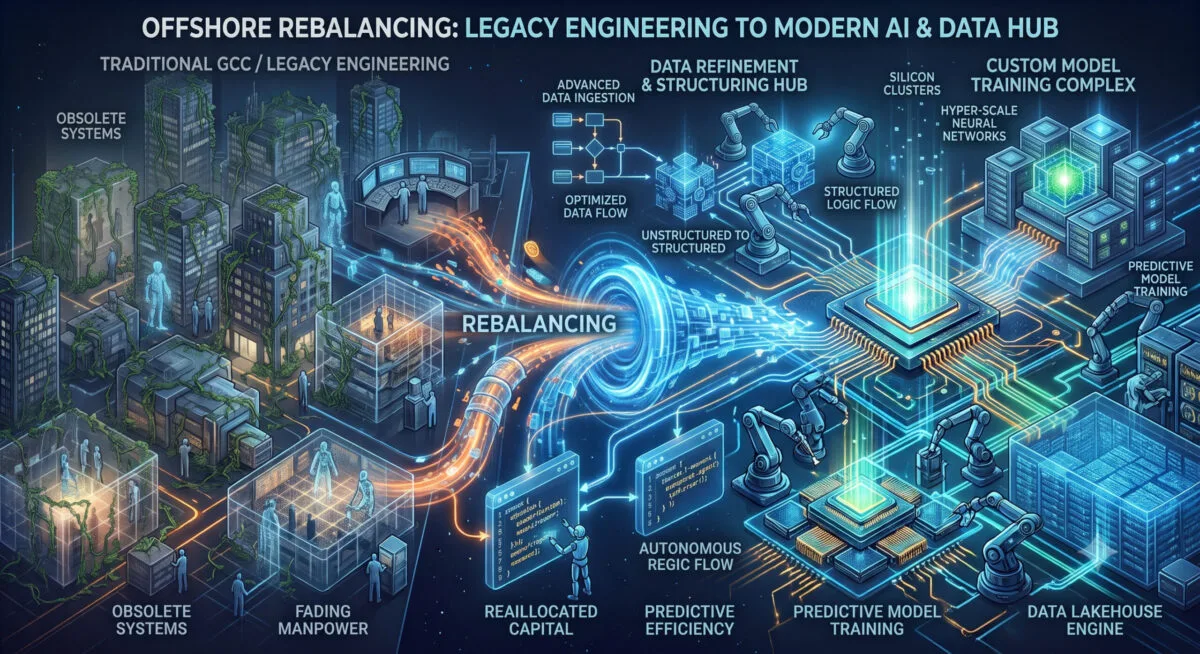
4. Offshore Rebalancing: Navigating the Ripple Effects on Emerging Markets
Because emerging markets serve as the global engine room for technology delivery and business process outsourcing, they are heavily impacted by AI role replacement in IT sector 2026. Estimates indicate that offshore delivery networks may see up to 35,000 traditional support and maintenance roles optimized as international enterprise clients shift towards lean, highly automated service contracts.
However, forward-looking economic policymakers emphasize that this rebalancing presents a clear evolutionary path rather than an existential crisis. Chief Economic Adviser V. Anantha Nageswaran has regularly highlighted that while routine, repetitive, and rule-bound human activities are highly vulnerable to automation, advanced technological ecosystems can significantly amplify human productivity if properly aligned.
The data supports this view. India, for example, serves as a crucial hub for Global Capability Centers (GCCs), hosting over 2,000 facilities that employ over 2 million tech professionals. More than half of these advanced centers have already pivoted their core delivery models toward data engineering, algorithmic tuning, and system optimization. This swift shift proves that AI role replacement in IT sector 2026 is not destroying the offshore sector; it is forcing it to climb the value chain into high-margin systems architecture and specialized platform engineering.
5. Career Insulation: Strategic Frameworks for the Modern Engineer
The rapid expansion of AI role replacement in IT sector 2026 does not mark the end of human software engineering; it marks the end of simple code assembly. To remain indispensable in a highly automated corporate landscape, technical professionals must move away from routine execution and focus on large-scale system design and model oversight.
Master Distributed Systems and Enterprise Architecture
AI engines are highly proficient at generating standalone code snippets, but they lack the contextual nuance required to manage massive, multi-layered enterprise systems. Engineers who specialize in designing complex distributed infrastructures, managing cloud resource allocation, and maintaining data-pipeline integrity remain highly valued by top-tier firms. AI Role Replacement in IT Sector 2026
Deepen Expertise in AI Trust, Safety, and Model Governance
Every automated workflow deployed by an enterprise requires human oversight to monitor, audit, and secure. Building a career focused on model assessment, algorithmic transparency, bias mitigation, and international data privacy compliance is a highly effective way to stay ahead of AI role replacement in IT sector 2026.
Transition Into Agentic Workflow Engineering
The premium talent market has shifted from basic text prompt creation toward constructing complex multi-agent orchestrations. Professionals who know how to construct, test, and securely connect autonomous software agents to legacy enterprise APIs to execute intricate business operations are seeing significant demand across the corporate world. AI Role Replacement in IT Sector 2026
Conclusion: Driving Enterprise Value in the Automated Era
The widespread deployment of AI role replacement in IT sector 2026 is fundamentally redrawing the boundaries of tech employment. This sudden acceleration in corporate restructuring represents a permanent structural evolution in how business value is generated. For corporate strategists and financial leaders, this pivot offers an unparalleled opportunity to defend margins, eliminate operational bottlenecks, and accelerate system delivery speeds.
For technical professionals, adapting to this new landscape is an absolute necessity. Viewing automation as a force multiplier rather than a career threat is the defining trait of the modern tech leader. By mastering advanced system architecture, algorithmic governance, and agentic workflow integration, technology professionals can build resilient, future-proof careers alongside automated systems.
Frequently Asked Questions (FAQs)
What is the primary cause of AI role replacement in IT sector 2026?
The primary driver behind AI role replacement in IT sector 2026 is the strategic reallocation of corporate capital. Global technology companies are optimizing human payroll expenses to secure the massive budgets required to purchase advanced computing chips, expand data center capabilities, and license premium generative AI software layers.
Are these global technology layoffs an indicator of a contracting tech industry?
No. A defining feature of AI role replacement in IT sector 2026 is that the organizations announcing headcount adjustments are frequently reporting record-breaking quarterly revenues and strong cash generation. Industry output is growing; however, software automation has decoupled top-line business revenue from raw human headcount numbers.
Which specific engineering roles are most vulnerable to 2026 AI replacements?
The positions facing the highest rate of structural replacement are routine, repetitive, and rule-bound tasks. This includes entry-level junior programmers focused on boilerplate script generation, manual software quality assurance (QA) testers, and tier-1 database administration or basic technical support roles.
How can offshore tech professionals insulate their careers from AI replacement?
Offshore technical professionals can successfully counter the trends of AI role replacement in IT sector 2026 by moving up the value chain. This means shifting away from basic application maintenance and focusing on highly specialized fields like large-scale cloud systems architecture, AI model safety governance, and agentic workflow engineering.
Disclaimer
The analytical research and reports published on cfostimes.com are compiled strictly for educational, informational, and general journalistic purposes. Under no circumstances do these materials constitute formal financial, investment, legal, corporate restructuring, or career transition advice. All workforce statistics, corporate earnings metrics, and regulatory filing citations are gathered from public domain announcements and real-time financial tracking services. Structural corporate adjustments carry inherent operational risks. Readers are strongly urged to consult with certified independent financial advisors or legal professionals before implementing large-scale organizational workforce modifications.
For a deeper visual breakdown of this structural shift, you can check out this Oracle Corporate AI Adoption Briefing. This report outlines how global technology firms are strategically restructuring operational dependencies to deploy automated asset-light frameworks.

Dr. Dinesh Kumar Sharma is a CMA an award-winning Chief Financial Officer and Director of Finance with over 25 years of expertise in strategic planning and digital transformation. Recognized as a five-time CFO of the Year, he specializes in leveraging Generative AI and Microsoft Copilot to optimize financial forecasting and cost management. Dr. Sharma holds a Doctorate in Management (Finance) and has successfully scaled organizations from INR 1 billion to INR 7 billion. He is dedicated to providing transparent, data-driven insights for modern decision-makers at CFOs Times.