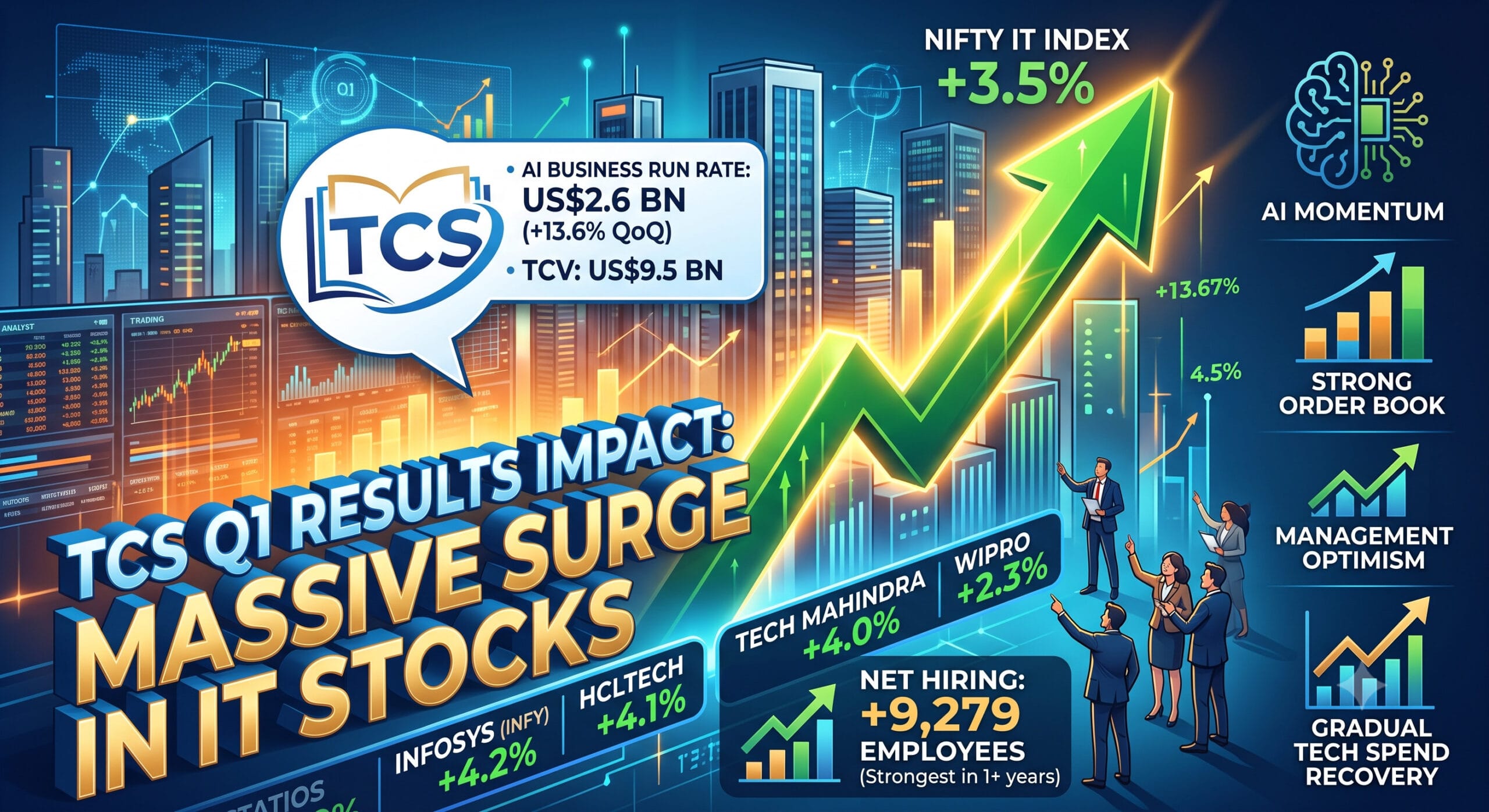
Global financial markets are undergoing a fundamental structural transition. Volatility is shifting from broad macroeconomic panic into sharp, earnings-driven sector rotations. For enterprise executives, institutional asset managers, and retail investors alike, tracking the TCS Q1 results impact on IT stocks has become the definitive playbook for predicting corporate technology spending and broader market trajectories.
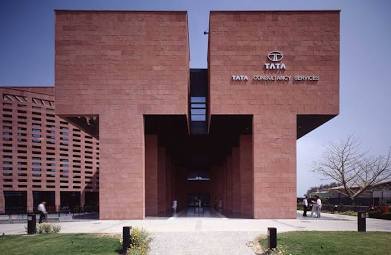
Tata Consultancy Services (TCS), serving as the undisputed bellwether of the Indian technology industry, recently published its financial scorecard for the first quarter of the fiscal year 2026–27 (Q1 FY27). The subsequent market reaction highlights how much the TCS Q1 results impact on IT stocks by injecting immediate structural momentum across equity indexes and sparking a massive short-covering rally that added hundreds of thousands of crores in single-day investor wealth.
But behind the flashing green tickers on global screens lies a much deeper, highly nuanced macro narrative. It is a narrative of a cooling “tech winter,” an aggressive transition toward productized Artificial Intelligence (AI) monetization, and a distinct sorting of winners and losers across global system integrators. This comprehensive pillar post breaks down every vertical of this financial shift, analyzing exactly how the real-time TCS Q1 results impact on IT stocks changes the strategic landscape for all technology stakeholders.
Table of Contents
1. The Core Metrics: Deconstructing the Q1 Financial Performance
To understand the macro velocity of the TCS Q1 results impact on IT stocks, we must first dissect the raw ledger of the announcement. TCS delivered a highly defensive, structurally resilient set of operational figures that comfortably outpaced conservative consensus estimates.
Revenue and Net Profit Trajectories
TCS recorded its consolidated revenue from operations at ₹72,275 crore for the June-ended quarter of 2026. This reflects a robust 13.93% year-on-year (YoY) increase compared to the ₹63,437 crore reported in the corresponding period of the previous fiscal year. This top-line expansion plays a major role in the overall TCS Q1 results impact on IT stocks because sequentially (quarter-on-quarter), revenue managed a steady 2.23% growth in rupee terms. This provides clear evidence that client billing pipelines are normalizing after multi-quarter stagnation.
Consolidated net profit attributable to shareholders reached ₹13,349 crore, locking in an expansion over the ₹12,760 crore printed in Q1 FY26. While net profits softened slightly on a sequential basis due to front-loaded annual wage increments and localized seasonal costs, the structural bottom-line health remained completely intact. Detailed structural breakdowns are readily accessible via the official TCS Investor Relations Portal.
| Metric | Q1 FY27 Baseline | Year-on-Year (YoY) Change | Quarter-on-Quarter (QoQ) Change |
| Revenue from Operations | ₹72,275 Crore | +13.9% | +2.2% |
| Consolidated Net Profit | ₹13,349 Crore | +5% | -2.6% |
| Operating Margin (EBIT) | 24.0% | Stable / Protected | Minor Wage Compression |
| Net Cash from Operations | ₹12,412 Crore | 93% of Net Income Conversion | Highly Liquid |
Operational Efficiency and Margin Defense
One of the most impressive components of the release was the operating margin, which stood firmly at 24.0%. Analysts studying the TCS Q1 results impact on IT stocks noted that defending a 24% margin while simultaneously absorbing full global employee salary revisions highlights superior supply chain optimization and optimized staff utilization rates.
Furthermore, free cash generation remained exceptionally strong, with net cash from operations tracking at ₹12,412 crore—representing a cash conversion rate equivalent to 93% of the company’s total net income. The ultimate TCS Q1 results impact on IT stocks extends directly to capital allocations; this underlying liquidity pool guarantees long-term dividend safety, backed up by the immediate declaration of a ₹12 per share interim dividend.
2. Market Wealth Surge: Analyzing the Immediate Sector Rebound
The release of these numbers operated as an absolute catalyst across global capital platforms, triggering an immediate shift in capital positioning.
The Mechanism of the Short-Covering Rally
Prior to the earnings drop, investor sentiment surrounding the broader IT index had degraded to multi-year lows. Short sellers had aggressively built up derivative positions across top-tier tech names, expecting discretionary tech budgets to remain frozen throughout the year.
When TCS delivered numbers that defied these bearish expectations, it forced a violent institutional squeeze. Short positions were rapidly liquidated, which acted as a major buyer mechanism in the open market. This systemic reversal added over ₹5 lakh crore to total investor wealth within hours of market operations, pulling the Nifty IT Index up significantly in a broad, secular rising tide. Tracking the index performance live via the National Stock Exchange of India (NSE) underscores how rapidly sector rotations occur under short-covering mechanics. This quick rotation is a classic example of the structural TCS Q1 results impact on IT stocks.
[Defensive TCS Q1 Data Beats Bearish Consensus]
                      │
                      ▼
[Forced Liquidation of Massive Derivative Short Positions]
                      │
                      ▼
[Violent Institutional Buying Spree Across Large-Cap IT]
                      │
                      ▼
[Substantial Wealth Injection & Nifty IT Index Surge]
Cooling Volatility and Macro Synchronization
The macro perspective of the TCS Q1 results impact on IT stocks reveals that this equity expansion occurred alongside a sharp, healthy contraction in market anxiety. The India VIX index plummeted by approximately 9%, resting comfortably at a lower structural floor.
This stabilizing volatility profile has created a highly favorable macro window. Foreign Institutional Investors (FIIs), who spent the previous quarters exiting emerging market tech allocations due to high interest rates and macro friction, are re-routing capital back into large-cap system integrators. The global TCS Q1 results impact on IT stocks is clear: domestic tech equities are acting as an incredibly resilient safe haven, offering visible free cash generation at a time when global geopolitical tensions are fluctuating.
3. The End of Tech Winter? Deciphering Workforce & Attrition Trajectories
At its core, the truest metric of forward-looking corporate demand is the internal management of talent. Headcount expansions or contractions speak much louder than short-term quarterly revenue recognitions. This is a critical pillar when assessing the full scope of the TCS Q1 results impact on IT stocks.
The End of the Headcount Contraction Phase
For several quarters across 2024 and 2025, the global technology sector experienced a painful “talent rationalization”. Major firms deliberately let headcount shrink through natural attrition, frozen fresh hiring, and campus boarding delays. However, the Q1 structural talent indicators reveal that this tech winter has definitively broken, heavily shifting the TCS Q1 results impact on IT stocks from structural pessimism to operational scaling.
TCS closed out the June quarter with a total consolidated global workforce of 593,798 professionals. Crucially, the organization added thousands of net new workers to its payroll during this reporting cycle, completely reversing the multi-quarter pattern of structural workforce contraction.
This net positive hiring trend serves as undeniable proof that project pipelines are expandive. You do not hire, onboard, and pay for net new tech talent unless your active client contract execution requires fresh delivery capacity. Thus, the workforce growth represents an essential element of the long-term TCS Q1 results impact on IT stocks.
Stabilization of Long-Term Attrition Metrics
Concurrently, the Last Twelve Months (LTM) attrition rate for IT services stabilized at a highly predictable 13.6%.
   18% ─── High Attrition Churn (Project Disruption Zone)

   14% ─── [Current Stabilized Attrition Baseline: 13.6%]

   10% ─── Talent Stagnation / Low Mobility Baseline
An attrition profile mapping near 13.6% represents a healthy structural baseline for modern technology enterprises. It is low enough to prevent disruptive project transition expenses and maintain institutional memory, yet dynamic enough to allow structural payroll optimization without triggering human resource inflation. The stabilization of this labor dynamic underpins the positive TCS Q1 results impact on IT stocks.
4. The AI Monetization Reality: Moving From Hype to Hard Balance Sheets
For the past several quarters, the broader market has wrestled with a crucial dilemma: Is Artificial Intelligence a genuine revenue driver for system integrators, or is it an expensive marketing cost center? The latest enterprise data answers this definitively, dramatically altering the narrative of the TCS Q1 results impact on IT stocks. AI has graduated directly onto the corporate balance sheet.
Reaching a Milestone Annual Run Rate
The ongoing TCS Q1 results impact on IT stocks has fundamentally altered how the market values technology companies’ AI capabilities. The organization confirmed that its annualized AI and generative AI (GenAI) revenue run rate has reached an incredible $2.6 billion. This marks a sequential execution expansion of 13.6% quarter-on-quarter, proving that AI frameworks are scaling significantly faster than traditional enterprise software deployments.
Clients are actively shifting away from low-ROI speculative experimentation and are instead signing definitive, multi-million-dollar structural deployment commitments. A core factor behind the TCS Q1 results impact on IT stocks is that the total contract value (TCV) for the quarter hit a massive $9.5 billion, anchored directly by massive, transformative automation projects.
Analyzing the Landmark Structural Deals
The architectural depth of these recent contract wins highlights how deeply AI is integrating into core industrial operations, contributing heavily to the macro-level TCS Q1 results impact on IT stocks:
- The SKF Transformation Deal: TCS secured a historic, mega-scale $800 million AI-driven business transformation agreement with global engineering giant SKF. This project is designed to rebuild SKF’s global operations completely around an intelligent digital core, implementing AI as an autonomous, self-learning enterprise nervous system across fragmented supply networks. Check out official performance commentaries via The Times of India Business Desk to track real-time global deal pipelines.
- North American Utility Modernization: The company closed a massive multi-million-dollar contract with a major North American utility provider. The scope focuses on scaling AI capabilities across localized electrical grids, predictive asset management architectures, and workforce deployment structures.
- Agentic AI in Continental Europe: TCS locked in a milestone project with a Europe-based Fortune Global 50 conglomerate to transform human resource infrastructures and workforce experiences using cutting-edge Agentic AI systems—autonomous software agents capable of executing multi-layered workflows without human intervention.
Expanding the Open-Source Ecosystem
To sustain this breakneck execution speed, the enterprise is bypassing traditional proprietary software limits and embedding itself directly into open-source AI models. This strategic pivot deepens the TCS Q1 results impact on IT stocks by providing long-term structural partnerships. During the quarter, TCS finalized key strategic partnerships with Anthropic and Mistral AI.
Through the Anthropic alliance, a dedicated internal business unit is being deployed to provide structured enterprise-wide access to the advanced Claude LLM architecture for over 50,000 employees. Meanwhile, the Mistral agreement establishes TCS as the first global systems integrator partner for Mistral Forge, enabling the highly customized fine-tuning of compact, hyper-efficient localized models for sensitive banking and sovereign cloud clients.
5. Architectural Divergence: Identifying Structural Winners and Losers
One of the most vital strategic takeaways for any financial leader tracking the TCS Q1 results impact on IT stocks is that the era of general, sector-wide growth has concluded. We have entered an era of deep structural divergence.
While the Nifty IT index pushed upward on the back of TCS’s metrics, individual stock trajectories tell a story of extreme specialization. Year-to-date performance across the tech spectrum reveals that while legacy-heavy system integrators are trading flat or down, specialized entities are experiencing explosive gains. Understanding this divergence is key to capitalizing on the broader TCS Q1 results impact on IT stocks.
The Case of Extreme Specialization
Consider the massive outperformance of specialized financial architecture utilities, such as Oracle Financial Services Software (OFSS). While large-cap legacy names have faced a challenging multi-month correction due to broader corporate budget freezes, specialized banking and financial technology utilities have surged to historic 52-week highs.
This structural decoupling shows that modern business leaders are no longer spending capital on broad, generalized technology consulting. Instead, corporate investments are narrowing down into hyper-specific, high-margin transformations, which defines the true directional TCS Q1 results impact on IT stocks:
- Core transaction processing modernization (Modern banking stacks)
- Autonomous infrastructure optimization (Sovereign cloud networks and cybersecurity platforms)
- Core cost-reduction automation architectures (Agentic workflow replacements)
Companies with productized offerings in these three narrow lanes are seeing rapid margin expansion, while organizations tethered strictly to traditional time-and-material legacy maintenance are seeing structural pricing pressure.
Conclusion: The Strategic Playbook for Corporate Growth
The institutional analysis of the TCS Q1 results impact on IT stocks signals a definitive structural turning point for the global enterprise landscape. The technology winter is giving way to an era of high-value, highly intentional, AI-centered deployment.
For modern corporate leaders, the strategic takeaway regarding the TCS Q1 results impact on IT stocks is unambiguous: technology investment has pivoted from a general operational cost center into a core tool for driving market share expansion. Organizations that fail to move beyond legacy maintenance frames risk losing ground to agile competitors who are leveraging agentic AI and productized financial architectures to scale output autonomously.
As capital markets stabilize and volatility measures normalize, the corporate ecosystem is clearing a direct path forward. The systemic TCS Q1 results impact on IT stocks proves that strategic technology spending is no longer a luxury—it has become the primary mechanism for defending market leadership.
Frequently Asked Questions (FAQs)
What is driving the TCS Q1 results impact on IT stocks?
The primary driver behind the TCS Q1 results impact on IT stocks is the unexpected resilience of corporate tech budgets. TCS outpaced downcast market expectations by delivering a strong 14% year-on-year revenue expansion, maintaining a highly resilient 24% operating margin, and reporting an annualized AI revenue run rate of $2.6 billion. This combination forced short-sellers to rapidly liquidate their positions, triggering a massive market wealth expansion across the technology sector.
Why are enterprise tech companies suddenly reporting net positive hiring?
When tracking the TCS Q1 results impact on IT stocks, the return to positive hiring indicates that the intense corporate “talent rationalization” phase seen over the past 18 months has reached completion. As enterprises sign massive new transformation contracts—such as TCS’s historic $9.5 billion total contract value this quarter—they must onboard delivery talent to execute these active project pipelines.
How is AI moving from an experimental tech trend to concrete corporate revenue?
Firms are now securing major, binding commercial commitments that put AI at the center of core business operations. As shown in the active TCS Q1 results impact on IT stocks, global giants are executing massive operational overhauls—like the $800 million SKF contract—where AI acts as an autonomous operational nervous system to optimize supply chains, lower structural expenses, and accelerate workflow delivery at scale.
What does the structural divergence in technology stocks mean for corporate strategies?
It demonstrates that general enterprise IT spending has become highly focused. A major component of the TCS Q1 results impact on IT stocks shows that companies are actively freezing budgets for basic legacy software maintenance and instead routing capital into high-margin, specialized utilities—specifically automated financial platforms, cloud cybersecurity, and agentic AI tools. For corporate technology providers, success now depends heavily on having productized, high-value technical offerings rather than general consulting services.
Disclaimer
The information provided on cfostimes.com is strictly for educational, informational, and general journalistic purposes. It does not constitute formal financial, investment, legal, or tax advice. Market performance data, stock valuations, and index metrics reflect past and real-time electronic reporting and are subject to change without notice. Equity markets carry inherent economic risks. Readers should consult with a certified financial professional or independent advisor before executing any corporate or personal asset allocations.

Dr. Dinesh Kumar Sharma is a CMA an award-winning Chief Financial Officer and Director of Finance with over 25 years of expertise in strategic planning and digital transformation. Recognized as a five-time CFO of the Year, he specializes in leveraging Generative AI and Microsoft Copilot to optimize financial forecasting and cost management. Dr. Sharma holds a Doctorate in Management (Finance) and has successfully scaled organizations from INR 1 billion to INR 7 billion. He is dedicated to providing transparent, data-driven insights for modern decision-makers at CFOs Times.









1 thought on “TCS Q1 Results Impact on IT Stocks: Massive Surge”