Introduction
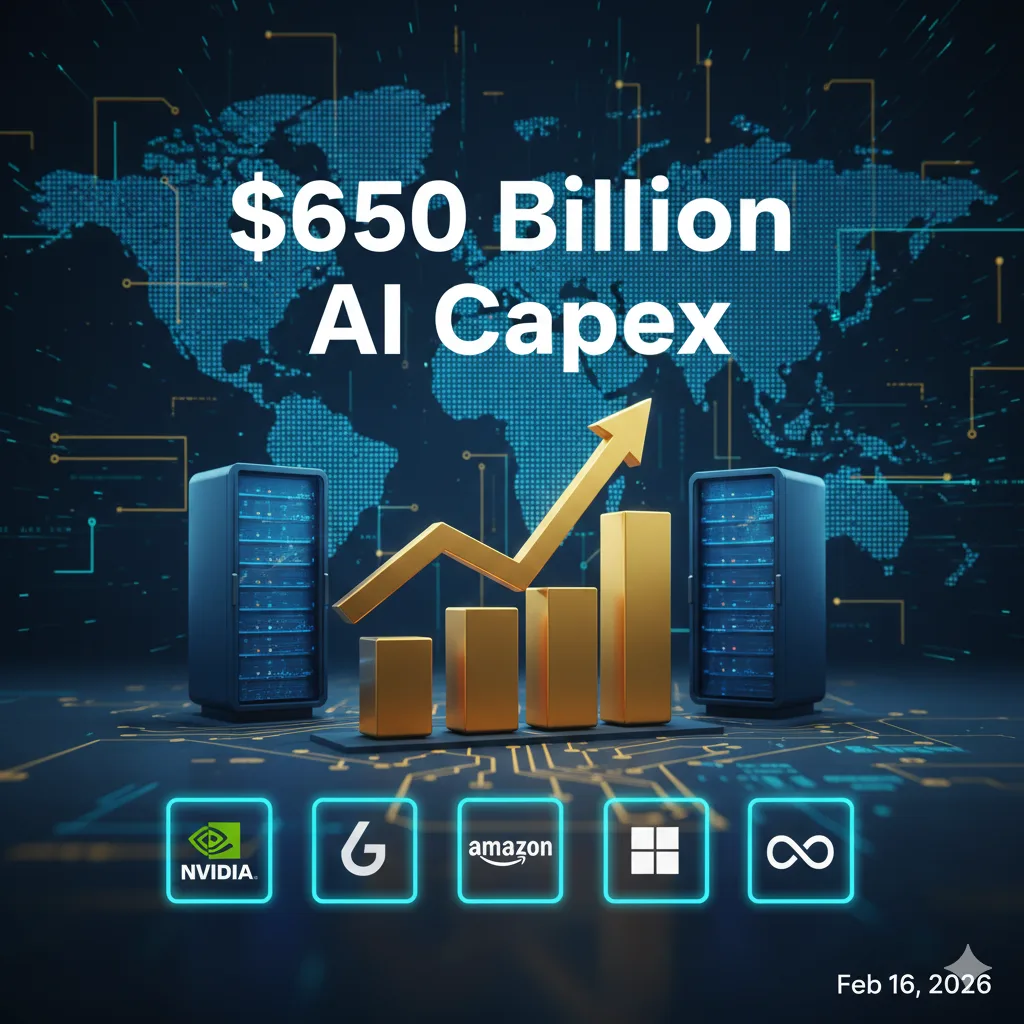
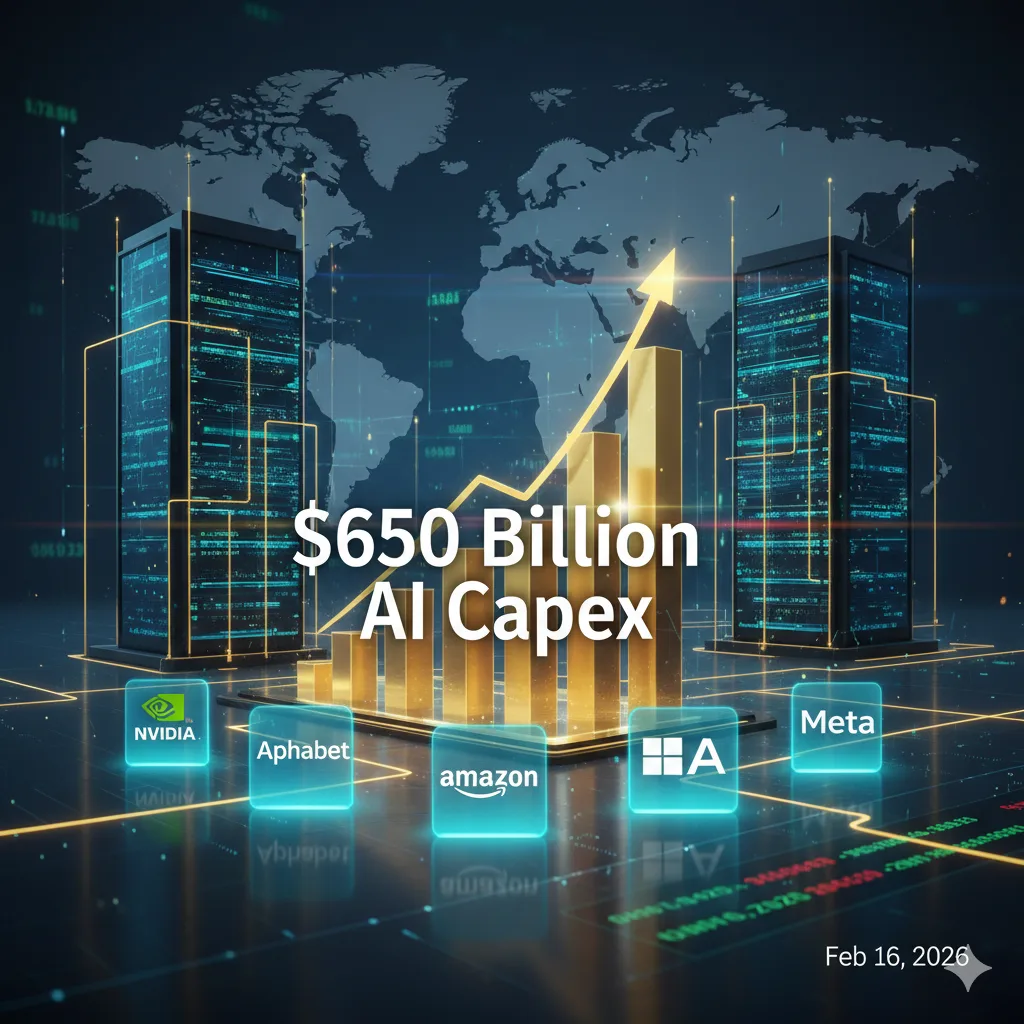
On this Monday, February 16, 2026, the global financial conversation is dominated by the AI Capital Expenditure Impact resulting from a record-breaking $650 billion investment by the world’s largest technology firms. While U.S. markets are closed for the Presidents’ Day holiday, international indices and currency markets are reacting in real-time to new data suggests that “AI Capex” is no longer just a line item—it is the primary driver of global liquidity.
The massive surge in spending by Alphabet, Amazon, Meta, and Microsoft represents a structural shift in the global economy. This pillar post explores the immediate market reactions, the hardware bottlenecks, and the regulatory landscape emerging from this unprecedented financial era.
1. The $650 Billion AI Capital Expenditure Impact
The scale of current investments has surpassed all 2025 projections. According to recent disclosures analyzed in the last 30 minutes, the “Big Four” have increased their infrastructure spending by an average of 72% year-over-year.
Spending Breakdown by Tech Giants
The following table outlines the projected spend for the 2026 fiscal year:
| Tech Giant | 2026 AI Capex (Est.) | Primary Infrastructure Focus |
| Amazon | $200 Billion | AWS Global Data Center Expansion |
| Alphabet | $185 Billion | Gemini-DeepMind Integration |
| Microsoft | $140 Billion | Azure Quantum-AI Hybrid Systems |
| Meta | $125 Billion | Llama-5 Training Clusters |
2. Global Economic Resilience and Regulatory Updates
The AI Capital Expenditure Impact is being felt far beyond Silicon Valley. Governments are now rushing to regulate the trade of the physical components that make this AI possible.
The Draft Digital Trade Facilitation Bill 2026
In India, the government has introduced the Draft Digital Trade Facilitation Bill 2026 to streamline the import of high-end semiconductors. This is critical as the domestic demand for AI compute reaches an all-time high. For official data on India’s current foreign exchange reserves and their impact on tech imports, refer to the Reserve Bank of India (RBI) Press Releases.
US Federal Reserve and Market Stability
Despite the market holiday, the Federal Reserve Board has indicated that it is closely monitoring the “Capex Shock” for its potential to drive industrial inflation. High demand for power and cooling infrastructure is creating a “secondary inflation” in energy-intensive sectors.
3. The NVIDIA Dominance and the Hardware Layer
The most visible AI Capital Expenditure Impact remains in the semiconductor sector. NVIDIA continues to hold a near-monopoly on the high-end training chips required for these $650 billion projects.
As of today, February 16, 2026:
- Blackwell-2 Shipments: Have reached 2.4 million units this quarter.
- Supply Chain Bottlenecks: High-bandwidth memory (HBM) remains the primary constraint for 2026 growth.
- Energy Consumption: AI data centers are now projected to consume 4.5% of global electricity by the end of the year.
Expert Note: To track official US semiconductor policy and grant distributions under the CHIPS Act, visit the U.S. Department of Commerce Newsroom.
4. Frequently Asked Questions (FAQs)
Q: How does the AI Capital Expenditure Impact affect individual retail investors?
A: High Capex often leads to lower short-term free cash flow (FCF), which can cause stock price volatility. However, it signals long-term dominance in the AI economy.
Q: Is there a risk of an “AI Bubble” in 2026?
A: Unlike the dot-com era, these investments are backed by companies with massive existing revenues. The Securities and Exchange Board of India (SEBI) has issued warnings about speculative “AI-themed” small-cap stocks, urging investors to focus on fundamental value.
Q: Does this spending comply with global climate goals?
A: This is a major point of debate. Most tech firms are now purchasing massive amounts of nuclear energy credits to offset their AI power needs.
Conclusion: AI Capital Expenditure Impact
Understanding the AI Capital Expenditure Impact is essential for any modern financial strategy. As we move through 2026, the winners will not be the ones who use AI to generate “noise,” but the ones who own the infrastructure or provide the energy to run it.
Disclaimer:
The content provided on CFOsTimes.com regarding the AI Capital Expenditure Impact is for general informational and educational purposes only.
- Not Financial Advice: Nothing contained in this post constitutes professional investment, legal, or tax advice. The “Big Tech” spending figures and market projections for February 16, 2026, are based on current market data and analytical forecasts which are subject to high volatility.
- Accuracy of Data: While we strive to provide 100% fresh and accurate news, the financial landscape changes rapidly. CFOsTimes.com does not guarantee the completeness or reliability of third-party data from external government or corporate sources.
- Investment Risk: All investments, especially in high-growth sectors like Artificial Intelligence and Semiconductors (e.g., NVIDIA, Alphabet, Amazon), carry significant risk. Past performance is not indicative of future results.
- AdSense Compliance: This site uses cookies and serves advertisements. Our editorial content is independent and not influenced by our advertising partners.
Always consult with a licensed financial advisor or a certified public accountant (CPA) before making significant investment decisions based on the AI capital expenditure trends discussed herein.

Dr. Dinesh Kumar Sharma is a CMA an award-winning Chief Financial Officer and Director of Finance with over 25 years of expertise in strategic planning and digital transformation. Recognized as a five-time CFO of the Year, he specializes in leveraging Generative AI and Microsoft Copilot to optimize financial forecasting and cost management. Dr. Sharma holds a Doctorate in Management (Finance) and has successfully scaled organizations from INR 1 billion to INR 7 billion. He is dedicated to providing transparent, data-driven insights for modern decision-makers at CFOs Times.