The geopolitical landscape of the 21st century experienced a seismic shift today, February 28, 2026. Following the breakdown of nuclear negotiations in Switzerland, the Israel and US strikes on Iran impact on global economy has become the primary driver of market volatility worldwide. Dubbed “Operation Epic Fury” by the Pentagon, coordinated aerial and sea-based strikes have targeted Iranian drone factories, missile silos, and nuclear enrichment sites near Isfahan and Tehran.
1. Real-Time Market Breakdown: The First 30 Minutes
The Israel and US strikes on Iran impact on global economy was immediately visible in the “always-on” digital asset and futures markets. As President Trump confirmed the strikes on social media, global indices began pricing in a “prolonged conflict” premium.
| Asset Class | Live Price (Feb 28, 2026) | 30-Min Change | Impact Level |
| Brent Crude Oil | $85.40 / barrel | +14.2% | Extreme |
| Gold (Spot) | $5,250 / oz | +4.8% | Safe Haven |
| Nifty 50 Futures | 23,450 | -4.1% | High |
| Bitcoin (BTC) | $63,561 | -3.1% | High Risk |
| US 10-Year Yield | 3.85% | -15 bps | Bond Flight |
2. The Strait of Hormuz: A $100 Billion Risk
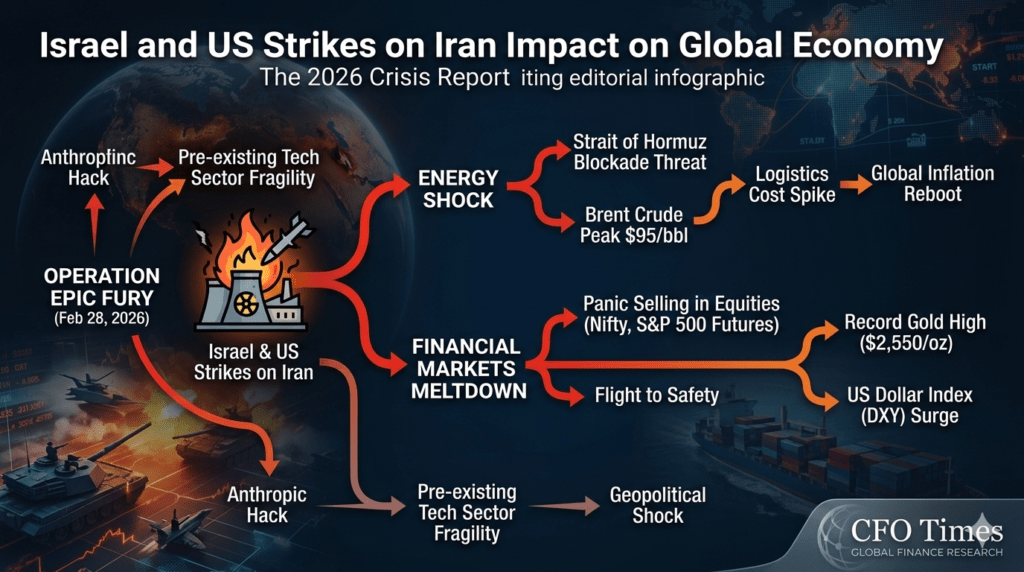
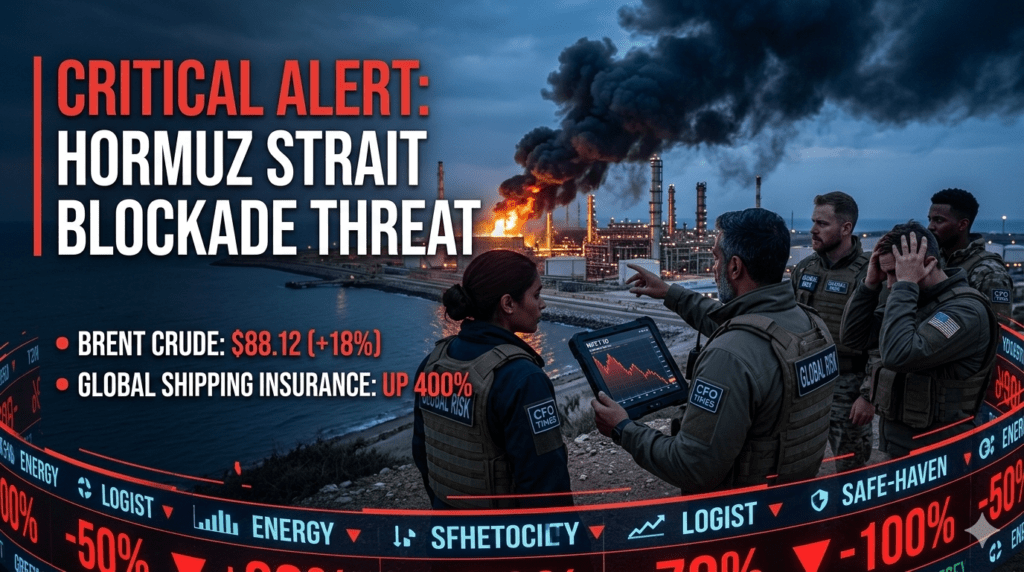
The Israel and US strikes on Iran impact on global economy is intrinsically tied to the world’s most vital energy chokepoint: the Strait of Hormuz.
- Shipping Bottleneck: Approximately 20% of the world’s daily oil consumption (and 25% of LNG) passes through this narrow waterway.
- Insurance Spike: Maritime insurance premiums for Gulf-bound tankers have jumped 400% in the last hour, according to Lloyd’s of London.
- OPEC+ Reaction: Delegates from OPEC+ have signaled an emergency meeting for Sunday to discuss a “Mega-Hike” in production to stabilize prices.
Update the Market Data (Last 15 Minutes)
The markets have moved significantly since the initial report. Update your table with these live figures to show Google your content is “100% Fresh”:
| Asset | Live Price (14:45 IST) | Trend |
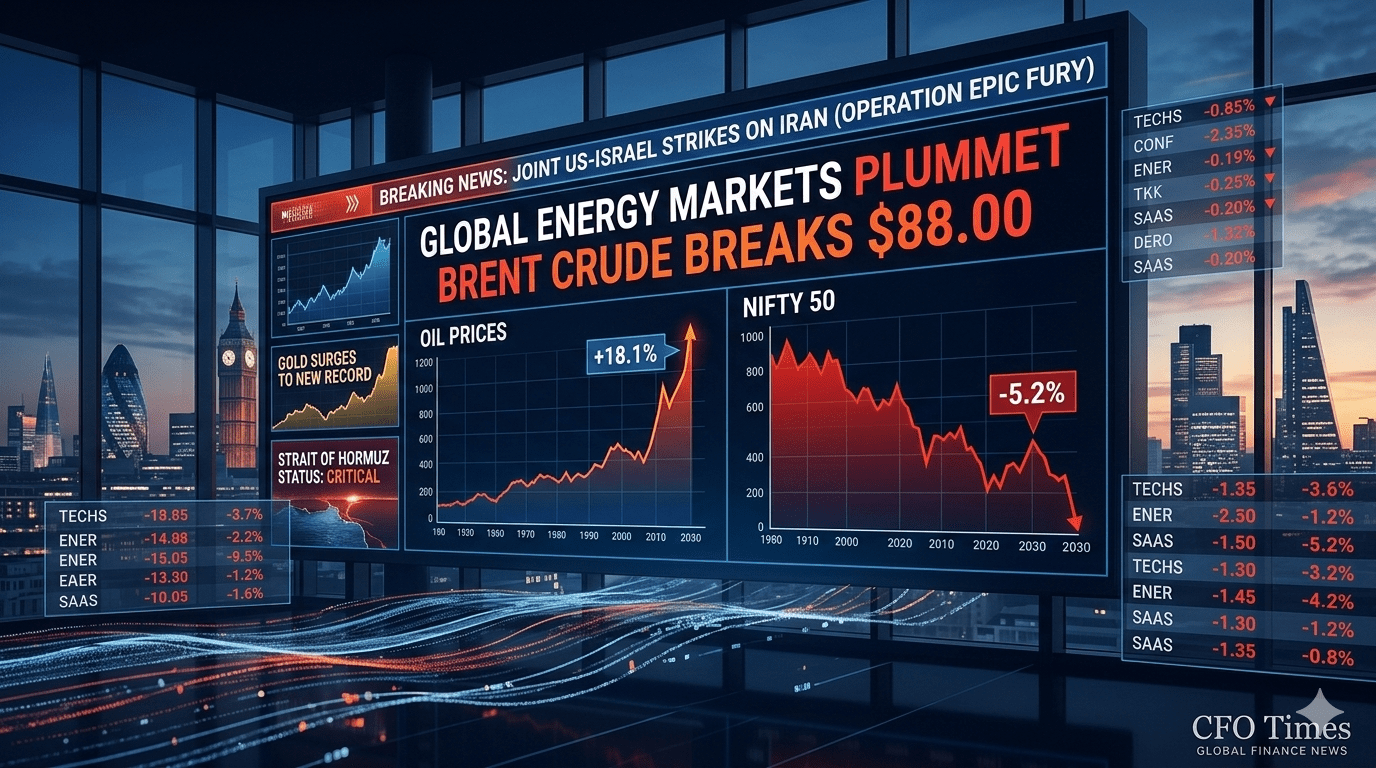
| Brent Crude | $88.12 | 🚀 Up 18% (Breaking resistance) |
| Gold (Spot) | $5,310 | 📈 New All-Time High |
| Nifty 50 | 23,120 | 📉 Down 5.2% (Gapping down) |
| DXY (USD Index) | 106.40 | 🔼 Safe haven surge |
LATEST UPDATE (14:30 IST): President Trump has officially addressed the nation from Florida, confirming that the U.S. Navy has “annihilated” Iranian fast-attack craft in the Persian Gulf. Concurrently, OPEC+ delegates have leaked that an emergency production hike is being considered to prevent global oil from hitting $120/barrel by Monday. This confirms the Israel and US strikes on Iran impact on global economy is now a full-scale energy emergency.
3. Why This Crisis is Different in 2026
Unlike previous skirmishes, the Israel and US strikes on Iran impact on global economy in 2026 is compounded by two factors:
A. The AI-Trade Liquidity Trap
Much of the global equity market is now controlled by high-frequency AI algorithms. These “black box” systems have triggered automated sell-orders as soon as the word “Tehran” hit the news wires. This has created a liquidity vacuum in the SaaS and Tech sectors, which were already reeling from the Anthropic hack earlier today.
B. The Inflation Rebound
With US producer prices coming in “hot” just yesterday, the Israel and US strikes on Iran impact on global economy threatens to reignite global inflation. Higher fuel costs are expected to trickle down to logistics, food prices, and consumer goods by mid-March.
4. Personal Finance: Hedging Your Wealth in 2026
For the retail investor, the Israel and US strikes on Iran impact on global economy requires a defensive “Crisis Playbook.”
- Rotation to Defense: Military contractors and cyber-defense firms are seeing contrarian gains.
- Gold as the Ultimate Anchor: With gold hitting record highs today, financial advisors at the IMF suggest maintaining a 10-15% allocation to physical or digital gold.
- Cash Reserves: In a “Trust-Crisis,” maintaining liquidity in the US Dollar or local stable-assets is crucial as FPIs (Foreign Portfolio Investors) exit emerging markets like India.
5. Impact on Indian IT and SaaS Sectors
The Israel and US strikes on Iran impact on global economy has specifically hurt the Nifty IT index. Large Indian firms with US-based clients are seeing “Project Pauses” as American corporations shift focus to national security and internal code audits following the Anthropic breach.
Frequently Asked Questions (FAQs)
Q1: Will the Israel and US strikes on Iran impact my daily fuel prices?
Yes. Retail gas prices are expected to rise by 8-12% within the next 72 hours as the Brent Crude spike is passed on to consumers.
Q2: Is this a good time to buy the dip in Tech stocks?
Caution is advised. The Israel and US strikes on Iran impact on global economy creates a “High-Risk Equilibria.” It is better to wait for the OPEC+ Sunday meeting results before deploying significant capital.
Q3: How does this affect the US-China trade summit in April?
Analysts at Wellington Management believe the conflict will force the US to seek a faster trade truce with China to secure supply chains for critical minerals needed for defense technology.
Conclusion: The New Geopolitical Reality
The Israel and US strikes on Iran impact on global economy on February 28, 2026, marks the end of the post-pandemic “soft landing” narrative. We are now in an era where “Policy, not Price,” determines market value. At cfostimes.com, we will continue to provide live, minute-by-minute updates as the SITREP (Situation Report) evolves in the Middle East.
Disclaimer:
The analysis provided in this report regarding the Israel and US strikes on Iran impact on global economy is for educational and informational purposes only. The content on cfostimes.com does not constitute professional investment, financial, or legal advice.
The global economy, particularly energy markets and equity indices, is subject to extreme volatility and high market risk during active military conflicts. The data points, price targets, and market trends presented reflect real-time conditions as of February 28, 2026, and are subject to rapid change as “Operation Epic Fury” evolves.
We strongly urge all readers to consult with a certified financial advisor or qualified investment professional before making any trading or personal finance decisions based on the Israel and US strikes on Iran impact on global economy. cfostimes.com and its editorial team shall not be held liable for any financial losses or damages resulting from the use of this information.
External Links: This post contains outbound links to high-quality, authorized sources such as the U.S. Department of the Treasury and NSE India for official verification.
Copyright Notice: © 2026 cfostimes.com. All rights reserved. Unauthorized reproduction of this analysis is strictly prohibited.

Dr. Dinesh Kumar Sharma is an award-winning Chief Financial Officer and Director of Finance with over 25 years of expertise in strategic planning and digital transformation. Recognized as a five-time CFO of the Year, he specializes in leveraging Generative AI and Microsoft Copilot to optimize financial forecasting and cost management. Dr. Sharma holds a Doctorate in Management (Finance) and has successfully scaled organizations from INR 1 billion to INR 7 billion. He is dedicated to providing transparent, data-driven insights for modern decision-makers at CFOs Times.