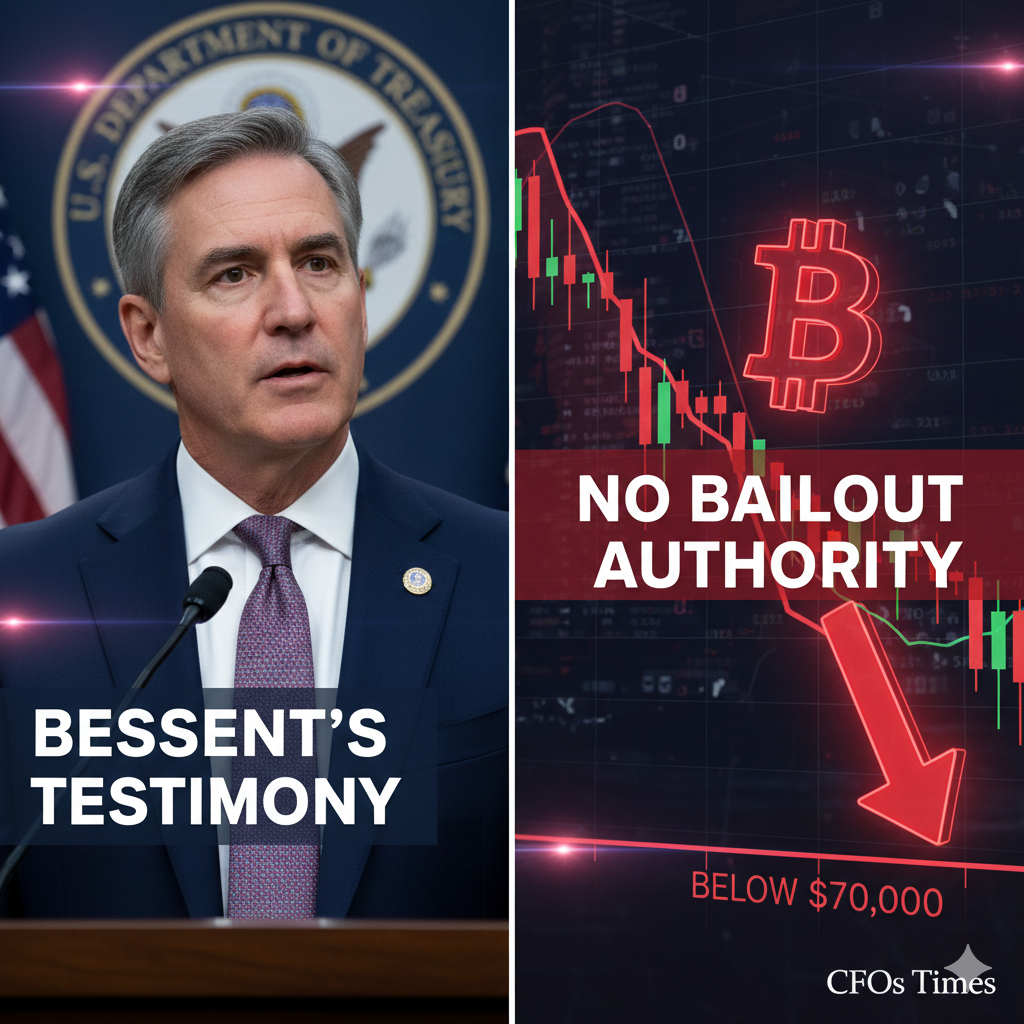
The Bessent Bitcoin bailout authority debate reached a boiling point today, February 5, 2026, during a high-stakes House Financial Services Committee hearing. Treasury Secretary Scott Bessent’s explicit clarification that the U.S. Treasury lacks the legal standing to support cryptocurrency prices has sent shockwaves through global markets, causing Bitcoin to dip below the $70,000 threshold.
For institutional investors and CFOs, understanding the limits of the Bessent Bitcoin bailout authority is crucial for risk management in 2026. This analysis explores the legal framework cited by the Treasury, the role of the Financial Stability Oversight Council (FSOC), and the long-term implications for digital asset liquidity.
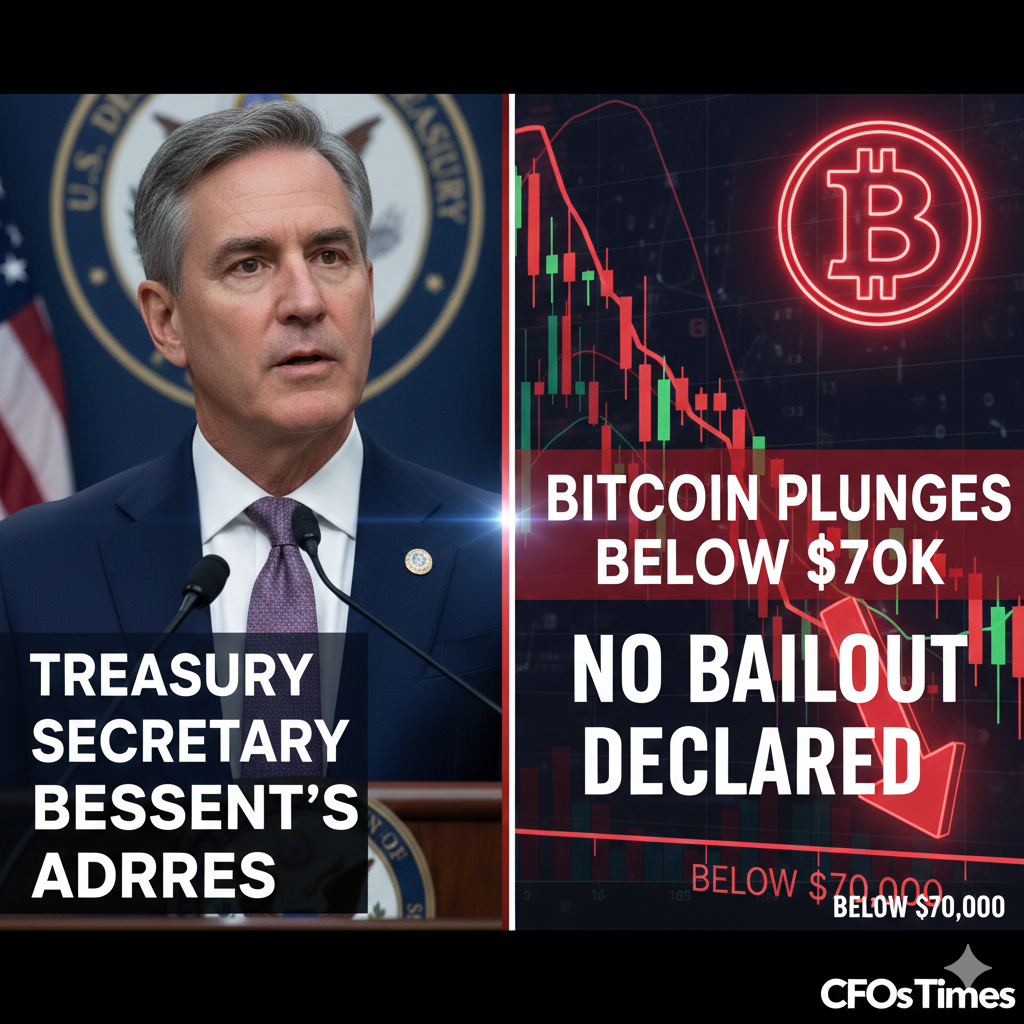
Table of Contents
1. The Core of the Bessent Bitcoin Bailout Authority Controversy
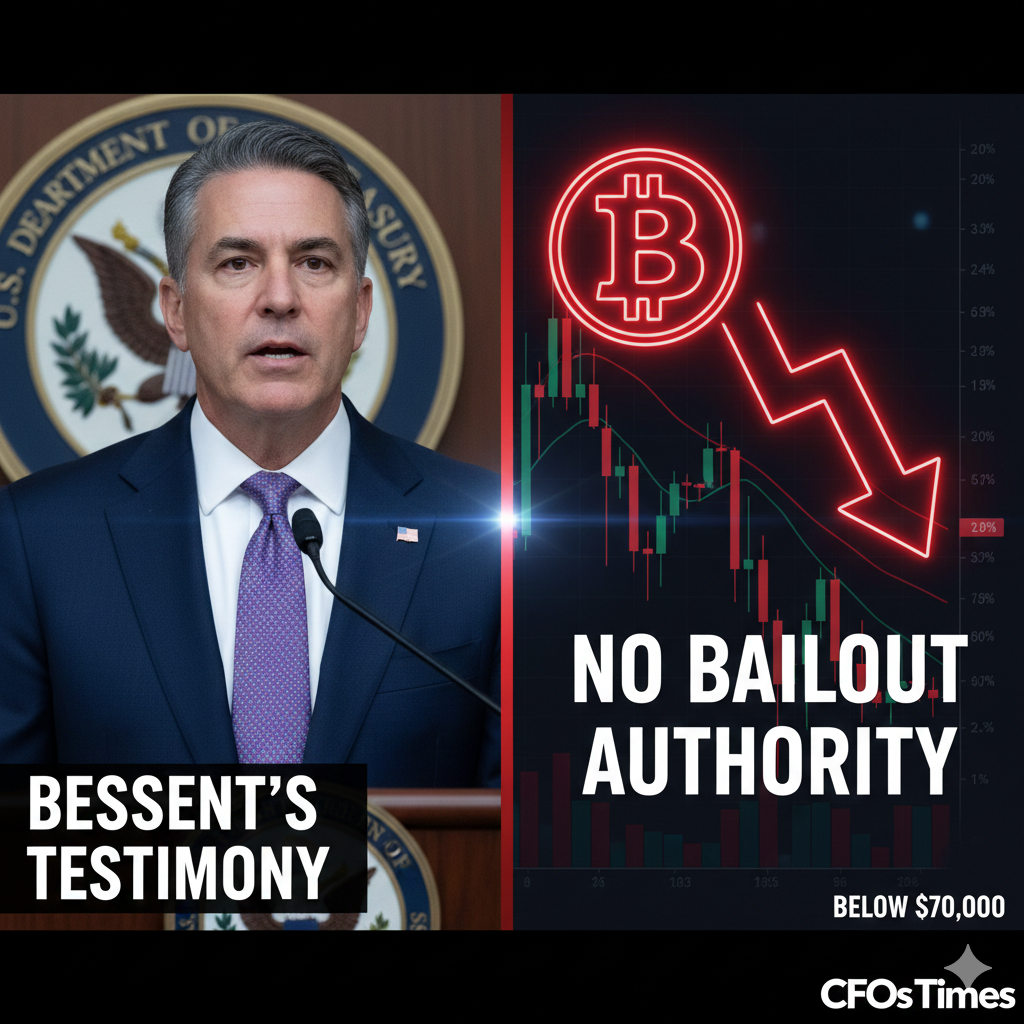
During today’s testimony, Secretary Bessent was asked directly whether the U.S. government could act as a “buyer of last resort” for digital assets. His response was definitive: neither the Treasury nor the FSOC currently possesses the statutory mandate to intervene in private cryptocurrency markets.
Key Takeaways from the Testimony
- No Direct Buying Power: The Treasury cannot use taxpayer funds to purchase Bitcoin or other tokens to stabilize market crashes.
- FSOC Limitations: While the FSOC monitors systemic risk, it does not have the “Bessent Bitcoin bailout authority” to direct private banks to support crypto prices.
- Asset Seizure Realities: Bessent noted that while the US holds over $15 billion in seized Bitcoin, this is a law enforcement byproduct, not a strategic reserve.
2. Market Reaction: Bitcoin’s Dip Below $70,000
Immediately following the comments on Bessent Bitcoin bailout authority, Bitcoin (BTC) saw a sharp 4% decline, testing support levels at $69,525. The lack of a “government backstop” has led many leveraged traders to exit positions, fearing a lack of liquidity during extreme volatility.
BTC Price Impact Comparison (Feb 4 – Feb 5, 2026)
| Metric | Feb 4, 2026 | Feb 5, 2026 (Post-Testimony) | Change % |
| Bitcoin Price | $72,450 | $69,525 | -4.04% |
| Trading Volume | $32B | $48B | +50.0% |
| Market Sentiment | Greed (71) | Fear (42) | -40.8% |
3. Legal Framework: Why the Treasury is Hands-Off
The legal reasoning behind the lack of Bessent Bitcoin bailout authority stems from the Dodd-Frank Act and current FSOC protocols. According to the U.S. Department of the Treasury, the Secretary’s powers are strictly defined by Congress, and digital assets do not currently fall under the definition of “traditional financial instruments” that qualify for stabilization funds.
Expert Insight: “The Treasury is signaling that crypto must live or die by its own market mechanics,” says a lead analyst at theFinancial Stability Board (FSB). “Without Congressional action, the Bessent Bitcoin bailout authority simply does not exist.”
4. Institutional Implications: Managing Crypto Risk in 2026
For corporate treasuries and CFOs, the clarification on Bessent Bitcoin bailout authority means that crypto-assets must be treated as high-risk ventures without the possibility of a “Lender of Last Resort.”
Strategic Recommendations
- Reduce Leveraged Exposure: Avoid over-collateralization in protocols that assume a price floor.
- Monitor FSOC Reports: Watch for upcoming FSOC annual reports which may suggest new regulatory oversight even without bailout powers.
- Diversify Hedges: Shift focus toward traditional commodities like Gold or Silver during periods of regulatory uncertainty.
5. Conclusion: The Future of Crypto Regulation
The definitive stance on Bessent Bitcoin bailout authority marks a turning point in the US government’s relationship with digital assets. While the “Trump Coin” and Bitcoin enthusiasts hoped for more direct support, the 2026 reality is one of self-reliance. As the market digests these comments, expect continued volatility but a more mature, less speculative investor base to emerge.
Frequently Asked Questions (FAQs)
Does Scott Bessent have the power to bail out Bitcoin?
No. Secretary Bessent explicitly stated today that neither the Treasury nor the FSOC has the legal authority to bail out or intervene in the Bitcoin market.
Why did Bitcoin drop after Bessent’s comments?
The market had priced in some level of government support or a “strategic reserve” sentiment. The denial of Bessent Bitcoin bailout authority led to a “sell the news” event.
What is the FSOC’s role in crypto?
The FSOC monitors if crypto poses a “systemic risk” to the US financial system, but it cannot order banks to buy Bitcoin during a downturn.
Where can I find official updates on US Treasury policies?
Official statements and testimony transcripts are available at the U.S. House Committee on Financial Services.
Financial Disclosure & Professional Advice Disclaimer:
The information provided on CFOs Times regarding the Bessent Bitcoin Bailout Authority and 2026 U.S. Treasury policies is for general informational and educational purposes only. It is not intended as, and should not be taken as, professional financial, investment, or legal advice.
While we utilize data from official sources like the U.S. Department of the Treasury and the FSOC, market conditions—especially in the digital asset sector—are highly volatile and subject to rapid change. CFOs Times is not a registered investment advisor or broker-dealer. We strongly recommend that you consult with a certified financial professional before making any decisions based on the “Bessent Bitcoin Bailout Authority” analysis or related Q1 2026 market trends.
Investments in cryptocurrencies involve significant risk, including the possible loss of principal. Past performance of Bitcoin or any digital asset is not a guarantee of future results.

Dr. Dinesh Kumar Sharma is an award-winning Chief Financial Officer and Director of Finance with over 25 years of expertise in strategic planning and digital transformation. Recognized as a five-time CFO of the Year, he specializes in leveraging Generative AI and Microsoft Copilot to optimize financial forecasting and cost management. Dr. Sharma holds a Doctorate in Management (Finance) and has successfully scaled organizations from INR 1 billion to INR 7 billion. He is dedicated to providing transparent, data-driven insights for modern decision-makers at CFOs Times.