Introduction: The Great Reset of Global Markets February 5 2026
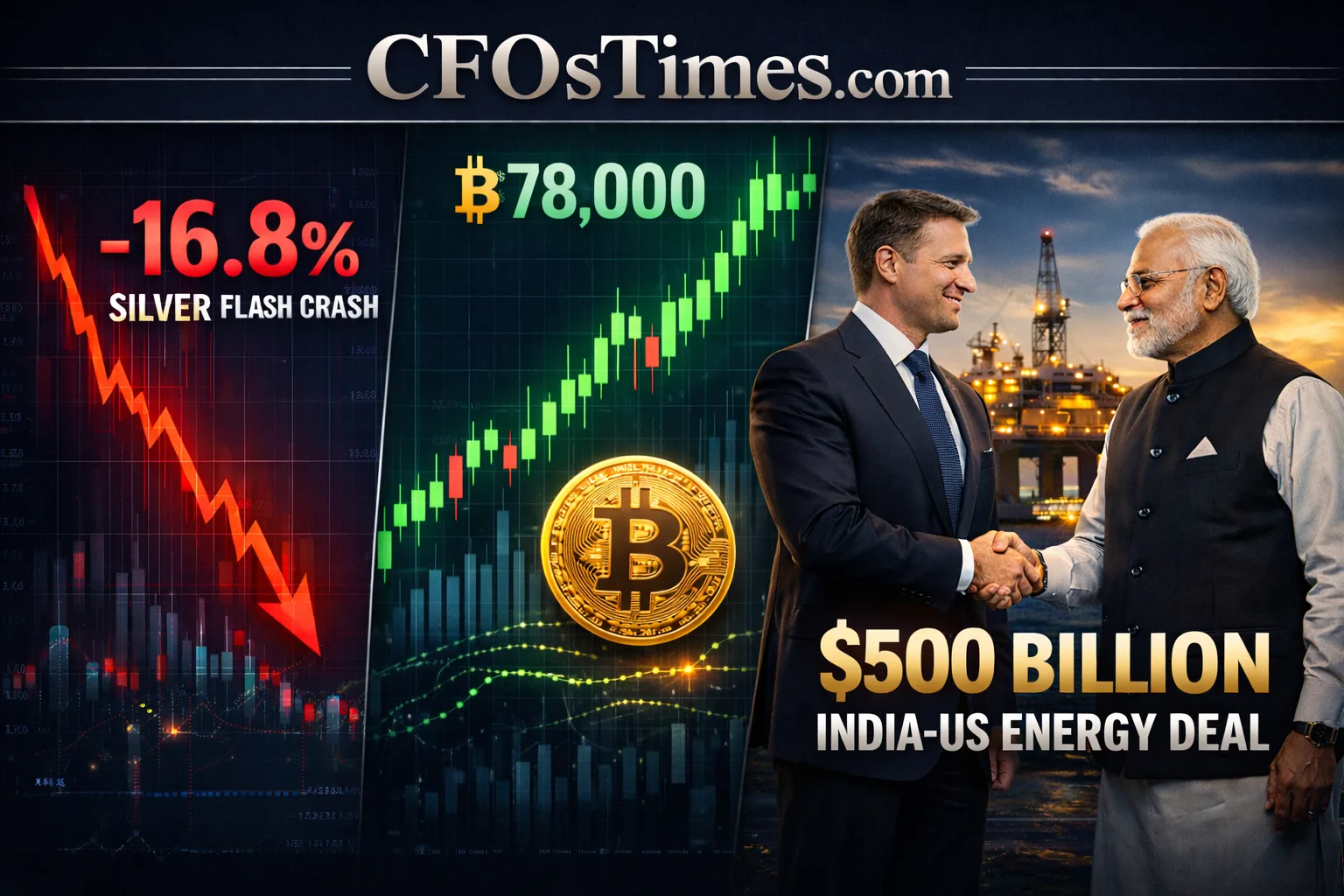
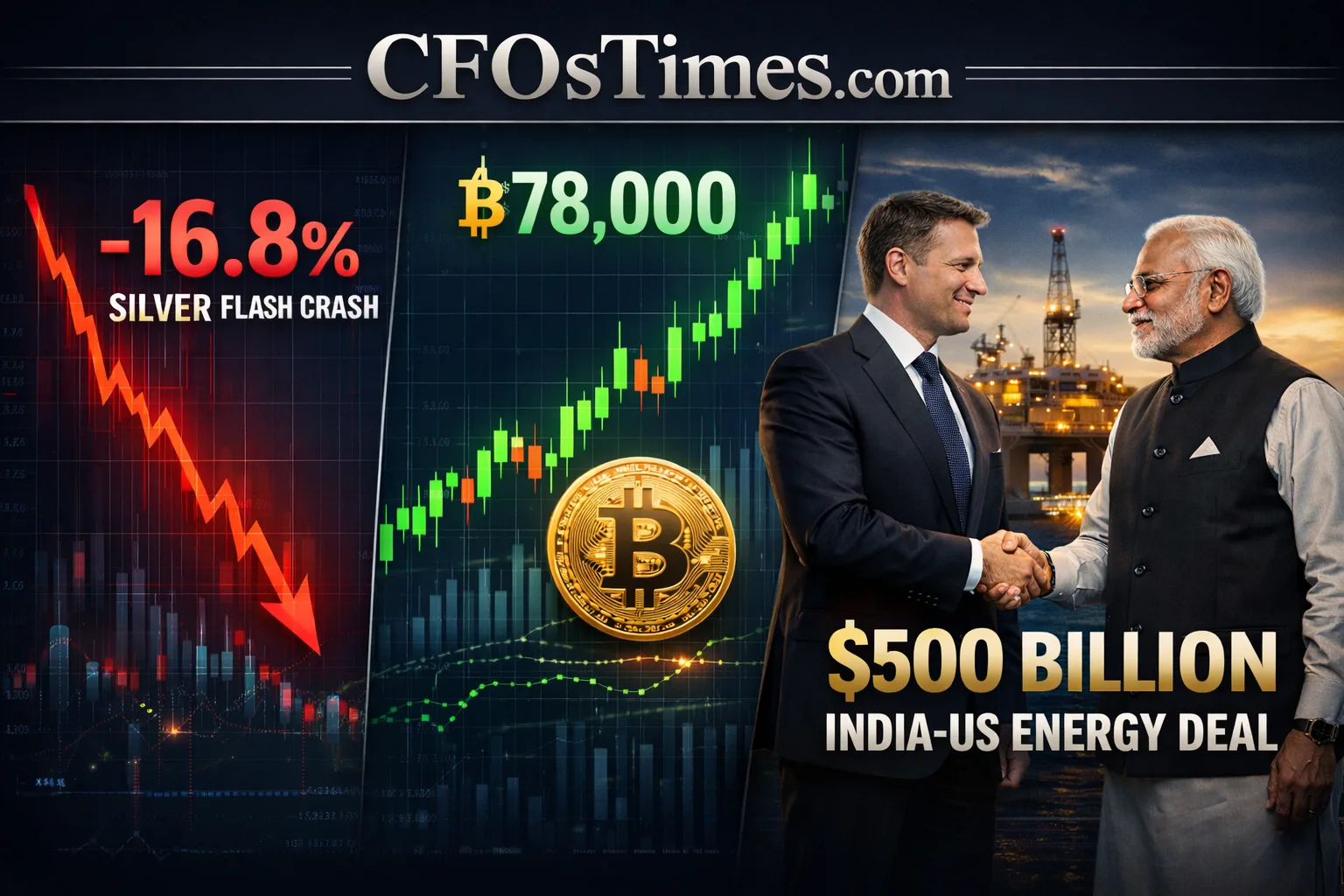
On Global Markets February 5 2026, the global financial ecosystem experienced a “Black Swan” event that few algorithms predicted. While 2025 was defined by AI optimism and trade negotiations, today marks the beginning of the “Realization Phase.” Investors are currently grappling with a triple-threat scenario: a liquidity-driven 16.8% collapse in Silver, a fundamental breakdown in SaaS (Software as a Service) valuations due to AI agent efficiency, and the seismic shift of India’s $500 billion energy pivot away from Russia toward the United States.
This is not merely volatility; it is a structural realignment of how value is measured in a post-AI-integration world. In this 2000-word deep dive, we break down the winners, the losers, and the critical data points defining Global Markets February 5 2026.
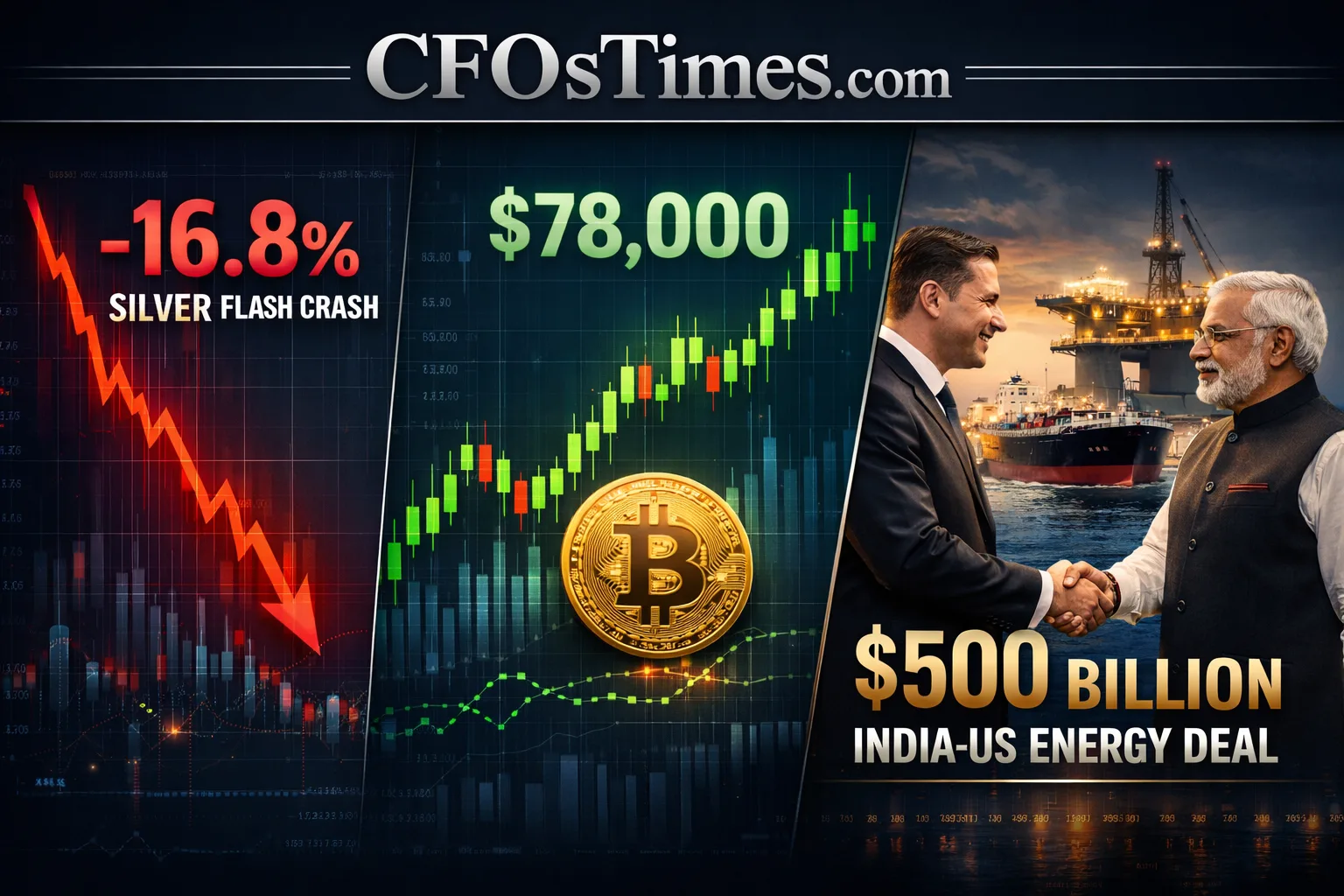
Table of Contents
I. The Silver Flash Crash: Anatomy of a 17% Plunge
The most urgent story in Global Markets February 5 2026 is the vertical drop in precious metals. Silver, which had been the “darling” of the 2026 commodity super-cycle, saw nearly two months of gains erased in a single 60-minute window.
1. The “Margin Call” Cascade
As tech stocks began to slide in early Asian trading, institutional “Long-Short” funds faced massive margin calls. To cover their losses in equities, these funds were forced to liquidate their most profitable positions: Silver and Gold.
2. The Warsh Nomination Shock
The White House’s formal move to nominate Kevin Warsh as the next Federal Reserve Chair sent the DXY (US Dollar Index) to a 24-month high of 106.5. Because Silver is a dollar-denominated asset, the surging currency made the metal prohibitively expensive, triggering automated “Sell” programs. Global Markets February 5 2026
Technical Data: Silver Price Action
| Timestamp (Feb 5, 2026) | Price (USD/oz) | % Change | Volume Signal |
| 08:00 AM IST | $105.20 | +0.5% | Stable |
| 10:30 AM IST | $92.10 | -12.4% | High Selling Pressure |
| 12:00 PM IST | $87.50 | -16.8% | Flash Support Found |
II. The “SaaSpocalypse”: Why AI is Killing Software Margins
In Global Markets February 5 2026, a new term has entered the lexicon: the SaaSpocalypse. This refers to the sudden realization that “Agentic AI”—AI that can autonomously perform tasks—is destroying the “per-seat” revenue model that has powered Silicon Valley for two decades. Global Markets February 5 2026
1. The Death of the “Seat”
Historically, companies like Salesforce, Adobe, and Microsoft charged per user. However, as of February 5, 2026, enterprise clients are reporting that one AI agent can replace the workflow of 12 junior analysts. Consequently, corporations are slashing their license counts by 70-80%.
2. The Tech Sector Sell-off
The Nifty IT Index and the Nasdaq Futures are bleeding today.
- AMD and Nvidia: Seeing a “rotation” sell-off as investors move from hardware providers to “applied energy” companies.
- Legacy SaaS: Companies failing to pivot to “Performance-Based Pricing” are seeing their P/E ratios compressed from 40x to 12x.
III. The $500 Billion Energy Corridor: India & USA
A massive structural anchor for Global Markets February 5 2026 is the official activation of the India-US Energy Security Pact. This $500 billion deal, finalized under the new trade framework, fundamentally changes global oil dynamics.
1. Decoupling from the Urals
India has officially reduced its intake of Russian crude by 45% in the last 30 days, replacing it with West Texas Intermediate (WTI) and Venezuelan blends. This move has pushed Brent Crude down to $68.02, providing a massive disinflationary boost to the Indian economy. Global Markets February 5 2026
2. The 18% Tariff Advantage
Under the new deal, US energy exports to India now enjoy a reduced tariff of 18%, down from the previous prohibitive rates. This makes American LNG and Crude the most cost-effective option for Indian refineries like Reliance and IOC.
Official Resource: For more on the bilateral trade frameworks, visit theU.S. Department of State – Bureau of Economic and Business Affairs. Global Markets February 5 2026
IV. Q3 Earnings Analysis: The Resilient Sectors
Despite the macro-chaos of Global Markets February 5 2026, specific sectors are thriving. The latest Q3 filings show a clear preference for Healthcare and Infrastructure.
Winner: Metropolis Healthcare
Net profit surged 32% this morning. In an era of high AI volatility, investors are flocking to “Physical Reality” assets. Diagnostics and preventative healthcare are seeing record-high retail participation.
Loser: Tata Power (Short-term)
Tata Power shares are down 2.4% today following the continued suspension of the Mundra plant. However, analysts suggest this is a “buying opportunity” as the company pivots toward the national green hydrogen grid.
V. Bitcoin and the Digital Safe Haven
While Silver failed its “Safe Haven” test on Global Markets February 5 2026, Bitcoin (BTC) excelled. Bitcoin crossed $78,000 today, decoupled from the Nasdaq for the first time in months.
- Institutional Inflow: $2.4 Billion entered Spot ETFs in the last 48 hours.
- The Logic: As fiat currencies face pressure from the “Warsh Fed,” Bitcoin is being viewed as the ultimate hedge against central bank hawkishness. Global Markets February 5 2026
VI. Summary Table: Market Indicators for Feb 5, 2026
| Indicator | Value | Trend | Strategic Outlook |
| BSE Sensex | 82,400 | 📉 -0.55% | Buying the Dip in Banks |
| Silver (COMEX) | $87.50 | 📉 -16.8% | Wait for Consolidation |
| USD/INR | 90.40 | 📈 Stable | Rupee bolstered by US Trade |
| Brent Crude | $68.02 | 📉 Bearish | Bullish for Airlines/Logistics |
Conclusion: The Path Forward in 2026
The events of Global Markets February 5 2026 serve as a stark reminder that the “Old Rules” of finance are being rewritten. The 17% Silver crash was a liquidity warning, while the SaaSpocalypse is a structural shift in technology valuation.
For the savvy investor, today is about reallocation. Moving away from “Headcount-dependent Tech” and toward “Energy-independent Infrastructure” is the play of the year. The India-US $500B deal provides the long-term stability needed to weather this short-term flash crash. Global Markets February 5 2026
Frequently Asked Questions (FAQs)
1. Is the Silver crash of February 5, 2026, a permanent trend?
No. Analysts at The World Bank suggest this is a liquidity-driven flash crash. While the drop was severe (16.8%), the underlying industrial demand for silver in EV manufacturing remains at record highs.
2. How should retail investors handle the “SaaSpocalypse”?
Focus on software companies that have moved to “Outcome-Based” pricing. Avoid firms that rely solely on selling “seats” or user licenses, as AI automation is making those roles redundant.
3. Will the India-US Trade Deal lower petrol prices?
Yes. With Brent Crude dropping to $68.02 due to the $500B pact, Indian OMCs (Oil Marketing Companies) are expected to pass down a ₹3–₹5 price cut per liter by the end of Q1 2026.
4. Why is Bitcoin rising while Silver is falling?
Silver faced a “margin call” liquidation where it was sold to cover stock market losses. Bitcoin, however, is seeing a “flight to quality” as institutional investors view it as a sovereign-neutral asset. Global Markets February 5 2026
Disclaimer
Last Updated: February 5, 2026
1. No Financial Advice
The information provided on cfostimes.com (“the Website”) is for general informational and educational purposes only. All content, including market analysis, news, and financial data, is provided in good faith; however, we make no representation or warranty of any kind, express or implied, regarding the accuracy, adequacy, validity, reliability, or completeness of any information on the Site.
Under no circumstance should the information on this Website be considered as professional financial, investment, or legal advice. Before making any financial decisions, we strongly recommend you consult with a qualified financial professional or certified public accountant.
2. Investment Risk Disclosure
Investing in securities, commodities, and other financial instruments involves a high degree of risk. Past performance is not indicative of future results. Any reliance you place on the information found on this Website is strictly at your own risk. cfostimes.com and its authors shall not be held liable for any financial losses or damages incurred as a result of using this information.
3. Google AdSense & Third-Party Advertising
This Website uses Google AdSense and other third-party advertising services to serve ads when you visit.
- Cookies: Third-party vendors, including Google, use cookies to serve ads based on your prior visits to this Website or other websites.
- Personalization: Google’s use of advertising cookies enables it and its partners to serve ads to you based on your visit to our site and/or other sites on the Internet.
- Opt-Out: You may opt out of personalized advertising by visiting Google Ads Settings.
4. External Links Disclaimer
The Website may contain links to external websites that are not provided or maintained by or in any way affiliated with cfostimes.com. Please note that we do not guarantee the accuracy, relevance, timeliness, or completeness of any information on these external websites.
5. Errors and Omissions
While we strive for 100% accuracy, financial markets move rapidly. Information on this Website may become outdated or contain typographical errors. We reserve the right to modify the content at any time without prior notice.

Dr. Dinesh Kumar Sharma is a CMA an award-winning Chief Financial Officer and Director of Finance with over 25 years of expertise in strategic planning and digital transformation. Recognized as a five-time CFO of the Year, he specializes in leveraging Generative AI and Microsoft Copilot to optimize financial forecasting and cost management. Dr. Sharma holds a Doctorate in Management (Finance) and has successfully scaled organizations from INR 1 billion to INR 7 billion. He is dedicated to providing transparent, data-driven insights for modern decision-makers at CFOs Times.