Introduction: Why October 29 Is a Watershed Moment
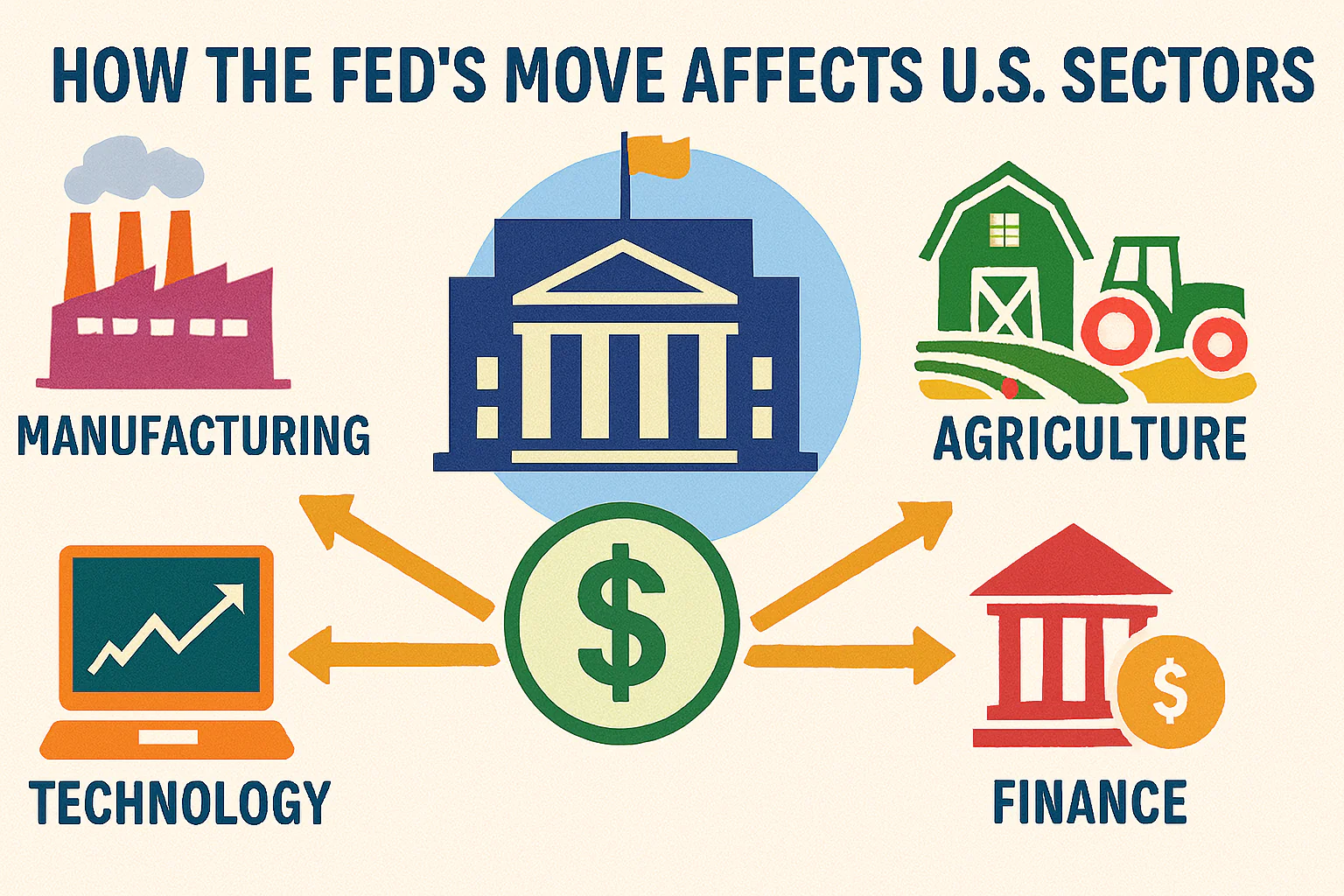
Today, the U.S. Federal Reserve concludes its October policy meeting amid a backdrop of economic uncertainty, shifting investor sentiment, and mounting pressure from both Wall Street and Main Street. With inflation cooling but growth showing signs of fragility, the Fed’s decision on interest rates — and Chair Jerome Powell’s accompanying remarks — could reshape market dynamics for months to come. Fed’s Move Affects U.S. Sectors
For CFOs, investors, and financial strategists, this isn’t just another rate announcement. It’s a signal flare for capital allocation, risk management, and long-term planning. In this post, we’ll unpack the Fed’s decision, analyze its market impact, and offer actionable insights for navigating the post-announcement landscape.
Table of Contents
📉 Section 1: The Fed’s Mandate and Today’s Decision
The Federal Reserve operates under a dual mandate: to maintain price stability and maximize employment. In 2022 and 2023, inflation surged past 9%, prompting aggressive rate hikes. But by mid-2025, inflation had cooled to around 2.4%, and unemployment hovered near 4.1% — a delicate balance.
What Happened Today? Fed’s Move Affects U.S. Sectors
- The Fed held rates steady at 5.25%, signaling a pause in its tightening cycle.
- Powell emphasized a “data-dependent” approach, citing mixed signals from labor markets and consumer spending.
- The Fed’s dot plot suggests one more rate cut may be possible before year-end, contingent on inflation trends.
This decision reflects caution — the Fed doesn’t want to reignite inflation, but it also doesn’t want to choke off growth. Fed’s Move Affects U.S. Sectors
📊 Section 2: Market Reactions — Real-Time and Historical
Markets responded swiftly to the Fed’s announcement, with volatility spiking across equities, bonds, and commodities. Fed’s Move Affects U.S. Sectors
Immediate Reactions
- S&P 500 jumped 1.2% in afternoon trading, led by tech and consumer discretionary.
- 10-year Treasury yields dipped to 4.65%, reflecting expectations of future easing.
- Gold prices rose 0.8%, signaling investor hedging against uncertainty.
Historical Context
- In past cycles, Fed pauses have often preceded equity rallies — but only when inflation was truly under control.
- Bond markets tend to price in future cuts quickly, which can lead to overexuberance if the Fed stays hawkish.
CFOs should note: market optimism doesn’t always align with Fed caution. Strategic planning must account for both scenarios. Fed’s Move Affects U.S. Sectors
🏗️ Section 3: Sector Watch — Who Wins, Who Waits
Interest rate decisions ripple unevenly across sectors. Here’s how today’s announcement could affect key industries:
📱 Tech and Growth Stocks
- Lower rates boost valuations for growth companies with long-term earnings potential.
- Expect renewed momentum in AI, cloud, and fintech — but watch for profit-taking if inflation resurfaces.
🏦 Financials
- Banks face margin pressure as rate hikes stall.
- Regional banks may struggle with deposit flight and loan demand, while large institutions pivot to fee-based revenue.
🏘️ Real Estate
- Commercial real estate remains fragile, especially office space.
- Residential markets may see a modest rebound if mortgage rates ease — but affordability remains a challenge.
🛢️ Energy and Industrials
- Rate stability supports capital-intensive projects.
- Energy firms benefit from global demand and stable financing costs, but geopolitical risks loom. Fed’s Move Affects U.S. Sectors
🧠 Section 4: Strategic Implications for CFOs and Finance Leaders
Today’s Fed decision isn’t just a macro headline — it’s a strategic inflection point for corporate finance.
1. Capital Allocation
- With borrowing costs plateauing, CFOs can revisit deferred capex and M&A opportunities.
- Consider refinancing high-cost debt before the next rate cycle begins.
2. Treasury and Liquidity Management
- Lock in yields on short-term instruments while rates remain elevated.
- Rebalance cash reserves to optimize return vs. flexibility.
3. Scenario Planning
- Build models for three rate paths: flat, gradual cuts, and surprise hikes.
- Stress-test balance sheets against each scenario, especially for interest-sensitive liabilities.
4. Investor Communication
- Update guidance to reflect macro uncertainty.
- Emphasize resilience, optionality, and long-term value creation in investor calls and earnings reports. Fed’s Move Affects U.S. Sectors
📈 Section 5: What Investors Should Watch Next
For institutional and retail investors, today’s Fed decision is a cue to recalibrate portfolios.
Key Signals to Track
- Core PCE inflation: The Fed’s preferred metric — next release due November 15.
- Jobs reports: Watch for wage growth and participation rate shifts.
- Consumer sentiment: A leading indicator for spending and credit demand.
Portfolio Moves
- Tilt toward quality growth and dividend payers in equities.
- Increase exposure to short-duration bonds and floating-rate instruments.
- Consider alternatives like private credit or infrastructure for yield and diversification. Fed’s Move Affects U.S. Sectors
🧭 Section 6: Long-Term Outlook — The Fed’s Next Moves
While today’s decision was a pause, the Fed’s trajectory remains uncertain. Here’s what could shape the next 6–12 months:
Bullish Scenario
- Inflation continues to ease.
- Fed cuts rates gradually, supporting a soft landing.
- Equities rally, credit markets stabilize.
Bearish Scenario
- Inflation reaccelerates due to wage pressures or energy shocks.
- Fed resumes hikes, triggering recession fears.
- Risk assets sell off, volatility spikes. Fed’s Move Affects U.S. Sectors
Base Case
- Fed holds rates through Q1 2026.
- Markets remain range-bound, with sector rotation and selective opportunities. Fed’s Move Affects U.S. Sectors
🧩 Conclusion: Turning Fed Signals into Strategic Advantage
Today’s Fed decision is more than a monetary policy update — it’s a strategic signal for finance leaders, investors, and market participants. By understanding the nuances of the Fed’s stance, anticipating market reactions, and aligning financial strategy accordingly, CFOs and strategists can turn uncertainty into opportunity.
Whether you’re managing a corporate balance sheet, allocating capital, or advising clients, the key is to stay agile, informed, and forward-looking. The Fed may be data-dependent — but your strategy should be insight-driven. Fed’s Move Affects U.S. Sectors
❓ Frequently Asked Questions (FAQs)-Fed’s Move Affects U.S. Sectors
1. What did the Federal Reserve decide on October 29, 2025?
The Fed chose to hold interest rates steady at 5.25%, signaling a pause in its tightening cycle while monitoring inflation and employment data.
2. Why is the Fed’s rate decision important for CFOs?
Interest rates directly affect borrowing costs, capital allocation, and financial planning. A pause allows CFOs to reassess debt strategies and investment timing.
3. How does a rate hold impact the stock market?
Markets often react positively to rate holds, especially in growth sectors like tech. However, long-term effects depend on inflation trends and future Fed signals.
4. Which sectors benefit most from stable interest rates?
Tech, consumer discretionary, and real estate often benefit due to improved borrowing conditions and investor sentiment. Financials may face margin pressure.
5. What should investors do after the Fed’s decision?
Investors should monitor inflation data, rebalance portfolios toward quality assets, and consider short-duration bonds or dividend-paying stocks.
6. Will the Fed cut rates again this year?
The Fed’s dot plot suggests one possible cut before year-end, but it depends on inflation and labor market data. The stance remains data-dependent.
7. How can companies prepare for future Fed moves?
Scenario planning is key. CFOs should model different rate paths, stress-test financials, and maintain liquidity to stay agile.
8. What risks remain despite the Fed’s pause?
Reaccelerating inflation, global energy shocks, and wage pressures could force the Fed to resume hikes, impacting credit markets and valuations. Fed’s Move Affects U.S. Sectors
Disclaimer:
The information provided in this article is for general informational purposes only and does not constitute financial, investment, or legal advice. While cfostimes.com strives to ensure accuracy and relevance, readers are encouraged to consult with qualified professionals before making any financial decisions. Market conditions and Federal Reserve policies are subject to change, and interpretations may vary. cfostimes.com assumes no liability for actions taken based on this content.

Dr. Dinesh Kumar Sharma is a CMA an award-winning Chief Financial Officer and Director of Finance with over 25 years of expertise in strategic planning and digital transformation. Recognized as a five-time CFO of the Year, he specializes in leveraging Generative AI and Microsoft Copilot to optimize financial forecasting and cost management. Dr. Sharma holds a Doctorate in Management (Finance) and has successfully scaled organizations from INR 1 billion to INR 7 billion. He is dedicated to providing transparent, data-driven insights for modern decision-makers at CFOs Times.