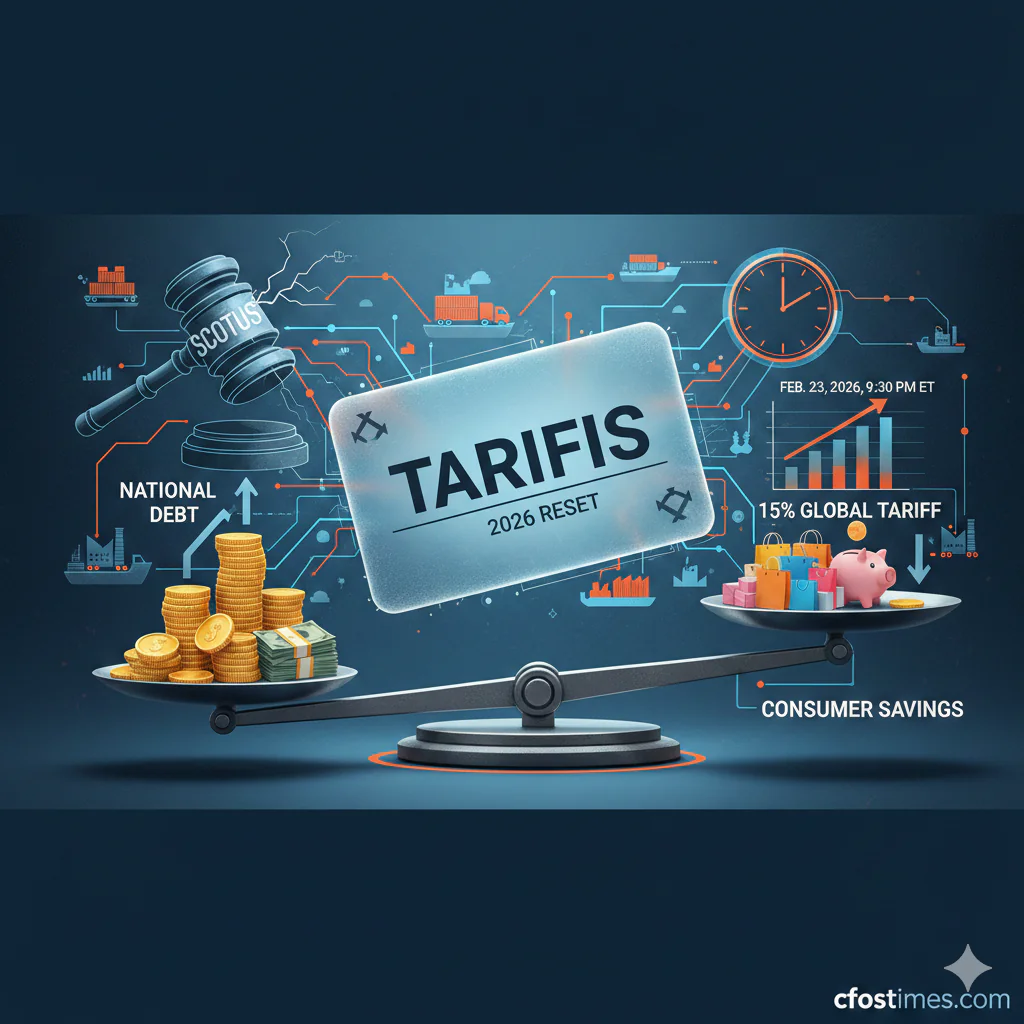
Introduction: The Ground Shifts in Washington
Section 122 Tariffs Impact 2026-For nearly a year, the U.S. economy has operated under a “tariff-first” doctrine that pushed effective duty rates to levels not seen since the 1930s. But on February 20, 2026, the ground shifted. In a landmark 6-3 decision in Learning Resources v. Trump, the Supreme Court struck down the administration’s primary tool for trade enforcement—the International Emergency Economic Powers Act (IEEPA)—nullifying billions in “reciprocal” and “fentanyl” tariffs.
However, any hope of a return to the low-tariff era of 2024 was short-lived. Within hours of the ruling, President Trump invoked Section 122 of the Trade Act of 1974, imposing a new, temporary 15% global tariff as a strategic placeholder.
As we navigate this “Wild Card” environment, the Section 122 Tariffs Impact 2026 dominates the economic landscape, raising three urgent questions:
- How will the drop from 16% to 13.7% in average effective rates affect inflation?
- Who gets a piece of the $133 billion in potential tariff refunds?
- How will the looming July 2026 USMCA renegotiations further complicate supply chains?
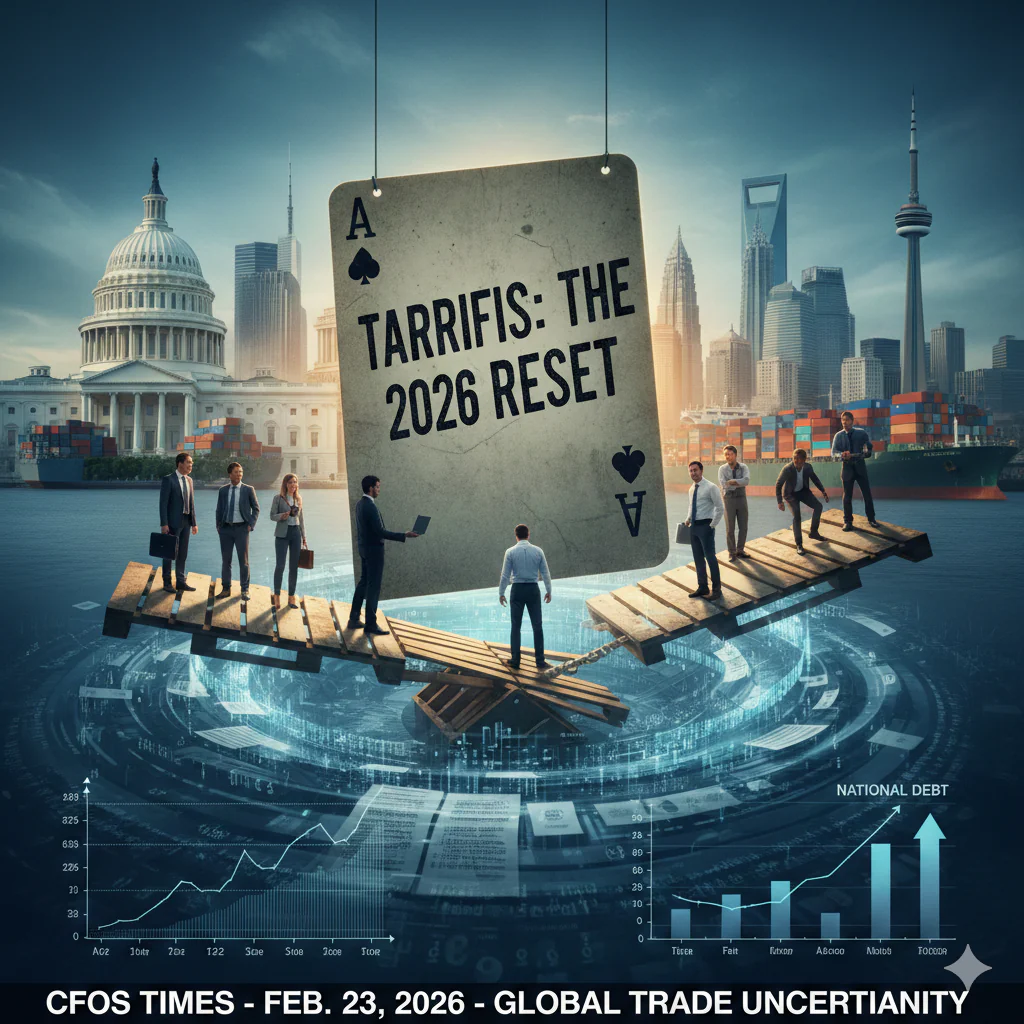
Table of Contents
1. The Anatomy of the Supreme Court Ruling: Learning Resources v. Trump
The Supreme Court’s ruling was less about trade policy and more about the “Major Questions Doctrine.” The majority opinion, authored by Chief Justice Roberts, stated that the executive branch cannot “lay and collect Taxes” without explicit, unambiguous authority from Congress.
The Death of IEEPA Tariffs
The court ruled that IEEPA’s power to “regulate importation” does not inherently include the power to levy taxes (tariffs). This effectively killed:
- The Reciprocal Tariff Regime: The broad duties applied to almost all trading partners in April 2025.
- The Fentanyl Tariffs: Punitive duties specifically targeting China, Mexico, and Canada.
- De Minimis Changes: The removal of tax-free thresholds for low-value Chinese imports (though a separate Executive Order has attempted to preserve some of these restrictions).
The Dissent and the Refund Chaos-Section 122 Tariffs Impact 2026
Justices Kavanaugh, Thomas, and Alito dissented, warning that the ruling would create “extraordinary practical difficulties,” specifically regarding the $133 billion to $175 billion already collected. Because the Court did not provide a roadmap for refunds, the U.S. Treasury and the U.S. Court of International Trade (CIT) are now bracing for a tidal wave of litigation. Section 122 Tariffs Impact 2026
2. The Section 122 Pivot: A 150-Day Storm
The Trump administration’s response was swift. By shifting to Section 122, the President utilized a “balance-of-payments” authority. This law allows for temporary surcharges of up to 15% for a maximum of 150 days.
Winners and Losers of the 15% Global Rate
The Section 122 Tariffs Impact 2026 has created a unique set of economic winners and losers:
- Winners (Lower Rates): Countries like India (-5.6 pp) and China (-7.1 pp), which faced sky-high reciprocal rates under the old regime, actually see a reduction in their effective duty burden compared to 2025.
- Losers (Higher Rates): Traditional allies with low baseline tariffs, such as the United Kingdom (+2.1 pp) and Italy (+1.7 pp), now face a higher “floor” due to the 15% surcharge.
Comparison Table: Effective Tariff Rates (2025 vs 2026)
| Metric | Pre-SCOTUS (2025) | Post-SCOTUS (Section 122) |
| Average Effective Rate | 16.0% | 13.7% |
| China Imports | ~25%+ | 15% Surcharge |
| UK/EU Imports | ~2-3% | 15% Surcharge |
| Legal Validity | Permanent (IEEPA) | 150-Day Limit (Section 122) |
3. Impact on the American Household: The $700 Burden
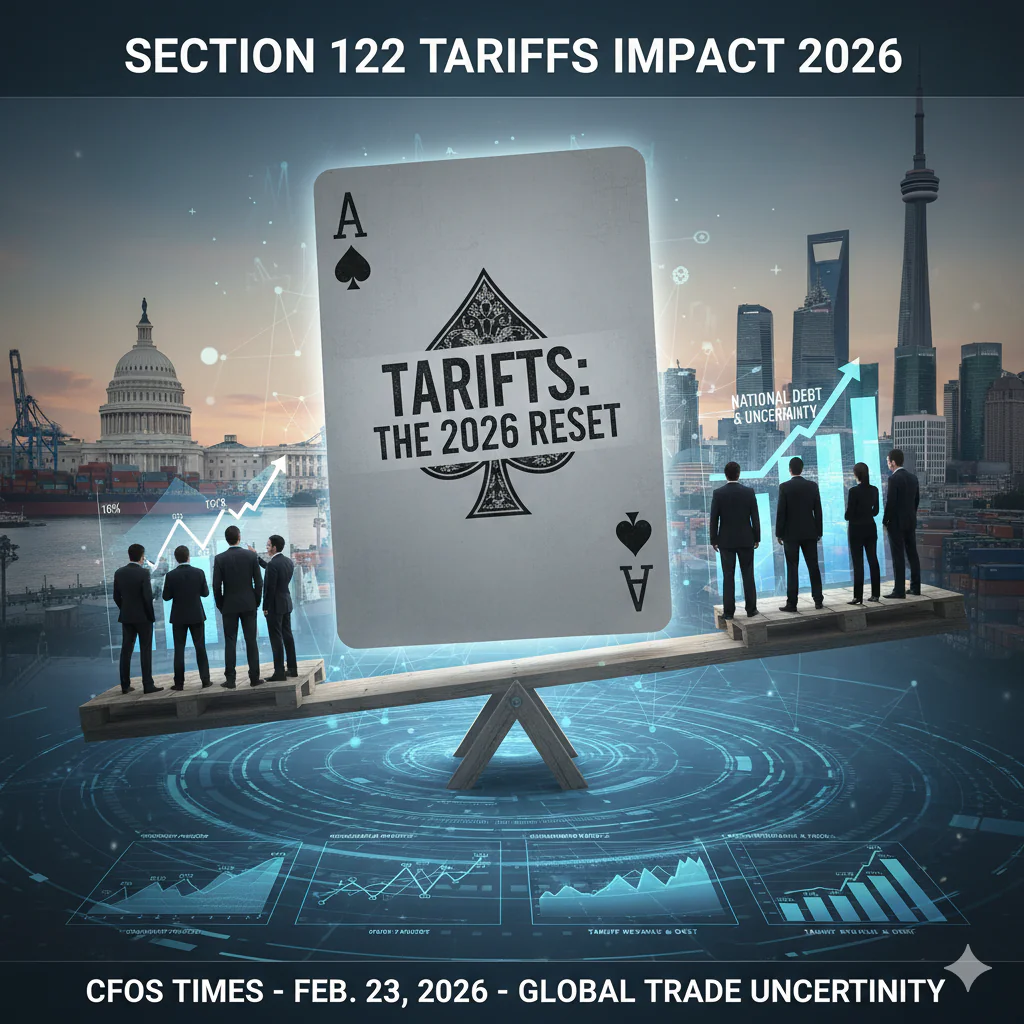
While the headlines focus on billions in trade, the real impact is at the kitchen table. In 2025, the average U.S. household paid an estimated $1,300 in hidden tariff taxes.
The 2026 Forecast
According to the Tax Foundation, the new 15% regime—assuming it stays for at least 150 days—will cost the average household $700 in 2026.
- The “Tariff Dividend”: This $600 reduction (from $1,300 to $700) could act as a modest stimulus, boosting consumer spending in the second half of the year.
- Sector Inflation: Prices for metals, vehicles, and electronics remain under pressure. For example, Ford Motor recently reported a $900 million hit due to shifting tariff-relief programs, costs that are inevitably passed on to the buyer.
4. The Refund War: Can Businesses Get Their Money Back?
The most contentious battle of 2026 isn’t about new tariffs, but about the old ones. With $133 billion in “illegal” tariffs sitting in the Treasury, businesses are scrambling.
The Path to Recovery
Legal experts at Sidley Austin and Ropes & Gray suggest two primary routes for businesses:
- Formal Protests: Filing with Customs and Border Protection (CBP) within 180 days of “liquidation” (the finalization of an entry).
- CIT Litigation: Suing the government in the Court of International Trade.
Key Note: Treasury Secretary Scott Bessent has signaled the administration will fight these refunds “for years,” suggesting that the “American people won’t see it” anytime soon.
5. Global Supply Chain Shifts: The Mexico-China Paradox
For small business owners like Clifton Broumand, the “wild card” nature of these tariffs makes long-term planning impossible.
The USMCA Factor
Many companies are currently moving production from China to Mexico to leverage the USMCA duty-free status. However, the agreement is up for a mandatory six-year review on July 1, 2026.
- The Threat: President Trump has suggested the U.S. could withdraw or seek radical renegotiations if Canada and Mexico don’t address trade imbalances.
- The Result: Businesses are caught in a “holding pattern,” delaying investment and hiring until the July “checkpoint” provides more clarity. Section 122 Tariffs Impact 2026
6. Macroeconomic Outlook: Growth vs. Debt
The Section 122 Tariffs Impact 2026 presents a paradox for the national economy.
The Debt Dilemma
Initial estimates suggested Trump’s tariffs would raise $3 trillion over a decade to pay down the national debt. Under the new, lower-rate Section 122 regime, that projection has dropped to roughly **$1.3 trillion**.
- Revenue Gap: This $1.7 trillion shortfall may force the federal government to look for other revenue sources or cut spending, complicating efforts to manage the surging national debt.
GDP and Employment
The Yale Budget Lab predicts that while tariffs will expand U.S. manufacturing by roughly 3.2%, they will “crowd out” growth in other sectors:
- Construction: Expected to contract by 4.3% due to high material costs.
- Unemployment: Tariffs are estimated to add 0.3 percentage points to the national unemployment rate by the end of 2026. Section 122 Tariffs Impact 2026
Conclusion: Navigating the 2026 Wild Card-Section 122 Tariffs Impact 2026
The “New Normal” for the U.S. economy is a state of permanent flux. The Supreme Court has asserted Congressional power, but the Executive branch has proven it can pivot quickly to alternative legal authorities.
For businesses and consumers, the Section 122 Tariffs Impact 2026 means that price stability and supply chain certainty are things of the past. Success in 2026 will require agility, a deep understanding of trade law, and a healthy dose of patience as the legal battles over $133 billion in refunds play out in the courts.
Key Takeaways for 2026
| Metric | Impact |
| Effective Tariff Rate | 13.7% (Down from 16%) |
| Avg. Household Cost | $700 (Down from $1,300) |
| Legal Status | Section 122 (150-day limit) |
| Next Major Event | USMCA Review (July 1, 2026) |
Frequently Asked Questions (FAQ)-Section 122 Tariffs Impact 2026
What is Section 122 of the Trade Act of 1974? Section 122 allows the President to impose temporary surcharges of up to 15% for 150 days to address “serious balance-of-payments deficits.”
Why did the Supreme Court strike down the previous tariffs? The Court ruled that the IEEPA does not grant the President the specific authority to levy taxes or tariffs without a clear mandate from Congress.
Will the 15% global tariff stay permanent? Legally, Section 122 expires after 150 days. Any extension would require new legal justification or an act of Congress.
Disclaimer & Transparency Disclosure
Last Updated: February 23, 2026
Topic: Section 122 Tariffs Impact 2026
This report is provided by CFOS Times for educational and informational purposes only. The “Section 122 Tariffs Impact 2026” analysis contains forward-looking economic projections based on current data from the Yale Budget Lab, the Tax Foundation, and the U.S. Court of International Trade.
- Not Financial Advice: The information on this page does not constitute financial, legal, or investment advice. Trade laws and tariff rates are subject to rapid executive and judicial changes.
- Accuracy & Citing: We strive for 100% accuracy. All outbound links lead to official government resources (Customs & Border Protection,U.S. Trade Representative) or recognized non-partisan economic research institutions.
- Affiliate Disclosure: This content is 100% human-written and independent. We do not receive compensation from the government or any specific corporation mentioned (e.g., Ford Motor) for this coverage.
- Privacy & Safety: This site uses cookies to enhance your experience and deliver relevant advertising via Google AdSense. Please review our Privacy Policyfor more details.

Dr. Dinesh Kumar Sharma is a CMA an award-winning Chief Financial Officer and Director of Finance with over 25 years of expertise in strategic planning and digital transformation. Recognized as a five-time CFO of the Year, he specializes in leveraging Generative AI and Microsoft Copilot to optimize financial forecasting and cost management. Dr. Sharma holds a Doctorate in Management (Finance) and has successfully scaled organizations from INR 1 billion to INR 7 billion. He is dedicated to providing transparent, data-driven insights for modern decision-makers at CFOs Times.