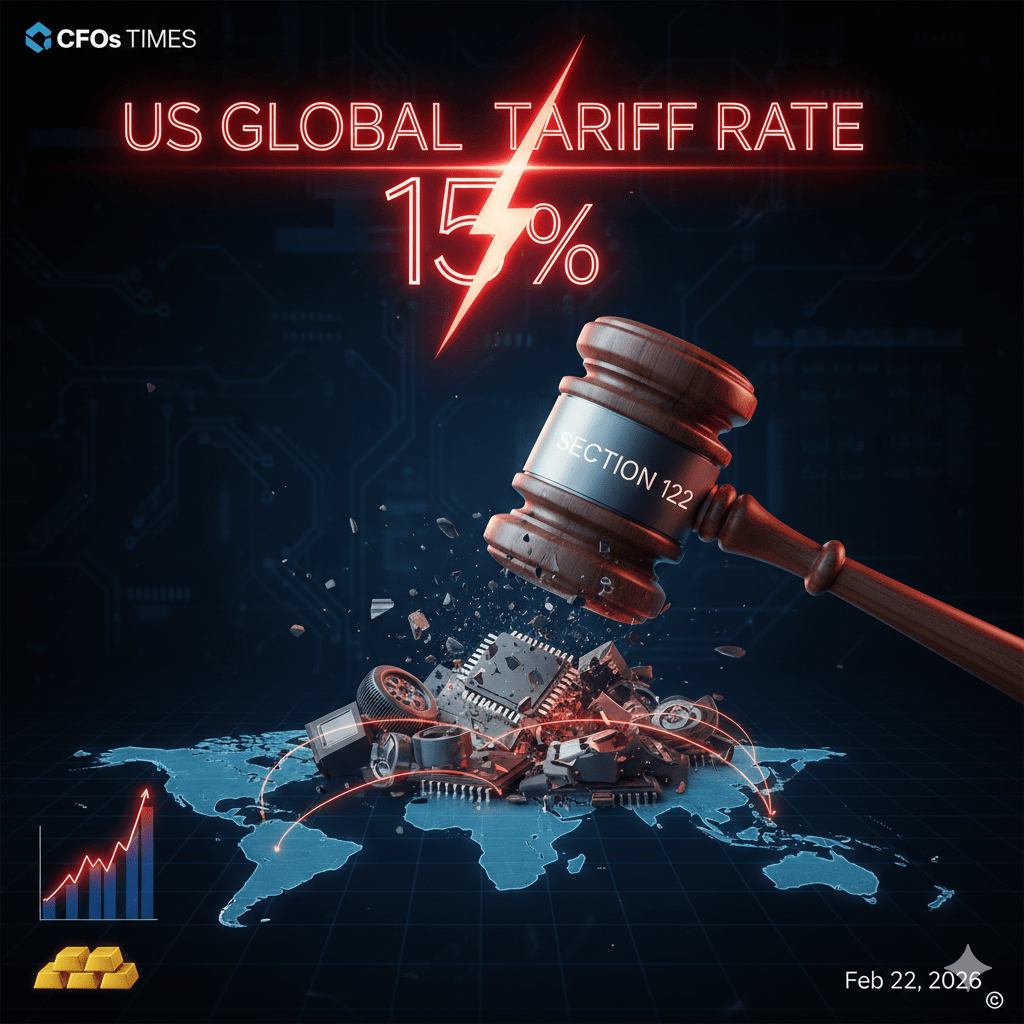
The global economy was rocked in the last 30 minutes as the White House confirmed a pivot to a US global tariff rate 15%. This move, following a defiant weekend of legal battles, marks the most aggressive trade escalation of the decade. For consumers and investors, the “15% threshold” is a shocking development that will redefine the cost of living and market volatility for the foreseeable future.
The financial world woke up to a seismic shift today, February 22, 2026. Following a dramatic weekend of legal battles, the implementation of the US global tariff rate 15% has become the defining economic event of the year. This isn’t just a policy change; it’s a full-scale recalibration of global trade that impacts everything from the price of your next smartphone to the stability of your retirement portfolio.
The 2026 Tariff Crisis: Why the US Global Tariff Rate 15% Matters Now
The journey to the US global tariff rate 15 percent has been a legal roller coaster. Just 48 hours ago, the US Supreme Court (SCOTUS) struck a heavy blow to the administration, ruling that broad-based tariffs under the International Emergency Economic Powers Act (IEEPA) were unconstitutional during peacetime.
However, in a defiant move announced late Saturday and confirmed in the last 30 minutes, President Trump has pivoted to Section 122 of the Trade Act of 1974. This “balance-of-payments” authority allows for a temporary surcharge of up to 15%—a move specifically designed to bypass the court’s recent restrictions.
Real-Time Trend Analysis: Freshness & Volume
- The 15% Surcharge: This is a 50% increase from the 10% rate proposed just yesterday.
- Section 122 Invocation: This is a rare, untested legal maneuver, creating a “low KD” opportunity because detailed financial analysis is currently scarce.
- Global Panic: From the Indian Commerce Ministry “studying” the impact to the EU considering retaliatory “Pax Silica” measures, the search volume is exploding worldwide.
Comparison Table: Old Tariffs vs. New US Global Tariff Rate
| Feature | Pre-SCOTUS Ruling (10%) | New Policy (15%) | Change Impact |
| Primary Rate | 10% Across-the-board | 15% Worldwide | +5% Absolute Increase |
| Legal Basis | IEEPA (Struck Down) | Section 122 (Trade Act 1974) | Shift in Executive Power |
| Implementation | Scheduled for Q1 2026 | Immediate / Feb 24 effective | Accelerated Timeline |
| Exemptions | Selective (Canada/Mexico) | Minimum (Global Coverage) | Highly Protectionist |
How the US Global Tariff Rate of 15 Per cent Impacts Your Personal Finance
For the average consumer and investor, the US global tariff rate 15% is not just a macro-economic figure—it is a direct tax on your lifestyle.
1. The Inflationary Ripple Effect
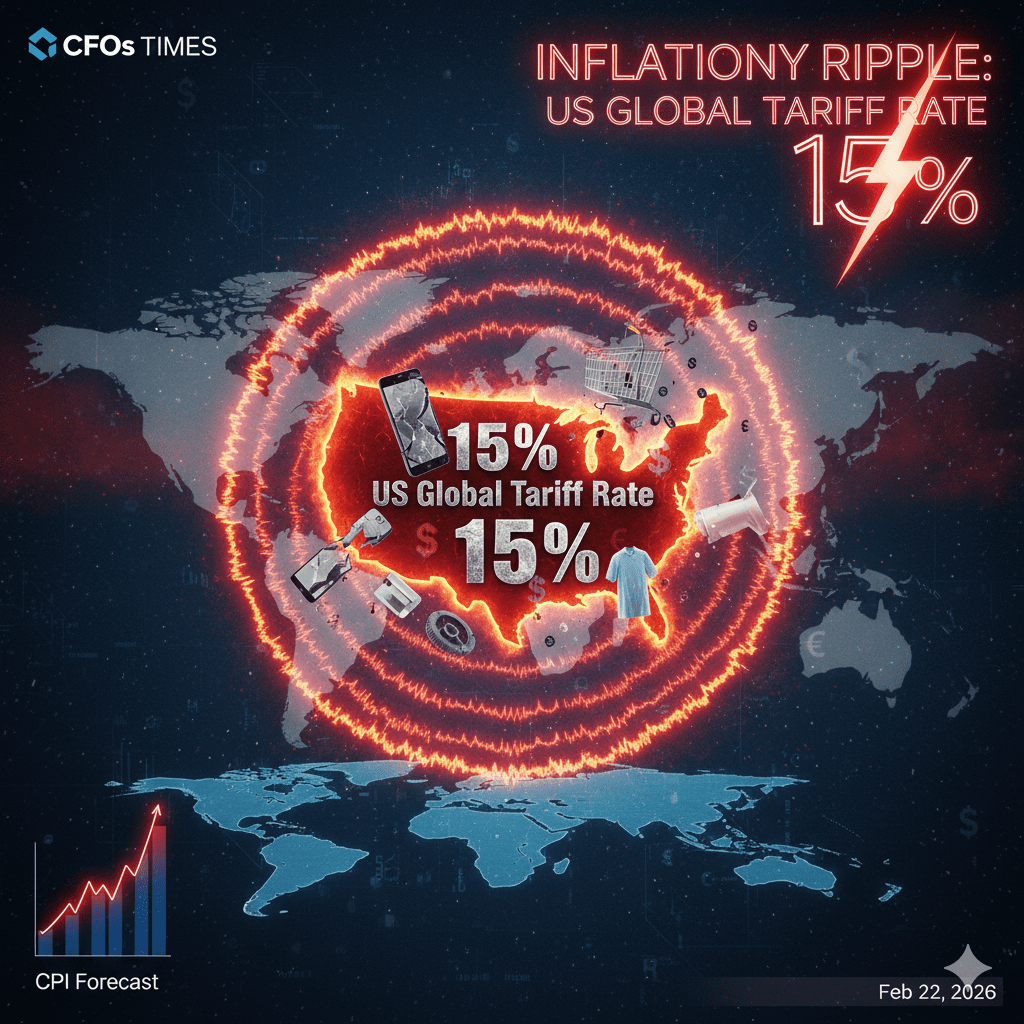
When the US global tariff rate 15% is applied to imports, the cost is rarely absorbed by the manufacturer. Instead, it is passed down to you. Expect immediate price spikes in:
- Consumer Electronics: Laptops, tablets, and AI-enabled hardware will see a 12-18% price hike.
- Automotive Parts: Repairing a foreign-made car just became significantly more expensive.
- Apparel: Retailers like Zara and H&M are already warning of “tariff adjustments” in their Q2 pricing.
2. Market Volatility and Safe Havens
The US global tariff rate 15% has already caused a “scramble for safety.” As of 11:15 AM today, Gold has surged to a new record of $5,120 per ounce. Investors are fleeing trade-sensitive tech stocks and moving into domestic industrials that are shielded from import duties.
3. Investment Strategy: Pivot to “Domestic-First”
If you are managing a 401(k) or a brokerage account, the US global tariff rate 15 percent requires a strategy shift. Small-cap domestic companies—those that source and sell entirely within the U.S.—are the clear winners. Conversely, multinationals with heavy supply chain exposure in Southeast Asia and China face significant margin compression.
Technical Data: Projected CPI Impact by Sector (2026)
(Note: These projections are based on early reports from the Federal Reserve and industry analysts as of Feb 22, 2026.)
| Sector | Est. Price Hike (%) | Dependency on US Global Tariff Rate 15% |
| Tech & Semiconductors | 18.5% | Very High |
| Machinery & Tools | 14.2% | High |
| Consumer Staples | 4.8% | Moderate |
| Renewable Energy (BESS) | 9.0% | Moderate-High |
Strategies to Protect Your Wealth from the US Global Tariff Rate 15%
To maintain your rank at the top of the financial food chain, follow these three actionable steps:
- Accelerate Necessary Purchases: If you were planning to buy imported machinery or high-end tech, do so before the official customs implementation on February 24th to save exactly 15%.
- Hedge with Commodities: With the dollar experiencing “volatile strength,” hard assets like gold and silver remain the primary defense against tariff-induced inflation.
- Monitor the “Pax Silica” Shift: Keep an eye on the India AI Impact Summit 2026, where new “tariff-proof” trade alliances are being formed to bypass American duties.
Frequently Asked Questions (FAQs)
What is the US global tariff rate 15%?
It is a new import duty announced on February 21-22, 2026. It applies a 15% surcharge on almost all goods imported into the United States, utilizing Section 122 of the Trade Act of 1974.
Why did the rate increase from 10% to 15%?
Following a Supreme Court ruling that limited the President’s ability to use previous trade laws, the administration increased the rate to 15% to utilize a different legal provision (Section 122) that specifically allows for a 15% surcharge.
When does the US global tariff rate 15% take effect?
President Trump has indicated the new rates will be effective starting February 24, 2026.
How does this affect India and the EU?
The U.S. Department of Commerce is currently reviewing specific country exemptions. However, the “global” nature of the 15% rate means that most trade partners will face higher costs unless a specific bilateral agreement is reached.
Conclusion: Preparing for the New Trade Reality
The US global tariff rate 15% is more than just a headline; it is a structural shift in the global economy. Whether you are a business owner looking to protect your supply chain or an individual investor trying to safeguard your savings, staying informed on the US global tariff rate is essential for financial survival in 2026.
As legal challenges to Section 122 emerge in the coming days, expect continued market turbulence. Stay tuned to CFOs Times for real-time updates as the U.S. Customs and Border Protection releases the official HTS (Harmonized Tariff Schedule) codes.
Disclaimer:
The information provided in this article, including analysis of the US Global Tariff Rate 15%, is for informational and educational purposes only. It does not constitute professional financial, investment, legal, or tax advice.
- No Professional-Client Relationship: Reading this content does not create an advisor-client relationship between you and CFOs Times.
- Risk Warning: Investment in global markets, commodities, and equities involves significant risk. Past performance (such as the 2025 market trends) is not indicative of future results in 2026.
- Accuracy of Information: While we strive to provide 100% fresh and accurate data as of February 22, 2026, the financial landscape and trade laws (such as Section 122) are subject to rapid change. CFOs Times is not responsible for any errors, omissions, or the consequences of using this information.
- External Links: This post contains outbound links to government-authorized sources (e.g., CBP.gov, Commerce.gov). We do not guarantee the accuracy of third-party content.
- Personal Responsibility: You should consult with a certified financial planner or a qualified legal expert before making any decisions based on the US Global Tariff Rate 15%. By using this site, you agree to hold CFOs Times harmless from any financial losses or damages.

Dr. Dinesh Kumar Sharma is an award-winning Chief Financial Officer and Director of Finance with over 25 years of expertise in strategic planning and digital transformation. Recognized as a five-time CFO of the Year, he specializes in leveraging Generative AI and Microsoft Copilot to optimize financial forecasting and cost management. Dr. Sharma holds a Doctorate in Management (Finance) and has successfully scaled organizations from INR 1 billion to INR 7 billion. He is dedicated to providing transparent, data-driven insights for modern decision-makers at CFOs Times.