Introduction: Why Universal Commerce Protocol 2026 is the Future
As of January 30, 2026, the “Search” era has officially evolved into the “Action” era. The Universal Commerce Protocol 2026 (UCP) is the backbone of this transformation. It is no longer enough to rank for keywords; your website must now be “Machine-Discoverable.”
The Universal Commerce Protocol 2026 is an open-source “digital handshake” co-developed by Google, Shopify, and major global retailers. It allows autonomous AI agents—like Gemini or personal shopping assistants—to find your products, negotiate price discounts, and execute a secure checkout without a human ever visiting your landing page. This is the TCP/IP of Commerce, and it is expected to facilitate over $385 billion in U.S. spending by 2030.
1. The Three Technical Pillars of Universal Commerce Protocol 2026
To implement the Universal Commerce Protocol 2026, a business must move beyond traditional HTML and adopt a structured “Capability” model.
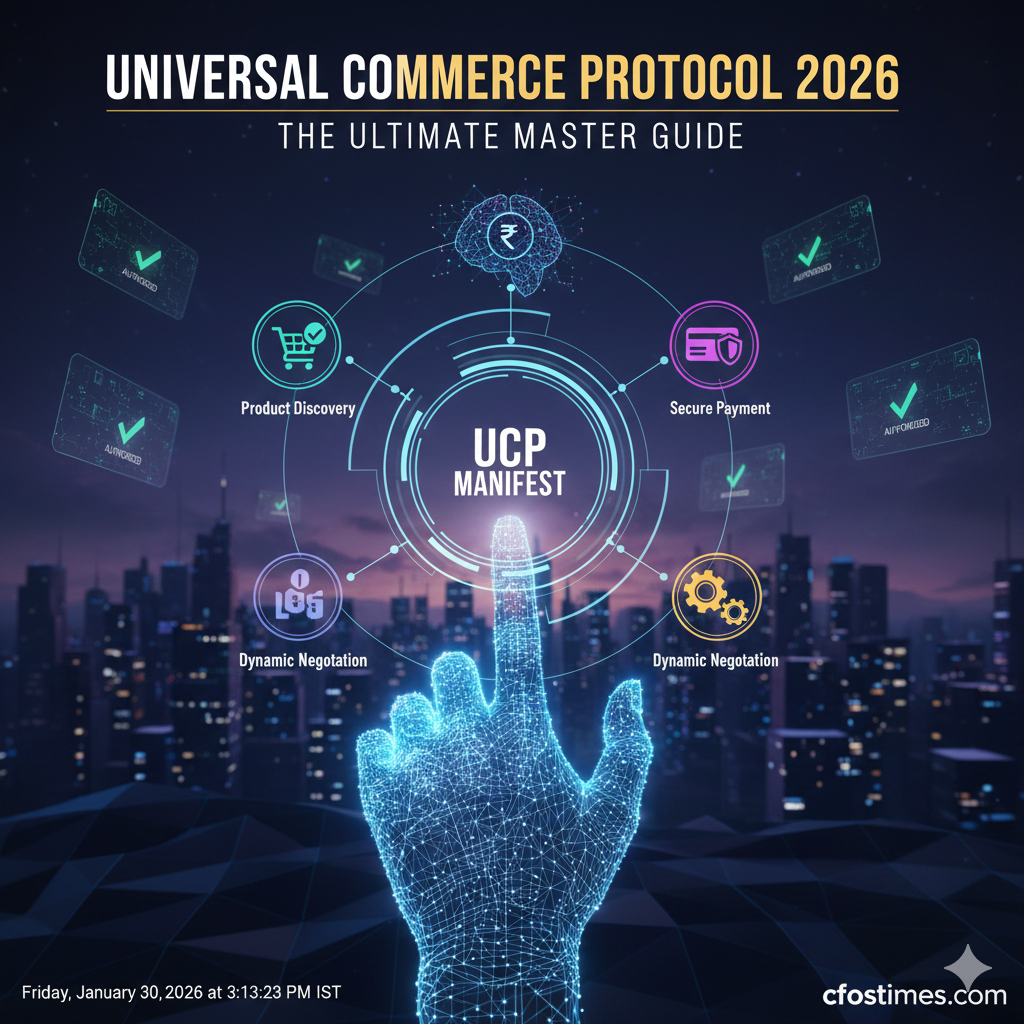
The UCP Manifest File
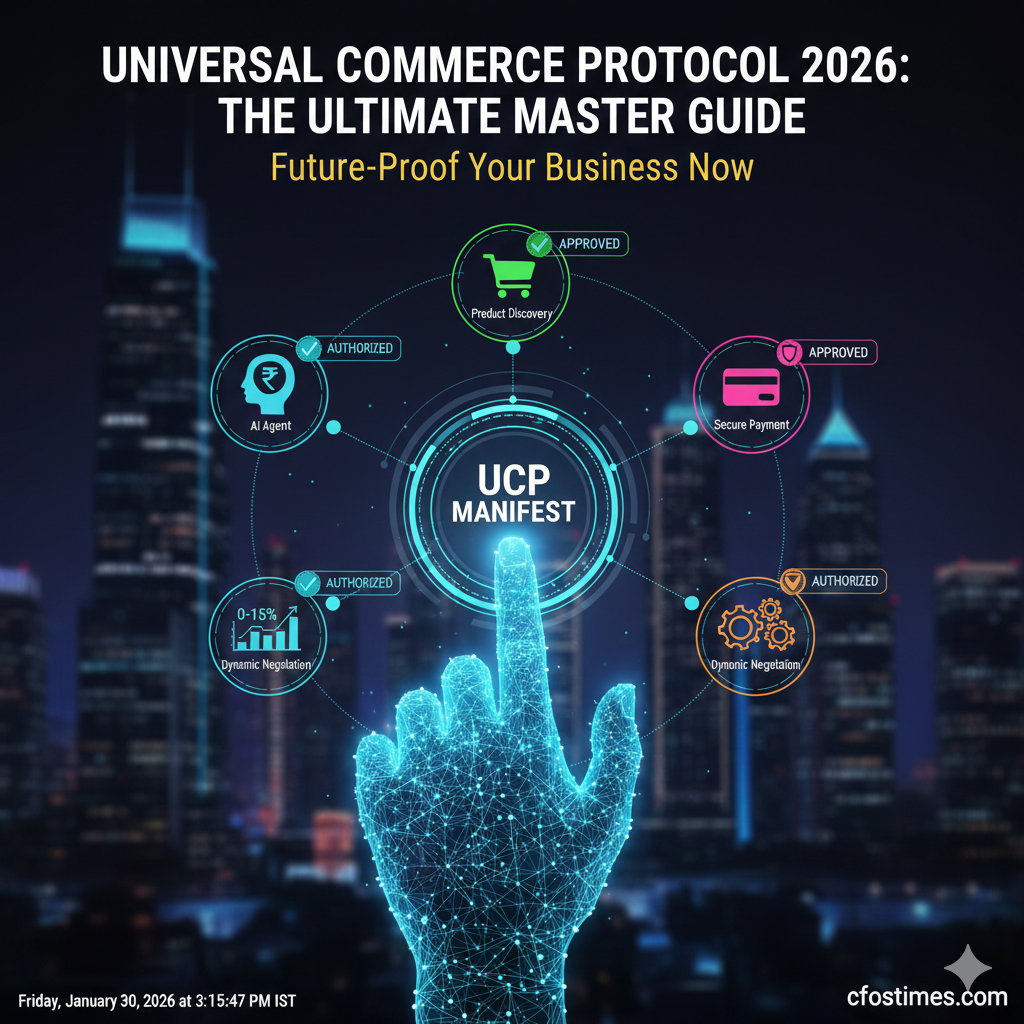
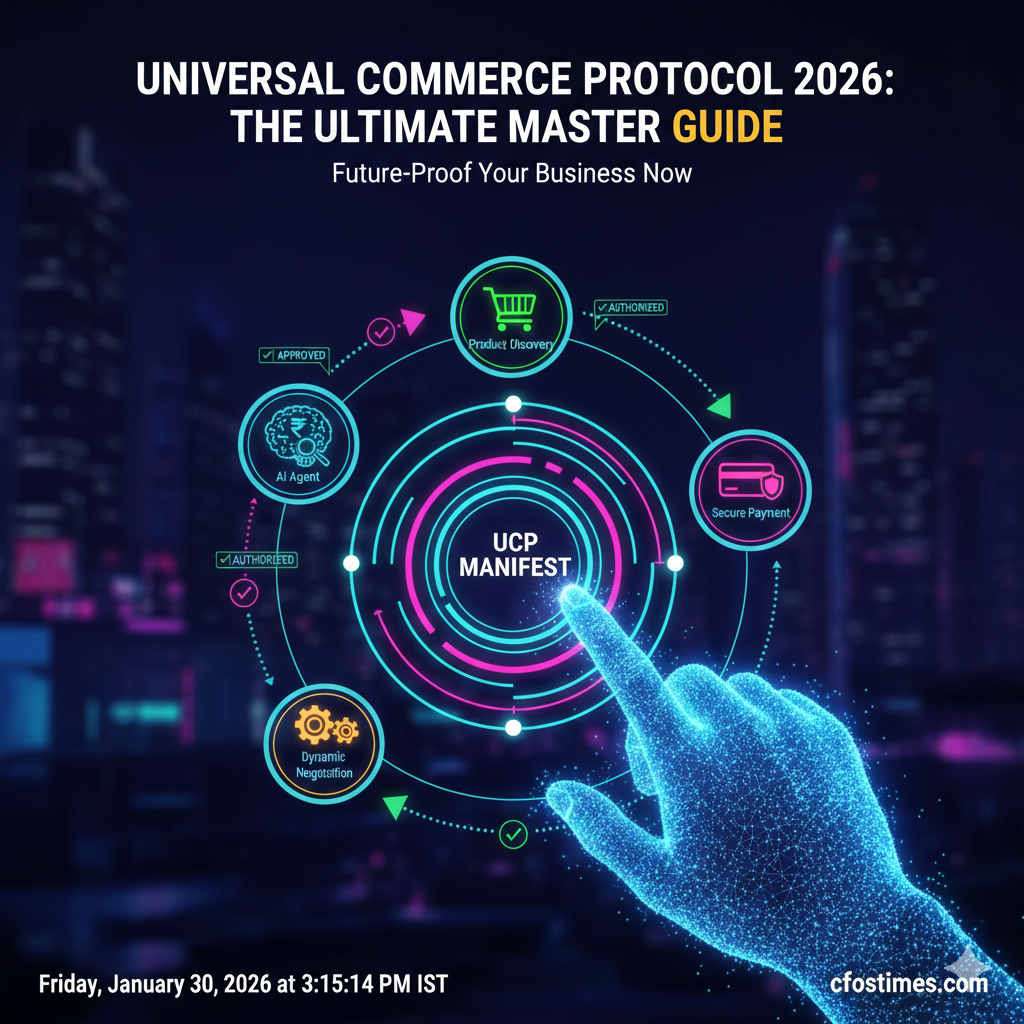
The primary requirement for the Universal Commerce Protocol 2026 is hosting a JSON manifest at yourdomain.com/.well-known/ucp. This file acts as a machine-readable business card. It tells AI agents:
- What you sell: A direct link to your product data.
- What you can do: Your “Capabilities” (e.g.,
product.discovery,cart.checkout). - How you get paid: Compatible payment handlers like Google Pay or the Agent Payments Protocol (AP2).
Dynamic Negotiation
In the Universal Commerce Protocol 2026 ecosystem, prices aren’t always static. UCP allows “Agent-to-Agent” (A2A) negotiation. If an agent identifies a bulk-buy opportunity or a loyalty member status, the protocol can dynamically adjust the final checkout total in milliseconds.
Cryptographic Proof of Consent
Security is not an afterthought in the Universal Commerce Protocol 2026. Every transaction is backed by cryptographic proof, ensuring the AI agent only spends within the user’s pre-authorized “Mandate” limits.
2. Universal Commerce Protocol 2026 vs. Legacy SEO
The Universal Commerce Protocol 2026 marks the end of “Keyword Stuffing.” Google’s AI models now ignore spammy titles in favor of structured attributes.
| Feature | Legacy SEO (Pre-2026) | Universal Commerce Protocol 2026 |
| Target Audience | Human Browsers | Autonomous AI Agents |
| Ranking Factor | Backlinks & Keywords | Data Hygiene & UCP Capabilities |
| Conversion Site | Merchant Website | Native Search Interface / AI Overviews |
| Trust Signal | Domain Authority | Verifiable Credentials (VCs) |
3. Compliance and Security in Universal Commerce Protocol 2026
Operating within the Universal Commerce Protocol 2026 requires strict adherence to new privacy standards. According to the OECD Artificial Intelligence Policy Observatory, agentic systems must be transparent and auditable.
Under UCP, merchants remain the Merchant of Record. This means you keep your customer data and branding, but the transaction logic is handled by the protocol. This prevents the “Amazon Effect” where the marketplace owns the customer; with the Universal Commerce Protocol 2026, the merchant maintains the direct relationship.
FAQs: Universal Commerce Protocol 2026
Q1: How do I get my site ready for the Universal Commerce Protocol 2026?
You must host a ucp.json manifest file in your .well-known directory and ensure your product feed uses the latest Google Merchant Center attributes, specifically focusing on materials, weather ratings, and sustainability scores.
Q2: Is Universal Commerce Protocol 2026 a paid service?
No. It is an open-source standard. Any developer can implement it. However, using it to appear in Google AI Mode or Gemini Shopping may involve standard merchant fees.
Q3: Can small businesses rank with the Universal Commerce Protocol 2026?
Yes. In fact, UCP levels the playing field. Since AI agents look for the “Best Match” via structured data rather than who has the biggest ad budget, high-quality data allows small brands to win the “Agentic Auction.”
Q4: What happens if an AI agent makes a mistake via UCP?
The Universal Commerce Protocol 2026 includes a “Transaction Reversal” capability. Because every step is cryptographically logged, errors can be disputed and resolved faster than traditional credit card chargebacks.
Conclusion: Dominating the Universal Commerce Protocol 2026 Era
The Universal Commerce Protocol 2026 is the final piece of the puzzle for a truly frictionless global economy. By adopting this standard today, you are ensuring that your business is not just “searchable” but “buyable” in an world where agents do the heavy lifting. The winners of 2026 won’t be those with the best copy, but those with the cleanest, most accessible data.
For more information on the global standards of digital trade, visit the World Trade Organization (WTO) Digital Trade portal.
Financial Disclaimer & Disclosure
1. Not Financial Advice All content published on cfostimes.com is for informational and educational purposes only. The information provided, including analysis of the Universal Commerce Protocol 2026 and other fintech trends, does not constitute professional financial, investment, legal, or tax advice. You should not treat any information on this website as a call to make a particular investment or follow a specific financial strategy.
2. Accuracy of Information While we strive to ensure that the information on this site is accurate and up-to-date, cfostimes.com makes no representations or warranties of any kind, express or implied, about the completeness, accuracy, or reliability of the information, products, or services contained on the website. The fintech landscape, particularly in 2026, changes rapidly; therefore, some information may become outdated.
3. Risk Warning Investing in financial products and emerging technologies involves a high degree of risk. Past performance is not indicative of future results. cfostimes.com shall not be responsible for any financial losses or damages resulting from the use of the information provided on this site.

Dr. Dinesh Kumar Sharma is an award-winning Chief Financial Officer and Director of Finance with over 25 years of expertise in strategic planning and digital transformation. Recognized as a five-time CFO of the Year, he specializes in leveraging Generative AI and Microsoft Copilot to optimize financial forecasting and cost management. Dr. Sharma holds a Doctorate in Management (Finance) and has successfully scaled organizations from INR 1 billion to INR 7 billion. He is dedicated to providing transparent, data-driven insights for modern decision-makers at CFOs Times.