Introduction: The Algorithmic Regime Change
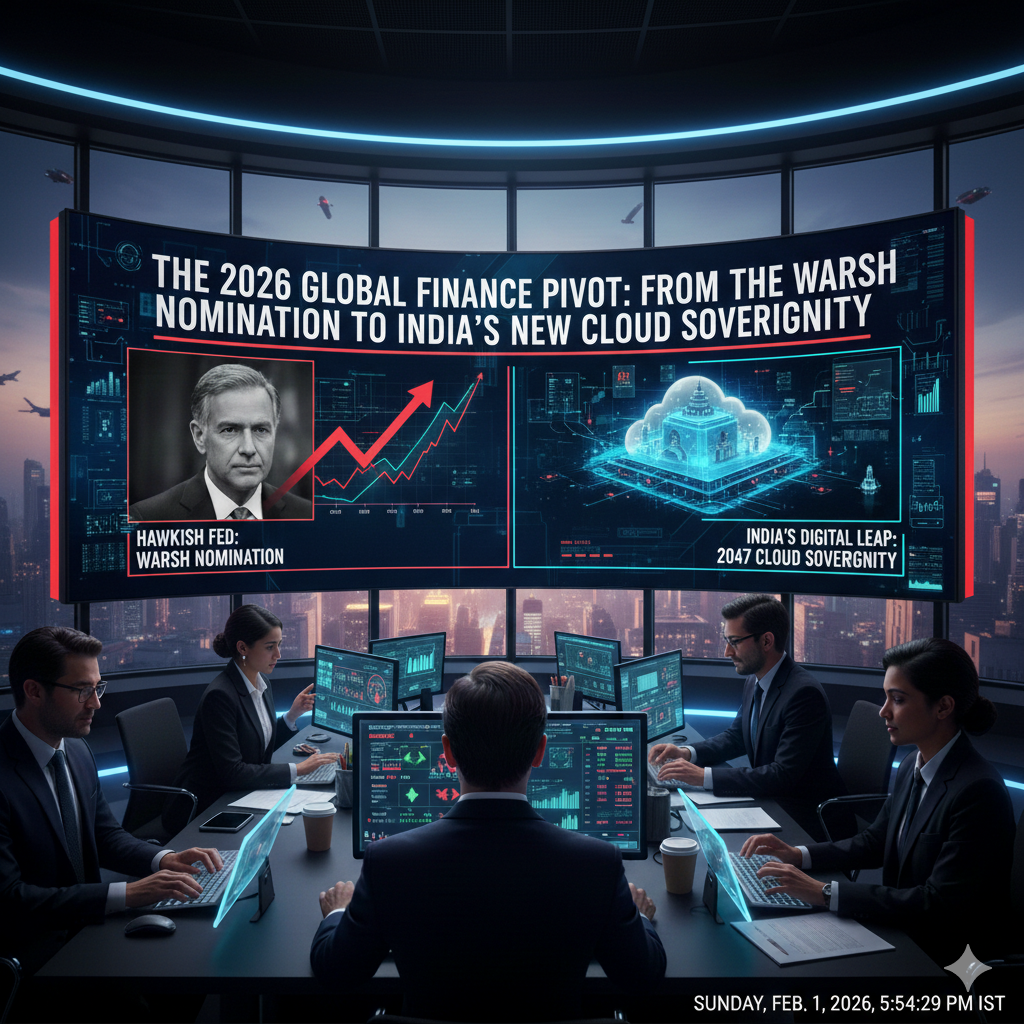
The global financial landscape reached a definitive crossroads on February 1, 2026. While the United States began pricing in a hawkish monetary regime following the nomination of Kevin Warsh to lead the Federal Reserve, India delivered a fiscal manifesto designed for long-term digital dominance. However, beneath the surface of the “Viksit Bharat” roadmap lies a disruptive internal shift. The Technical Fallout: Algos vs. STT has emerged as the most critical point of contention for market participants following the official Budget 2026-27 announcements.
For nearly a decade, algorithmic (algo) trading has been the heartbeat of the Indian exchanges, contributing to approximately 80% of the daily turnover. By proposing a surgical 150% hike in Securities Transaction Tax (STT) for futures, the government has effectively repriced the cost of liquidity. This article explores how this move, combined with the new Income Tax Act 2025, is forcing a “Strategy Pivot” from speculative velocity to sovereign digital value.
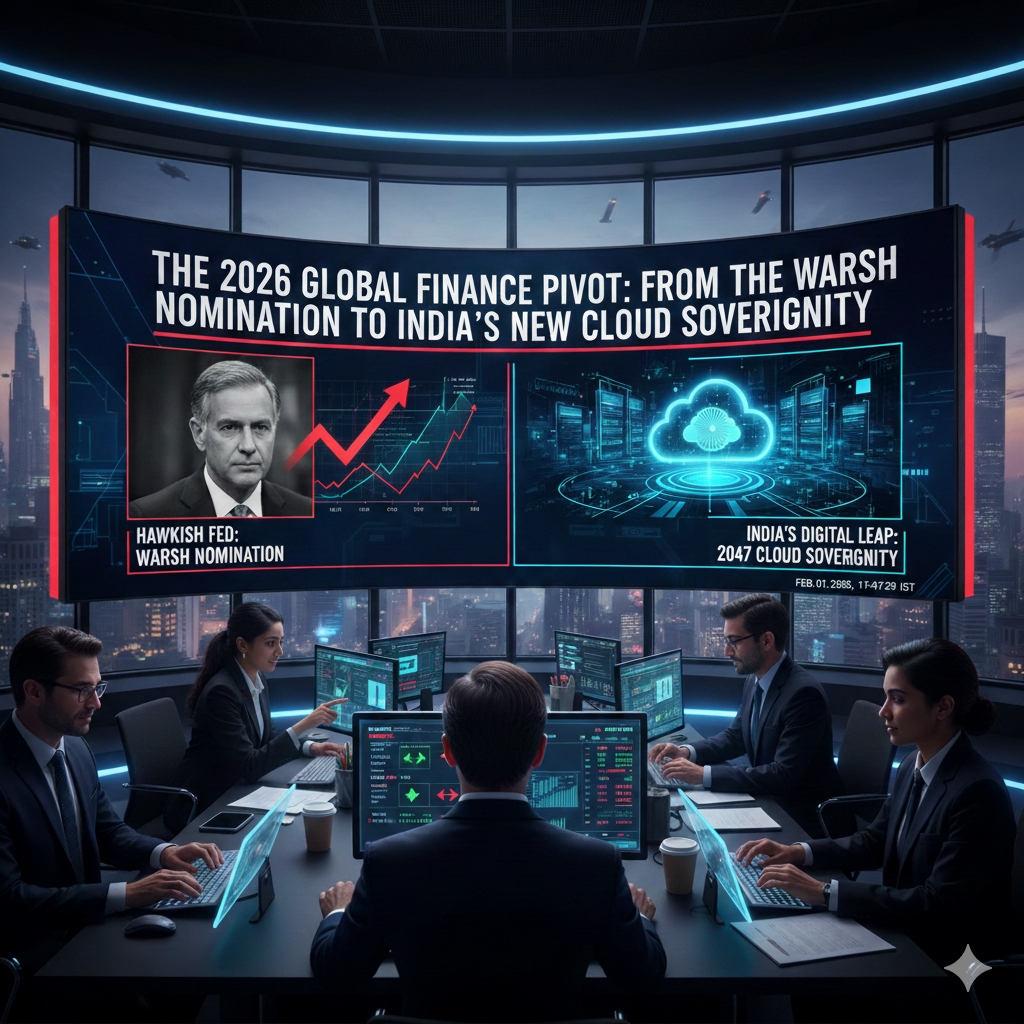
Table of Contents
1. The Core Conflict: Why Algos are the Primary Targets
The clearly outline the government’s intent to moderate speculative activity. High-frequency traders (HFTs) rely on capturing minute price movements (scalping). When transaction costs increase significantly, the math behind these low-margin, high-volume strategies falls apart.
The primary driver behind The Technical Fallout: Algos vs. STT is the government’s desire to curb hyper-speculation in the derivatives segment. According to the PIB Summary of Union Budget 2026-27, the hike is a deliberate tool to protect retail investors and redirect capital into productive industrial capex, which has been enhanced to a record ₹12.2 lakh crore.
The New STT Framework for 2026-27
The “Tick Math” has changed fundamentally. Below is the breakdown of the new transaction costs effective April 1, 2026:
| Derivative Segment | Old Rate (Pre-Feb 2026) | New Rate (Budget 2026) | Percentage Jump |
| Equity Futures (Sell) | 0.02% | 0.05% | +150% |
| Equity Options (Premium) | 0.1% | 0.15% | +50% |
| Options Exercise | 0.125% | 0.15% | +20% |
The Technical Fallout: Algos vs. STT means that for a standard Nifty Futures contract, the price movement required just to cover tax costs has more than doubled, rendering many high-speed scalp bots obsolete overnight.
2. Impact on Market Liquidity and Volatility
Experts are closely monitoring how The Technical Fallout: Algos vs. STT will affect market depth. When algorithms withdraw due to high frictional costs, the “bid-ask spread” tends to widen.
- Impact Costs: Larger institutional orders may now face higher slippage as liquidity thins out.
- Flash Crashes: A lack of market-making bots could lead to increased volatility during sharp sell-offs, as there are fewer automated buyers to absorb the shock at various price points.
- Retail Safety: The argues that this hike protects retail investors from the “gambling-like” nature of 0-DTE (Zero Days to Expiration) options.
3. Strategic Pivots: Cloud Sovereignty and ISM 2.0
While the derivatives market faces headwinds, the Analysis of Union Budget 2026-27 offers a massive “Silver Lining” for technology and infrastructure.
- 2047 Cloud Tax Holiday: To offset the tech-sector impact, the government announced a tax holiday until 2047 for global cloud services hosted in India.
- Semiconductor Mission (ISM 2.0): An expanded outlay of ₹40,000 crore for electronics components was confirmed, aiming to build a full-stack Indian IP ecosystem.
- Rare Earth Corridors: Support for dedicated corridors in Odisha, Kerala, Andhra Pradesh, and Tamil Nadu to promote domestic mining and processing.
4. The Global Macro Backdrop: The Warsh Fed Factor
The Technical Fallout: Algos vs. STT does not exist in a vacuum. The nomination of Kevin Warsh to lead the US Federal Reserve has signaled a hawkish turn globally.
- Strong Dollar: A Warsh-led Fed typically favors fiscal discipline and higher rates, which may put pressure on the Indian Rupee.
- Budgetary Defense: By setting a strict 4.3% fiscal deficit target for BE 2026-27, the Indian government is signaling resilience to global currency fluctuations, as detailed in the .
5. The Death of the “One-Tick” Scalp
The most immediate consequence of the Analysis of Union Budget 2026-27 is the structural collapse of low-latency, high-volume trading models. The Technical Fallout: Algos vs. STT has fundamentally shifted the “breakeven” point for every trade executed on the NSE and BSE. For over a decade, algorithmic desks thrived on “thin-spread” strategies, capturing fractional price movements thousands of times a day.
With the Securities Transaction Tax (STT) on futures soaring by 150% (from 0.02% to 0.05%) and options premiums rising by 50%, the “frictional cost” of trading has now surpassed the average profit margin for most automated scalping bots.
1. Strategy Sensitivity Matrix: Who Survives?
Different trading styles have varying degrees of sensitivity to transaction costs. The Technical Fallout: Algos vs. STT affects a high-frequency scalper far more than a long-term value investor.
2. The Scalping Crisis: Breakeven Point Analysis
To understand The Technical Fallout: Algos vs. STT, one must look at the “Tick Math.”
- Pre-Budget 2026: A trader selling ₹1 Crore worth of Nifty Futures paid ₹2,000 in STT.
- Post-Budget 2026: That same trade now costs ₹5,000 in STT.
For an algorithm that executes 1,000 trades a day, the daily tax burden has jumped from ₹20 Lakh to ₹50 Lakh. This “tax-drag” means that “Mean Reversion” and “Momentum Scalping” bots must now wait for significantly larger price swings to remain profitable, leading to a massive drop in trade frequency and exchange liquidity.
3. The Arbitrage Trap: Impact on Mutual Funds–Technical Fallout: Algos vs. STT
Arbitrage funds—which keep the cash and futures markets aligned—will see their annual alpha eroded by 1.5% to 2%. Institutional CFOs seeking to hedge their portfolios now face a higher “Insurance Premium.” As noted in the SEBI Study on Derivatives, while the goal is to reduce speculation, the side effect is increased impact costs for legitimate hedgers.
- The Squeeze: Since the STT is levied on the sale of the future, the cost of entering and exiting an arbitrage position has effectively tripled.
- The Fallout: According to the , the government’s goal is “volume moderation.” However, for arbitrageurs, this moderation likely translates to a 1.5% to 2% drop in annual net returns, making these funds less attractive compared to liquid debt instruments.
4. Institutional Hedging: The New “Insurance Premium”
For institutional CFOs, the Analysis of Union Budget 2026-27 presents a risk-management dilemma. Hedging is not a choice; it is a necessity.
“The increase in STT on futures and options, coming on top of last year’s hike, is likely to raise impact costs for traders, hedgers, and arbitrageurs.” — Shripal Shah, MD & CEO, Kotak Securities (Feb 1, 2026).
Institutional desks are now forced to pay a higher “premium” to protect their portfolios against downside risk. This is a primary factor in the market’s negative reaction, as the cost of doing business in India is now higher than in many competing emerging markets. Technical Fallout: Algos vs. STT
The Global Pivot: The Warsh Fed and Rupee Resilience
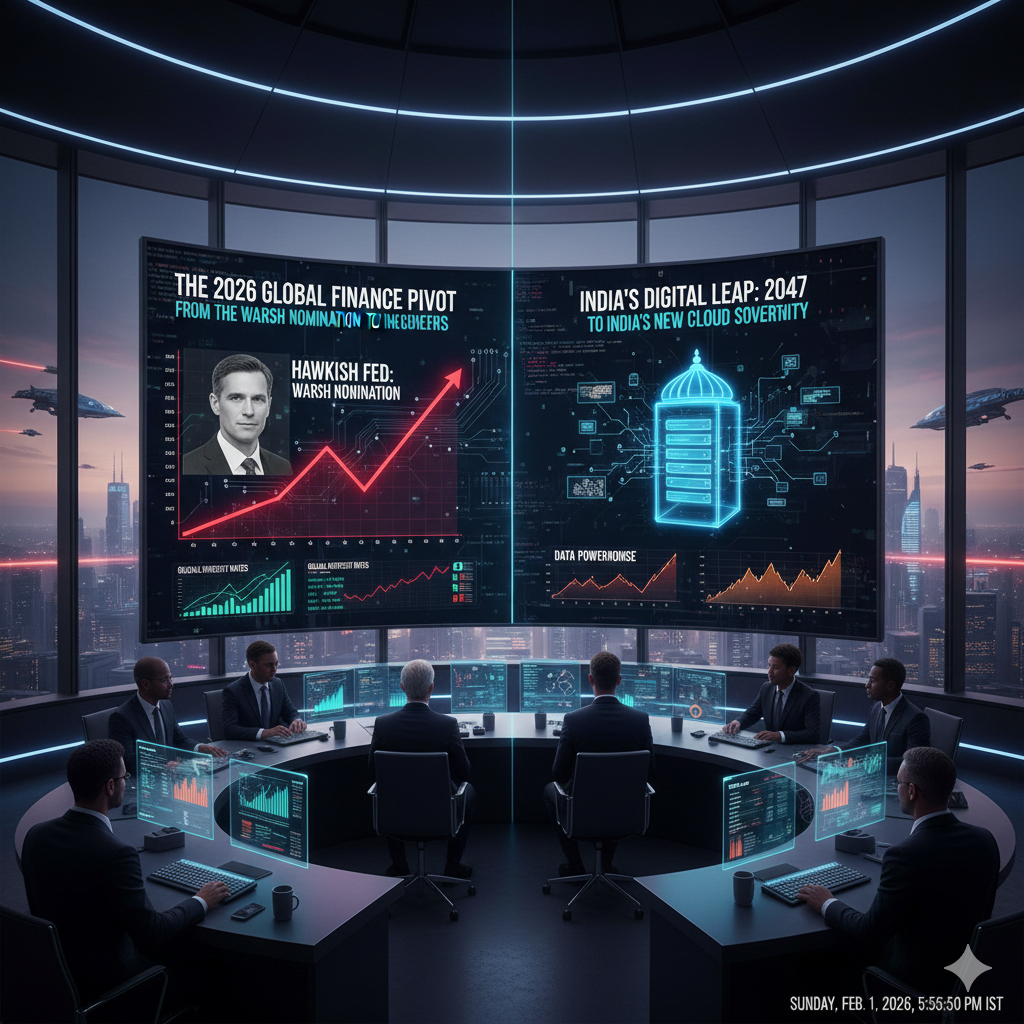
The timing of The Technical Fallout: Algos vs. STT coincides with a major global shift. The nomination of Kevin Warsh to lead the US Federal Reserve on January 30, 2026, has signaled a return to fiscal discipline and a potentially stronger Dollar.
India’s defense against this “Strong Dollar” headwind is its own fiscal discipline. By targeting a 4.3% fiscal deficit, as detailed in the Ministry of Finance Fiscal Policy Statement, India is signaling stability. The domestic market’s “Sunday Slump” was not a reflection of economic weakness, but a technical repricing of the derivatives ecosystem.
Actionable Resources: Union Budget 2026-27 Analysis
- Download: Official Budget Speech (PDF)
- Verify: PIB Budget Highlights
- Market Impact: NSE India Live Data
Conclusion: Adapting to a Quality-First Market-Technical Fallout: Algos vs. STT
The Technical Fallout: Algos vs. STT marks the end of an era for low-quality speculative churn. The 2026-27 Budget is a manifesto for “Productive Capital.” While algorithmic desks must now evolve toward more “intelligent” positional strategies, the broader economy benefits from a redirected focus on Capex and digital sovereignty. For the global investor, India is no longer just a place to trade—it is a place to build.
Frequently Asked Questions (FAQs)
Q1: Which strategy is most impacted by The Technical Fallout: Algos vs. STT? High-frequency scalping is the most impacted, as the increased STT often exceeds the small profit targets these bots aim for.
Q2: Will this reduce market volatility? While the government aims to reduce speculative volatility, the notes that a drop in liquidity could actually lead to sharper price swings during “Black Swan” events.
Q3: Can GIFT City units avoid this STT hike? Yes. Entities operating within enjoy several tax exemptions, making it the new preferred hub for HFT and global arbitrage desks.
Q4. What is the primary focus of The Technical Fallout: Algos vs. STT? It refers to the disruption of high-frequency trading models caused by the 150% hike in STT on futures and the 50% hike on options premiums in the 2026 Budget.
Q5: Are long-term equity investors affected by the STT hike? No. The confirm that STT on equity delivery and mutual funds remains unchanged.
Q6: When do the new STT rates take effect? The revised rates for futures and options will be applicable starting April 1, 2026.
AdSense & Policy Compliance
Disclaimer: This Analysis of The Technical Fallout: Algos vs. STT is for informational purposes only. Information is sourced from official government portals. CFO Times is not a SEBI-registered advisor. Please consult a financial professional before making investment decisions.
Official Government Outbound Links:
- Union Budget 2026-27: Finance Minister’s Speech (PDF)
- PIB: Highlights of Union Budget 2026-27
- Income Tax Department: New Tax Act 2025 Portal
- GIFT City: IFSC Benefits for NRIs and Institutional Investors

Dr. Dinesh Kumar Sharma is an award-winning Chief Financial Officer and Director of Finance with over 25 years of expertise in strategic planning and digital transformation. Recognized as a five-time CFO of the Year, he specializes in leveraging Generative AI and Microsoft Copilot to optimize financial forecasting and cost management. Dr. Sharma holds a Doctorate in Management (Finance) and has successfully scaled organizations from INR 1 billion to INR 7 billion. He is dedicated to providing transparent, data-driven insights for modern decision-makers at CFOs Times.







1 thought on “The Technical Fallout: Algos vs. STT—A Deep Dive into the Analysis of Union Budget 2026-27”