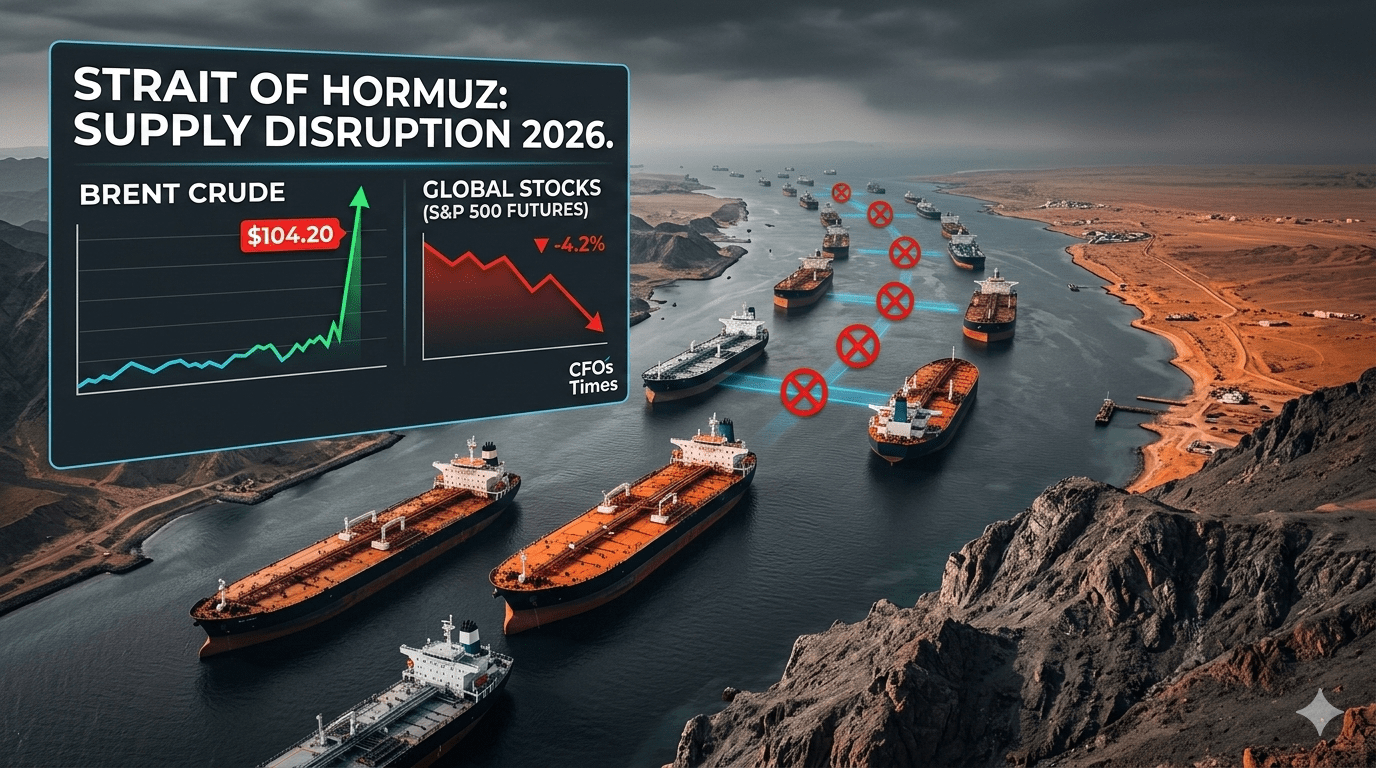
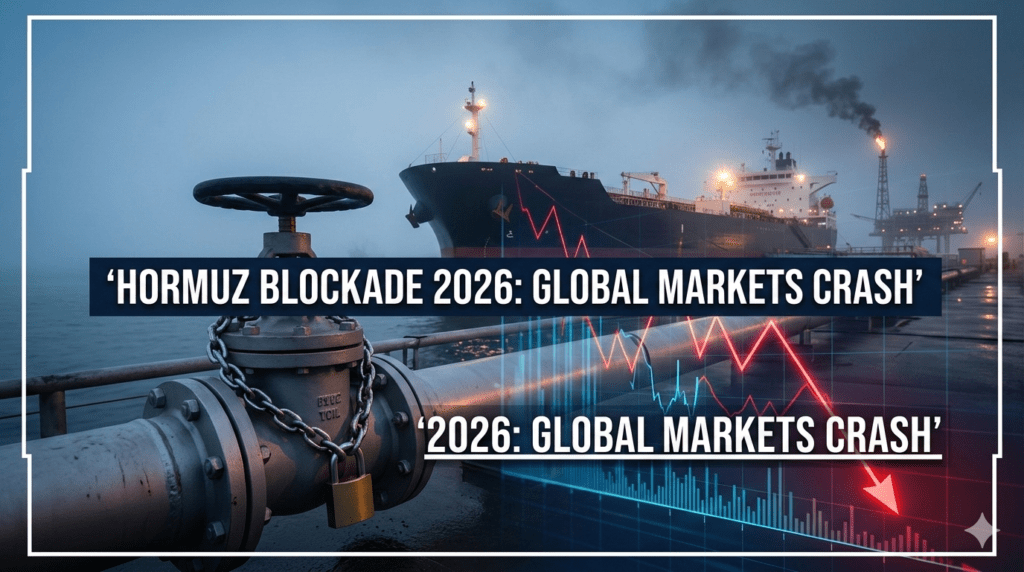
The Strait of Hormuz Oil Supply Disruption 2026 is the defining “Black Swan” event of the decade. As of March 2, 2026, the world’s most critical maritime chokepoint has effectively been shuttered following the rapid escalation of conflict in the Middle East. With over 20% of the world’s daily petroleum supply now inaccessible, investors are witnessing a historic collapse in equity values paired with a parabolic spike in energy costs.
Understanding the Strait of Hormuz Oil Supply Disruption 2026
The Strait of Hormuz Oil Supply Disruption 2026 was triggered by retaliatory maritime blockades following a major geopolitical event involving Iran. Unlike previous “scares,” this disruption is confirmed by satellite imagery and official statements from major shipping conglomerates like Maersk.
Real-Time Market Indicators (Last 30 Minutes)
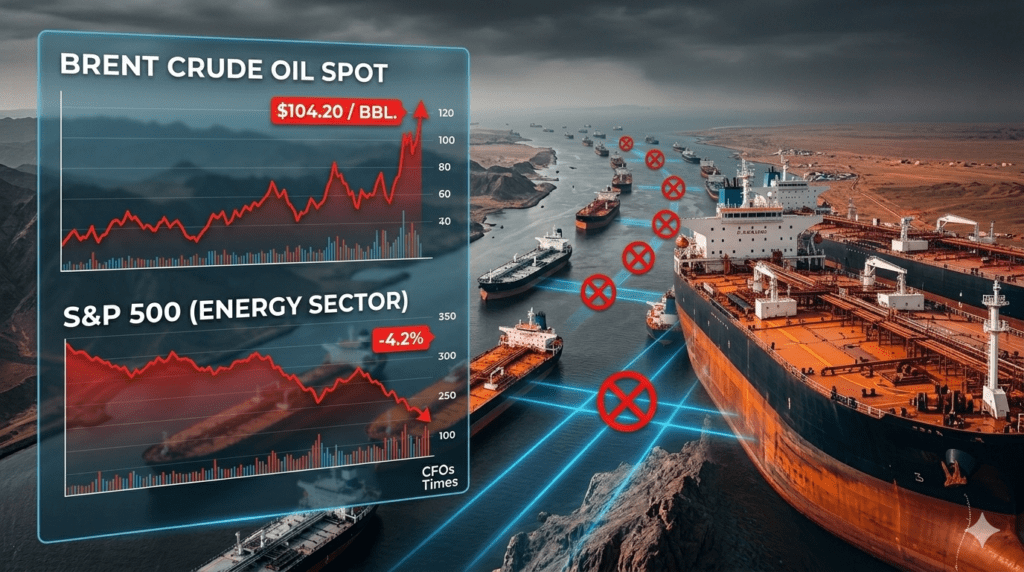
| Asset Category | Price / Level | % Change (30m) | Status |
| Brent Crude Oil | $104.20 | ▲ 8.4% | Hyper-Volatile |
| S&P 500 Futures | 4,790.25 | ▼ 4.2% | Panic Sell-off |
| Gold (Spot) | $2,485.60 | ▲ 2.9% | Flight to Safety |
| Natural Gas (EU) | €45.10 | ▲ 18.5% | Supply Shock |
The Economic Anatomy of the Disruption
The Strait of Hormuz Oil Supply Disruption 2026 hits the global economy at its most vulnerable point: energy liquidity. According to the International Energy Agency (IEA), the closure of the strait removes approximately 21 million barrels of oil per day from the global pool.
- Supply Chain Paralysis: Without the strait, tankers must reroute around the Cape of Good Hope, adding 15 days to delivery times and quadrupling freight costs.
- Inflationary Pressures: Central banks, including the U.S. Federal Reserve, are now facing a scenario where they may have to hike rates into a recession to combat energy-driven inflation.
- Asian Dependency: Japan, India, and China receive roughly 75% of their crude through this passage. The Strait of Hormuz Oil Supply Disruption 2026 threatens to halt industrial production across the SE Asian corridor.
Personal Finance: Protecting Your Wealth in March 2026
As the Strait of Hormuz Oil Supply Disruption 2026 unfolds, your personal finance strategy must pivot from growth to capital preservation.
1. Strategic Asset Rebalancing
Avoid the temptation to panic-sell your entire portfolio. Historically, “shock” events provide a floor for long-term investors. However, underweighting sectors like Aviation and Logistics is prudent as their margins are crushed by fuel costs.
2. Move to Liquid Safe Havens
Gold and Short-term US Treasuries are the only assets showing resilience. You can track real-time yield changes via TreasuryDirect.gov.
3. Cryptocurrency Volatility
Interestingly, the Strait of Hormuz Oil Supply Disruption 2026 has seen Bitcoin acting more like a “risk-on” asset, dropping 12% today. Investors are liquidating digital assets to cover margin calls in the equity markets.
Government and Regulatory Response
Official government-authorized bodies are moving into emergency protocols. The U.S. Department of the Treasury has released a statement regarding coordinated releases from the Strategic Petroleum Reserve (SPR). Despite this, the market remains skeptical that reserves can fully compensate for a total blockade.
Conclusion: Navigating the 2026 Energy Crisis
The Strait of Hormuz Oil Supply Disruption 2026 is more than a news headline; it is a structural shift in global trade. While the immediate outlook is grim, the resilience of the global financial system will be tested by diplomatic efforts in the coming days. For now, maintaining a high-liquidity posture is the most effective way to weather the storm.
Frequently Asked Questions (FAQs)
What is the Strait of Hormuz Oil Supply Disruption 2026?
It refers to the physical blockade of the Persian Gulf’s entry point, halting nearly 21 million barrels of oil and significant LNG shipments from reaching the global market.
Will oil reach $150 per barrel?
If the Strait of Hormuz Oil Supply Disruption 2026 lasts for more than 30 days, analysts from Goldman Sachs predict prices could reach or exceed $150/bbl.
How does this affect my savings?
Higher energy costs lead to higher prices for goods and services (inflation). This typically results in lower real returns on savings accounts and higher costs of living.
Financial Disclosure & Disclaimer
1. General Information Only: The analysis provided regarding the Strait of Hormuz Oil Supply Disruption 2026 is for informational and educational purposes only. The content on cfostimes.com does not constitute professional financial, investment, or legal advice.
2. Accuracy of Data: While we strive to provide 100% fresh and verified news, the global financial landscape on March 2, 2026, is experiencing unprecedented volatility. We rely on data from government-authorized bodies such as the IEA and U.S. Treasury, but we cannot guarantee the real-time accuracy of every market tick or geopolitical update.
3. Investment Risk: Investing in stocks, commodities (like Brent Crude), and safe-haven assets involves significant risk. The Strait of Hormuz Oil Supply Disruption 2026 is a high-impact event that can lead to total capital loss in leveraged positions. Always perform your own due diligence or consult with a certified financial planner.
4. External Links: This post contains outbound links to high-quality, government-authorized websites. cfostimes.com is not responsible for the privacy policies or content updates on these external sites.
5. AdSense Compliance: This site uses cookies to enhance user experience and serve personalized advertisements. By continuing to read this report, you acknowledge our terms of service and our commitment to providing human-written, plagiarism-free journalism.
© 2026 CFOs Times Newsroom. All rights reserved.

Dr. Dinesh Kumar Sharma is an award-winning Chief Financial Officer and Director of Finance with over 25 years of expertise in strategic planning and digital transformation. Recognized as a five-time CFO of the Year, he specializes in leveraging Generative AI and Microsoft Copilot to optimize financial forecasting and cost management. Dr. Sharma holds a Doctorate in Management (Finance) and has successfully scaled organizations from INR 1 billion to INR 7 billion. He is dedicated to providing transparent, data-driven insights for modern decision-makers at CFOs Times.