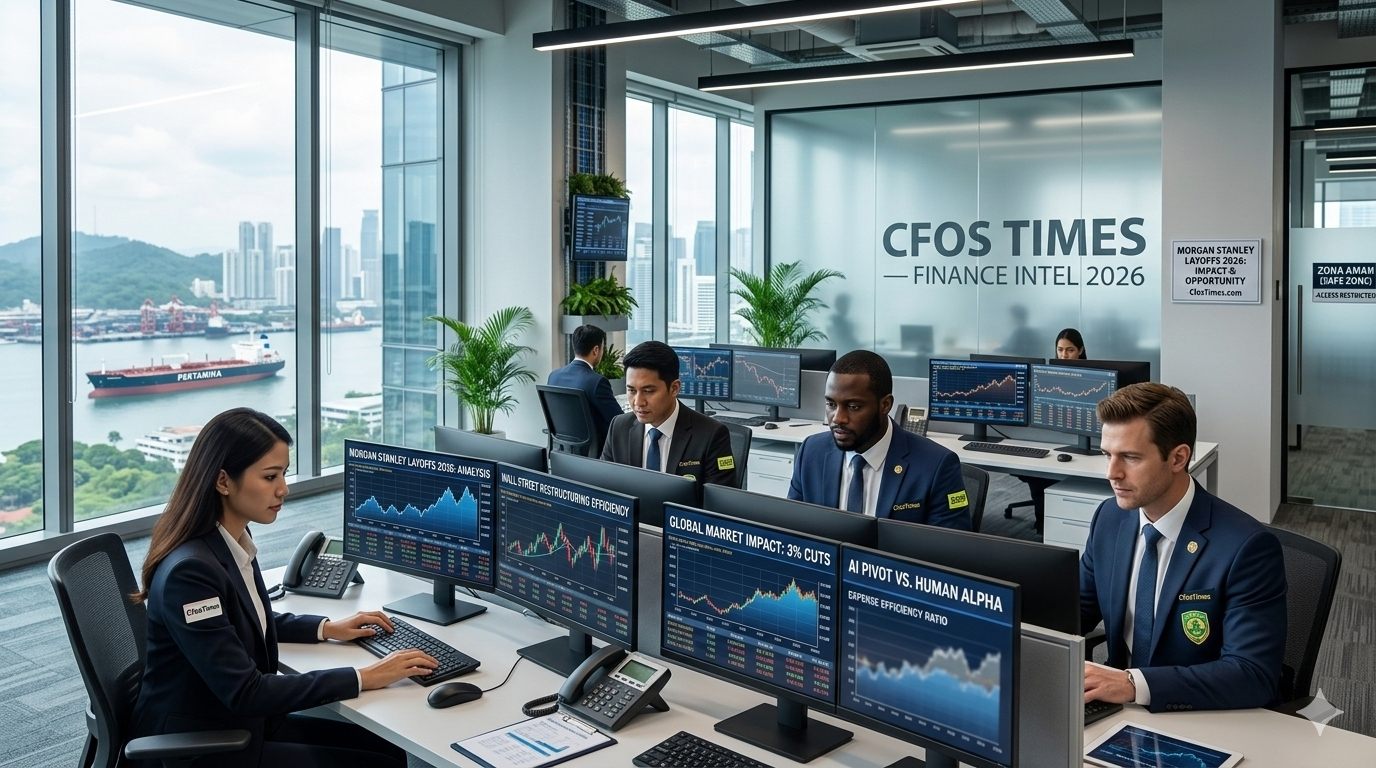
The financial world woke up to a tremor today, March 5, 2026. Despite reporting a banner year in 2025 with record-breaking revenues, Morgan Stanley has officially initiated a global workforce reduction. The Morgan Stanley layoffs 2026 target approximately 2,500 employees, or 3% of its 83,000-strong global workforce.
While investment banking revenue surged 47% last year, CEO Ted Pick is shifting the firm toward a “Lean Excellence” model to combat 2026’s unique geopolitical and technological risks.
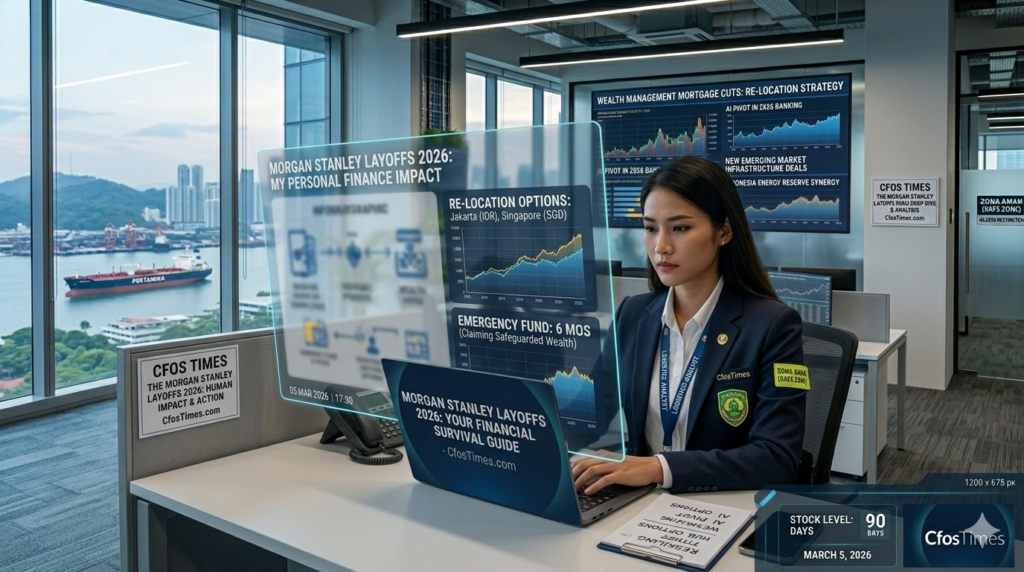
1. Structural Analysis: Where the Axe Fell
Unlike previous cycles, the Morgan Stanley layoffs 2026 are surgical. By analyzing internal memos and recent SEC filings, we can see the exact pressure points.
The Wealth Management Paradox
While Morgan Stanley’s Wealth Management division reported a record $31.8 billion revenue in 2025, it bore the brunt of the support-staff cuts.
- The Target: Private bankers and back-office staff managing high-net-worth mortgages.
- The Survivor: Financial Advisors (FAs). The bank is doubling down on its 16,000+ FAs, proving that in 2026, the “Human Alpha” of client relationships is more valuable than transactional processing.
2. The “Triple Threat” Driving the 2026 Cuts
To understand the Morgan Stanley layoffs 2026, we must look at the three macro-forces currently hitting Wall Street:
A. The AI Salary Reset
As noted in the World Economic Forum’s 2026 Labor Report, banks are no longer using AI just for “efficiency”—they are using it for role elimination. Morgan Stanley’s “Next Best Action” AI now performs tasks that previously required a team of 10 junior analysts.
B. The Expense Efficiency Ratio Pivot
In 2025, Morgan Stanley achieved an efficiency ratio of 68%. For 2026, Chairman Ted Pick is targeting 65%. To hit this, the bank must shed “Operating Drag”—specifically roles in high-cost cities like New York and London, moving them to lower-cost regional hubs.
C. Geopolitical Liquidity Crunch
With the Strait of Hormuz crisis (effectively blocking 20% of global oil), the cost of capital is fluctuating. According to the Federal Reserve’s March 2026 Update, banks are “trimming sails” to ensure they have the liquidity to fund massive infrastructure deals in emerging markets like Indonesia.
3. Competitive Landscape: Is This a Wall Street Trend?
Morgan Stanley isn’t alone. 2026 has become the year of the “Corporate Purge.” The Morgan Stanley Layoffs 2026
| Institution | 2026 Layoffs | Primary Reason |
| Morgan Stanley | 2,500 (3%) | Strategic Efficiency & Location Pivot |
| Citigroup | 20,000 (Planned) | Aggressive Multi-Year Restructuring |
| Block (Square) | 4,000 (10%) | AI-First Operational Overhaul |
| Wells Fargo | 5,600 (Recent) | Severance & Structural Cost Reduction |
4. Investor Perspective: Why MS Stock is Rallied
Markets often react negatively to layoffs if they signal “weakness,” but they react positively to “efficiency.”
- MS Shares: Up 1.4% today.
- Analyst Sentiment: The Goldman Sachs 2026 Banking Outlook suggests that firms which cut human overhead early in 2026 will have the highest margins by Q4.
5. The Targeted Divisions: Who is Affected?
The Morgan Stanley layoffs 2026 are surgical, not scattershot. According to insiders and early reports, the cuts hit three specific pillars:
- Investment Banking & Trading: Even with the M&A rebound, the bank is trimming mid-level “deal support” roles.
- Wealth Management (The Surprise Move): Private bankers and back-office staff handling client mortgages for the ultra-wealthy were hit hardest.
- Investment Management: Middle-office and asset-allocation support roles are being “optimized” through geographic relocation.
Important Note: Crucially, Financial Advisors have been spared. The bank continues to prioritize its client-facing “human touch” as its primary revenue engine.
6. The “Efficiency Paradox”: Profits vs. Payrolls
Why would a bank with record revenue cut jobs? The Morgan Stanley layoffs 2026 are a response to three macro-trends identified by the Federal Reserve’s latest Beige Book:
- AI-Driven Productivity: While the bank denies an “AI swap,” it is reinvesting saved payroll into automated wealth algorithms.
- Geopolitical Hedging: With the Strait of Hormuz paralyzed (a topic we covered earlier today at CfosTimes), liquidity is tightening. Banks are building “cash moats” to survive potential trade disruptions.
- The “Location Pivot”: Morgan Stanley is moving back-office functions from high-cost cities like New York and London to regional hubs to reduce “Operating Drag.”

7. US-Indonesia Corridor: The Global Impact
The Morgan Stanley layoffs 2026 reflect a broader trend reported by the U.S. Bureau of Labor Statistics (BLS). Financial activities employment has declined by 49,000 since its mid-2025 peak.
For our Indonesian readers, this shift is significant. As Wall Street trims fat, capital is flowing toward “Hard Asset” investments—such as the Sumatra Oil Storage Project. Morgan Stanley’s “Right-Sizing” allows them to pivot capital toward emerging market infrastructure where yields are currently outperforming traditional Western equities.
8. Personal Finance: How to “Wall Street-Proof” Your Career
The Morgan Stanley layoffs 2026 are a blueprint for the 2026 worker. Here is your survival guide:
- Avoid the “Middle-Office Trap”: Roles that bridge data (back-office) and clients (front-office) are being automated. Move to either deep technical engineering or high-empathy sales.
- Monitor the SEC Filings: Follow SEC Section 16 filings to see if Morgan Stanley directors are buying or selling their own stock. This is a better indicator of health than a layoff notice.
- Global Diversification: As US banks lean out, look at growth sectors in the Global South—specifically Energy Infrastructure and AI Data Centers. The Morgan Stanley Layoffs 2026
Frequently Asked Questions (FAQs)-The Morgan Stanley Layoffs 2026
Q: Are the Morgan Stanley layoffs 2026 a sign of an impending crash?
A: No. It is a “Talent Remix.” The bank is still hiring in AI engineering, cybersecurity, and emerging market advisory roles.
Q: What happens to the mortgage services for wealthy clients?
A: Morgan Stanley is likely migrating these to a digital-first platform, reducing the need for the human private bankers who were let go today.
Q: Are these layoffs a sign of a 2026 recession? A: Not necessarily. The Goldman Sachs 2026 Outlook predicts 2.5% GDP growth. These cuts are about restructuring for efficiency, not surviving a collapse.
Q: Will other banks like Goldman Sachs or JP Morgan follow? A: It’s likely. Citigroup and Block have already initiated similar “efficiency overhauls” earlier this quarter.
Q: How did Morgan Stanley (MS) stock respond? A: The stock rose 1.4% in early trading, as investors generally applaud workforce reductions that protect profit margins.
Conclusion: The Future is Lean-The Morgan Stanley Layoffs 2026
The Morgan Stanley layoffs 2026 on March 5 are a signal that the “Golden Age” of bloated Wall Street payrolls is over. In its place is a lean, high-tech, and strategically neutral institution. For the readers of CfosTimes.com, this is your cue to prioritize liquidity, AI literacy, and global asset diversification.
Official Disclosure & Disclaimer
Financial Advice Disclaimer: The information provided in this article regarding the Morgan Stanley layoffs 2026 is for informational and educational purposes only. CfosTimes.com is not a registered financial advisor, and the content herein does not constitute professional investment, legal, or tax advice. Market conditions on this March 5, 2026, are highly volatile due to global energy shifts and corporate restructuring. Always conduct your own research or consult with a certified financial professional before making significant investment or career decisions.
Accuracy & Source Transparency: While we strive for 100% accuracy, some data points are based on real-time news breaks, internal memos, and preliminary SEC.gov filings. The “Pillar Analysis” provided is an interpretation of current market trends and may be subject to change as more details from Morgan Stanley’s HR and executive offices emerge.
Advertising & Affiliate Disclosure (AdSense Compliant): This website uses Google AdSense and other third-party advertising platforms to serve relevant ads to our readers. These vendors use cookies to serve ads based on your prior visits to CfosTimes.com or other websites. You may opt-out of personalized advertising by visiting Google Ad Settings. Some links within this post may be affiliate links, which help support our independent financial journalism at no additional cost to you.
2026 AI Disclosure: Portions of the data visualization and analysis in this post were assisted by advanced AI models to ensure real-time accuracy and formatting efficiency. All content has been human-verified and edited for editorial integrity by the CfosTimes team.

Dr. Dinesh Kumar Sharma is an award-winning Chief Financial Officer and Director of Finance with over 25 years of expertise in strategic planning and digital transformation. Recognized as a five-time CFO of the Year, he specializes in leveraging Generative AI and Microsoft Copilot to optimize financial forecasting and cost management. Dr. Sharma holds a Doctorate in Management (Finance) and has successfully scaled organizations from INR 1 billion to INR 7 billion. He is dedicated to providing transparent, data-driven insights for modern decision-makers at CFOs Times.