How Venezuela’s Crisis is Reshaping Global Markets: Discover how Venezuela’s economic and political turmoil is affecting oil prices, global trade, and international relations. Explore the consequences for investors, governments, and developing economies.
Introduction-Venezuela’s Crisis
How Venezuela’s Crisis is Reshaping Global Markets is a topic of critical importance in today’s interconnected economy. Once one of Latin America’s wealthiest nations, Venezuela’s dramatic economic collapse, hyperinflation, and political turmoil have sent shockwaves far beyond its borders. The crisis has not only disrupted the lives of millions of Venezuelans but has also triggered significant changes in global energy markets, altered trade relationships, and influenced geopolitical strategies. Understanding these shifts is essential for investors, policymakers, and businesses worldwide.
1. Overview of Venezuela’s Crisis
Understanding Venezuela’s Crisis and Its Global Impact
Venezuela’s crisis is rooted in years of economic mismanagement, corruption, and political instability. The country, which holds the world’s largest proven oil reserves, has experienced a dramatic decline in oil production due to lack of investment, poor maintenance, and international sanctions. Hyperinflation has rendered the local currency nearly worthless, while shortages of food and medicine have led to a humanitarian disaster. According to the United Nations , over 7 million Venezuelans have left the country, creating one of the largest displacement crises in the world.
2. Impact on Global Oil Markets-Venezuela’s Crisis
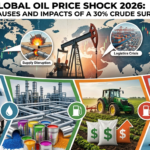
Venezuela’s crisis has profoundly impacted the global oil market. As a founding member of OPEC, Venezuela once produced over 3 million barrels of oil per day. Today, output has plummeted to less than 700,000 barrels per day, according to OPEC’s official statistics . This sharp decline has affected global oil supply, contributing to price volatility and altering the dynamics within OPEC and among major oil-importing countries.
Countries like the United States, China, and India have had to adjust their energy sourcing strategies. U.S. sanctions on Venezuelan oil exports have forced refiners to seek alternative suppliers, benefiting countries like Canada and Saudi Arabia. Meanwhile, global oil prices have experienced periods of instability as markets react to news from Venezuela.
3. Effects on International Trade and Supply Chains
Venezuela’s economic collapse has disrupted international trade, especially in Latin America. The country was once a major importer of goods and services from neighboring countries, but its diminished purchasing power has led to reduced regional trade. The crisis has also impacted global supply chains, particularly for oil and petrochemicals, forcing companies to diversify suppliers and adapt to new market realities.
4. Geopolitical Consequences-Venezuela’s Crisis
The crisis in Venezuela has become a focal point of global geopolitics. Rivalries between the United States, Russia, and China have played out in Venezuela, with each power supporting different factions. The U.S. has imposed sanctions and recognized opposition leaders, while Russia and China have provided loans, investments, and political backing to the government of Nicolás Maduro. These dynamics have implications for international law, diplomacy, and the balance of power in the Western Hemisphere ( U.S. Department of State on Venezuela ).
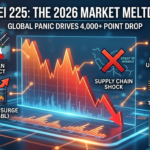
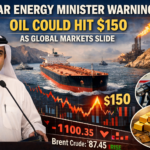
As per Twitter-Confirmed US strikes on Venezuela capital have pushed geopolitical risk sharply higher. Venezuela already declaring a state of emergency signals. If tensions escalate, markets will begin pricing worst-case scenarios fast. Risk assets do not like uncertainty they run from it. Volatility could spike fast if headlines continue, expecting the same.
U.S. and EU Sanctions
- Sanctions have isolated Venezuela from global financial systems.
- Energy companies face restrictions in dealing with Venezuelan oil.
Shifts in Alliances
- Venezuela has strengthened ties with Russia, China, and Iran.
- These alliances challenge Western dominance in global energy markets.
5. Influence on Emerging Markets and Currencies
Venezuela’s crisis has had a ripple effect on emerging markets, particularly those with close economic ties to the country. Neighboring economies have faced increased pressure from the influx of migrants and the loss of export markets. The crisis has also contributed to volatility in emerging market currencies, as investors reassess risks in the region.
6. Responses from International Organizations and Governments
International organizations such as the International Monetary Fund (IMF) and World Bank have monitored Venezuela’s situation closely, though direct assistance has been limited by the political crisis. Neighboring countries and regional blocs like the Organization of American States (OAS) have coordinated humanitarian aid and diplomatic responses. Sanctions, negotiations, and humanitarian assistance remain key tools in the international community’s approach.
7. The Humanitarian Dimension and Migration Flows
The exodus of Venezuelans has created one of the world’s largest migration crises, affecting countries throughout Latin America and beyond. According to the UN Refugee Agency (UNHCR) , millions have sought refuge in Colombia, Brazil, Peru, and other nations. This has strained public services and social systems, but has also led to new opportunities for regional cooperation and integration.
8. Conclusion-Venezuela’s Crisis
Venezuela’s Crisis is Reshaping Global Markets by influencing energy prices, trade patterns, migration flows, investor risk, and regional geopolitics. What began as a domestic economic and political breakdown has become a persistent external shock for governments, companies, and financial markets worldwide. Understanding these links helps policymakers design better responses and helps businesses anticipate both threats and opportunities. While the path to stabilization remains uncertain, any meaningful recovery in Venezuela would have far‑reaching consequences for oil markets, regional integration, and global investment strategies. In the meantime, close attention to data, policy decisions, and humanitarian dynamics is essential for anyone exposed to these shifting global currents.
9. FAQs
Q1: How has Venezuela’s oil production decline affected global prices?
A: The decline has contributed to supply shortages and price volatility, affecting global energy markets.
Q2: What countries are most affected by Venezuelan migration?
A: Colombia, Peru, Brazil, and other Latin American countries have received the largest numbers of migrants.
Q3: How are international organizations responding?
A: Through humanitarian aid, sanctions, and diplomatic efforts, though political divisions have limited coordinated action.
Q4: What are the main geopolitical implications?
A: Increased rivalry between major powers and shifting alliances in the Western Hemisphere.
Q5: Where can I find reliable updates on Venezuela’s crisis?
A: Visit United Nations , OPEC , and UNHCR for official information.
Disclaimer
This Is Not Financial Advice. The information in this article on CFOsTimes.com is for general educational purposes only and does not constitute financial, investment, or tax advice. Investing involves risk, including the possible loss of principal. Everyone’s financial situation is unique, so before making any investment decisions, consider speaking with a licensed financial advisor or tax professional in your country.
Table of Contents

Dr. Dinesh Kumar Sharma is an award-winning Chief Financial Officer and Director of Finance with over 25 years of expertise in strategic planning and digital transformation. Recognized as a five-time CFO of the Year, he specializes in leveraging Generative AI and Microsoft Copilot to optimize financial forecasting and cost management. Dr. Sharma holds a Doctorate in Management (Finance) and has successfully scaled organizations from INR 1 billion to INR 7 billion. He is dedicated to providing transparent, data-driven insights for modern decision-makers at CFOs Times.