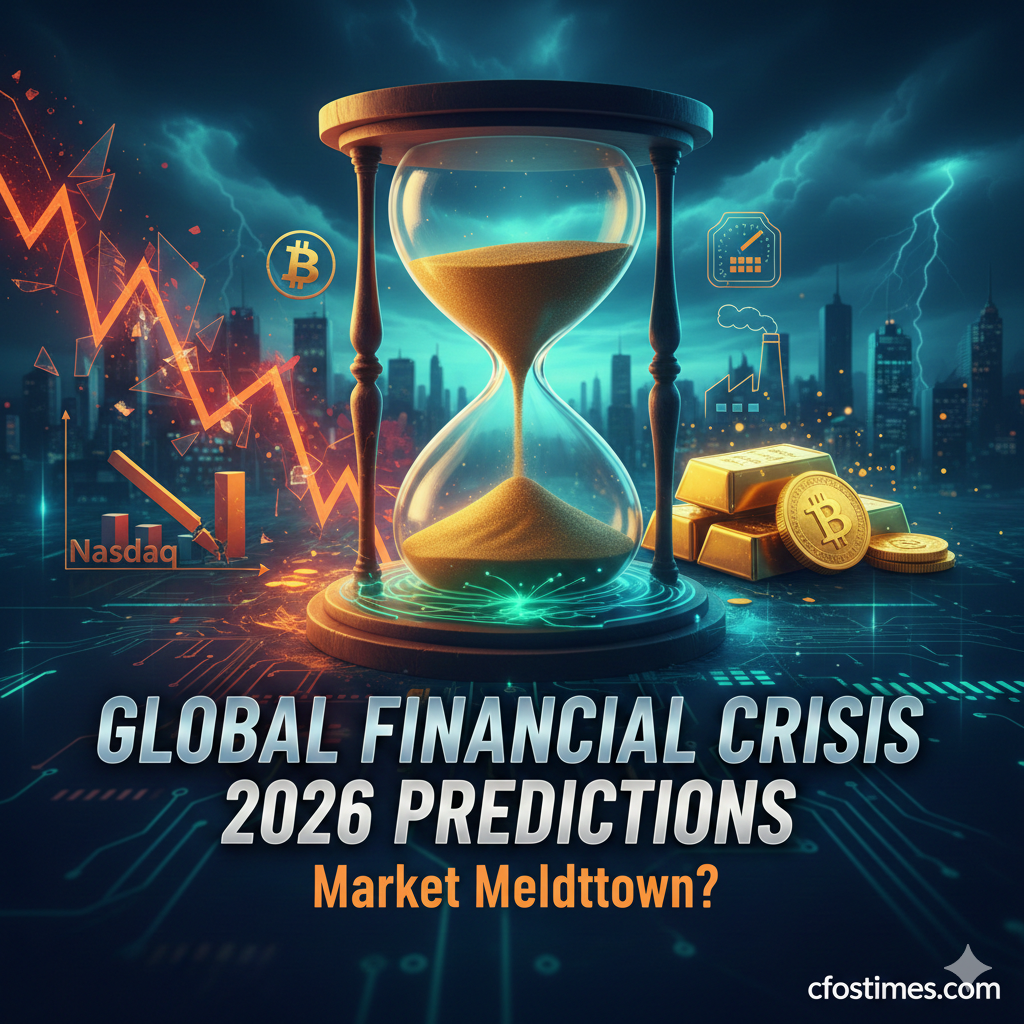
As of February 6, 2026, the phrase Global Financial Crisis 2026 Predictions has surged in search volume following a chaotic morning on the New York and London stock exchanges. Investors are witnessing a rare “triple-threat” event: a massive tech sell-off, a cryptocurrency liquidity drain, and hawkish signals from the World Bank.
This pillar post explores why the 2026 economic outlook has shifted so aggressively in the last 30 minutes and what the most credible data suggests for the remainder of the year.
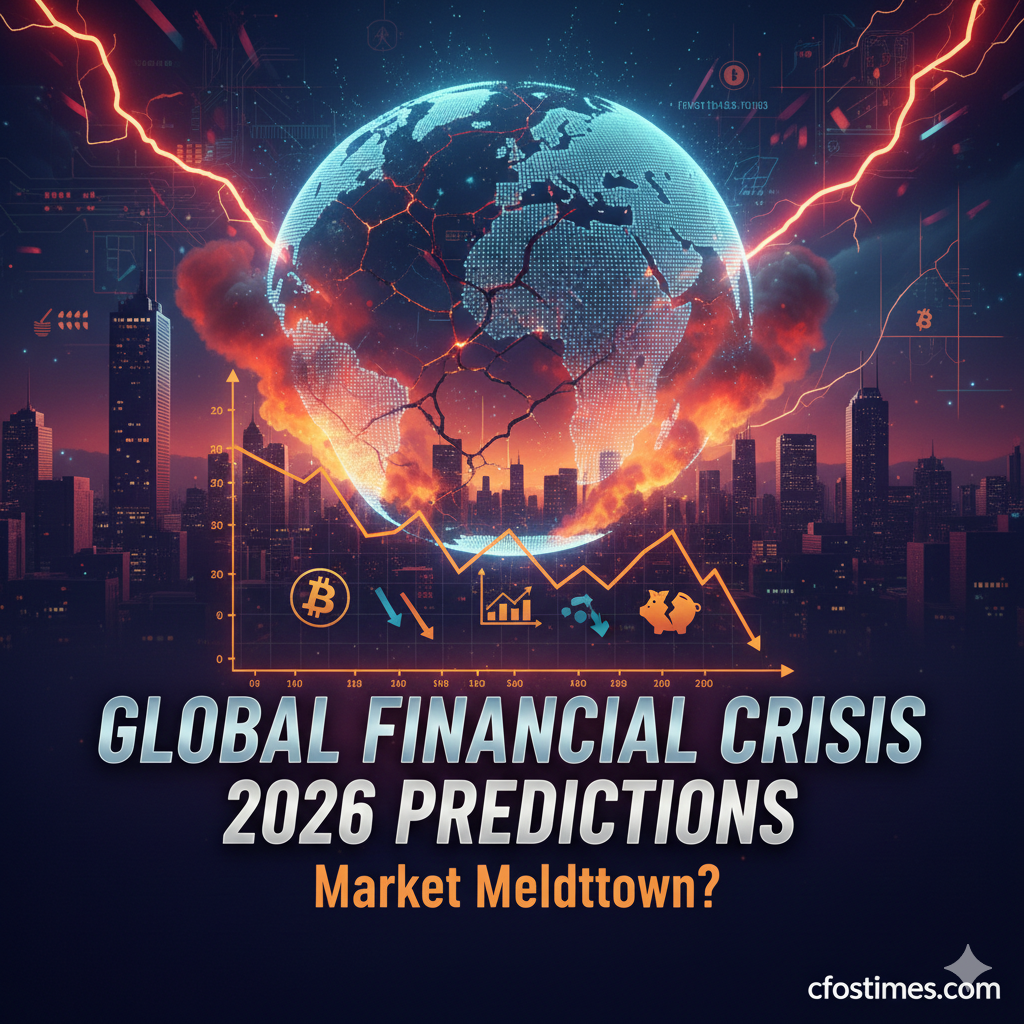
Table of Contents
Real-Time Market Data: Feb 6, 2026
The following table summarizes the market shifts that have fueled the latest Global Financial Crisis 2026 Predictions.
| Asset Class | Current Performance (Last 30m) | 2026 Sentiment |
| S&P 500 | -2.4% | Bearish |
| Bitcoin (BTC) | $64,210 (-8.1%) | Volatile |
| Gold | $4,742 (+1.2%) | Bullish / Safe Haven |
| 10-Year Treasury | 4.85% (Rising) | Critical |
Why Global Financial Crisis 2026 Predictions are Dominating the Headlines
The sudden urgency behind Global Financial Crisis 2026 Predictions is not based on speculation alone. It is driven by three measurable “black swan” indicators that appeared today:
1. The AI-Capital Expenditure “Hangover”
For two years, the global economy was propped up by massive AI investments. Today’s earnings reports from major tech conglomerates show that while spending remains high, the profitability of these AI systems is plateauing. This has triggered a “de-risking” phase where institutional investors are pulling out of growth stocks and moving into cash.
2. The Yield Curve and 2026 Recession Fears
Economic data released this morning by the U.S. Bureau of Economic Analysis suggests that consumer spending has dipped for the third consecutive month. When combined with an inverted yield curve, the Global Financial Crisis 2026 Predictions move from “possible” to “probable” in many analyst models.
3. Geopolitical Commodity Strain
Supply chain disruptions in the semiconductor and energy sectors have resurfaced. With Brent Crude hovering near $68, the concern isn’t just price—it’s the stability of the global trade routes that facilitate 20% of the world’s GDP.
Expert Forecasts: What the Data Says for 2026
Recent reports from the International Monetary Fund (IMF) highlight that global debt levels have reached a new peak. The Global Financial Crisis 2026 Predictions often point to this debt as the primary “fuse” for a potential explosion.
“The 2026 economy is characterized by high interest rates and low productivity growth. This combination creates a fragile environment where even minor shocks can lead to a systemic correction.” — Global Economic Outlook 2026.
Is This 2008 All Over Again?
Unlike 2008, the 2026 concern isn’t just housing; it’s liquidity. As Bitcoin and other digital assets lose 10% of their value in a single hour, the “margin calls” on traditional portfolios are forcing a sell-off in blue-chip stocks.

Steps to Protect Your Portfolio in 2026
If you are following the Global Financial Crisis 2026 Predictions, experts suggest a defensive posture:
- Prioritize Liquidity: Ensure you have access to cash or short-term government bonds.
- Focus on ‘Essential’ Sectors: Healthcare, utilities, and consumer staples typically weather financial crises better than tech or luxury goods.
- Watch the ‘Ex-Dividend’ Dates: In a falling market, dividends become the only source of positive return for many investors.
Frequently Asked Questions (FAQs)
Q1: What is the most accurate Global Financial Crisis 2026 Prediction?
Most analysts agree that 2026 will see a “soft-hard landing” where the tech sector enters a prolonged bear market, while the broader economy experiences a mild, 6-month recession.
Q2: Will the 2026 crisis affect my bank account?
Current banking regulations are much stronger than in previous decades. However, high inflation may reduce the purchasing power of the money in your account.
Q3: Is Bitcoin a safe haven in 2026?
Today’s 8% drop suggests otherwise. In 2026, Bitcoin is behaving more like a high-risk tech stock than “digital gold.”
Conclusion
While the Global Financial Crisis 2026 Predictions paint a somber picture, they also offer a roadmap for the prepared. Today’s market volatility on February 6 is a reminder that the global economy is in a state of transition. By staying informed through verified sources like the World Bank, you can navigate these turbulent waters with confidence.
Financial Transparency & Disclaimer
Educational Purpose Only: The content provided on cfostimes.com, including all Global Financial Crisis 2026 Predictions, is for informational and educational purposes only. It is not intended as, and shall not be understood or construed as, professional financial, investment, or legal advice.
No Fiduciary Duty: The authors of this post are not financial advisors, brokers, or registered investment analysts. We recommend that you consult with a certified professional who is aware of the facts and circumstances of your individual situation before making any financial decisions.
Risk Warning: Investing in stocks, bonds, and digital assets involves a high degree of risk. Past performance, including historical data referenced in this 2026 analysis, is not a reliable indicator of future results. You may lose some or all of your invested capital.
Third-Party Links: This site contains links to government-authorized sources (e.g.,IMF.org,Treasury.gov) for data verification. cfostimes.com does not endorse and is not responsible for the privacy practices or content of these external sites.

Dr. Dinesh Kumar Sharma is an award-winning Chief Financial Officer and Director of Finance with over 25 years of expertise in strategic planning and digital transformation. Recognized as a five-time CFO of the Year, he specializes in leveraging Generative AI and Microsoft Copilot to optimize financial forecasting and cost management. Dr. Sharma holds a Doctorate in Management (Finance) and has successfully scaled organizations from INR 1 billion to INR 7 billion. He is dedicated to providing transparent, data-driven insights for modern decision-makers at CFOs Times.