Introduction: The Budget That Finally Hears You
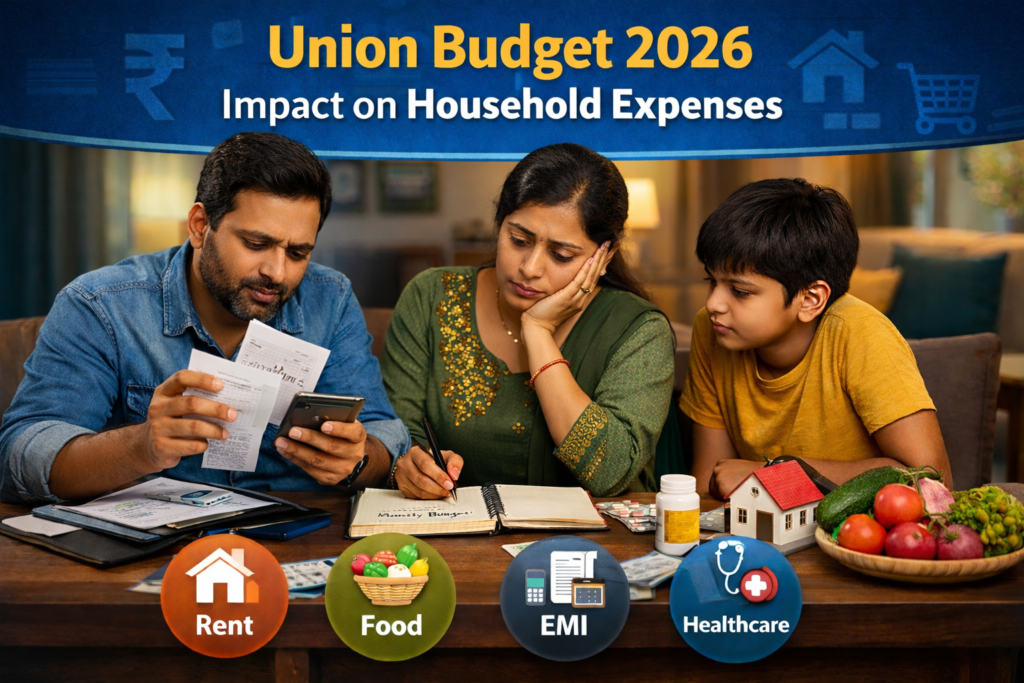
For years, the Indian middle class has felt like the “forgotten engine”—paying the most, yet feeling the squeeze of every rising price. The Union Budget 2026 Impact on Household Expenses isn’t just about fiscal deficits; it’s about whether you can finally afford that family vacation or stop worrying about the cost of your parents’ life-saving medicines.
As announced in the official PIB Summary of Union Budget 2026-27, the government has pivoted toward a “Stability First” model. This budget seeks to replace “financial fatigue” with “predictable stability.”
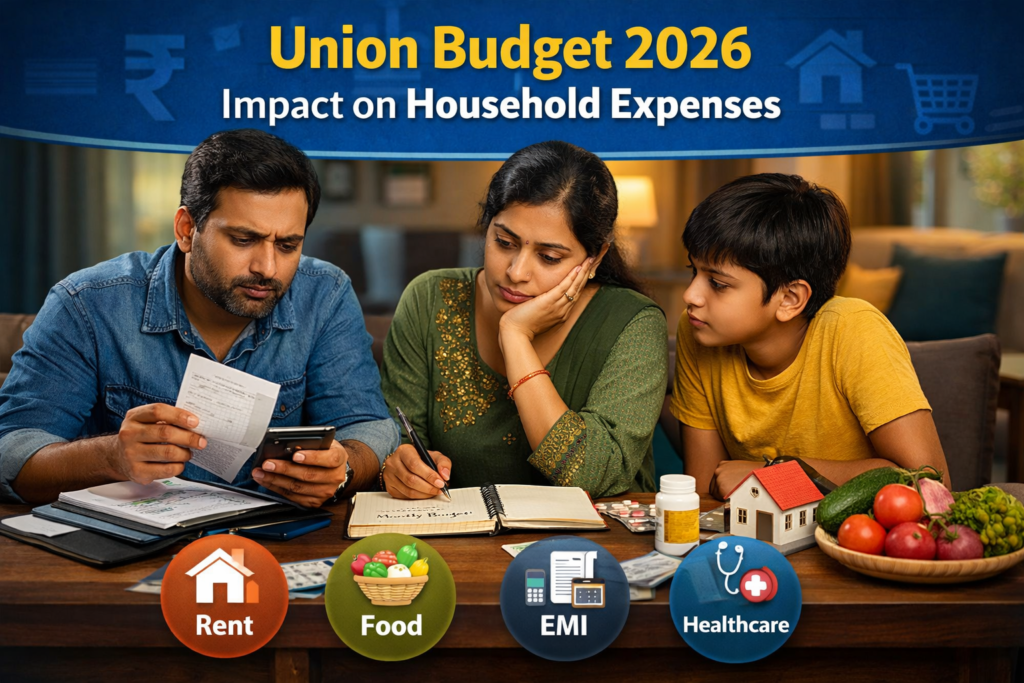
Table of Contents
1. The “Zero Tax” Milestone: More Cash for Your Family
The most emotional part of any budget is the paycheck. The Union Budget 2026 Impact on Household Expenses is most visible in the introduction of the Income Tax Act 2025, which officially replaces the 1961 law.
If you are a salaried professional earning ₹12.75 Lakh, your effective tax is now Zero.
- Why it matters: Between the increased Standard Deduction of ₹75,000 and the Section 87A rebate, that extra ₹3,000–₹5,000 saved every month isn’t just a number. It’s a child’s new hobby class or the peace of mind of a slightly larger emergency fund.
2. Healthcare: Because No Family Should Go Broke Over a Diagnosis
We all know the fear: one critical illness can undo a decade of savings. In her speech, Finance Minister Nirmala Sitharaman addressed this head-on by slashing duties on high-value imported drugs.
- The Cancer Shield: The customs duty on 17 cancer drugs (including Ribociclib and Abemaciclib) has been fully exempted.
- Rare Diseases: 7 more rare diseases have been added for duty-free personal imports of medicines and specialized food.
- Domestic Push: A ₹10,000 crore Biopharma Shakti initiative aims to make India a hub for affordable domestic biologics.
👉 The Impact: For a son or daughter buying medicines for a parent, this is more than a “tax cut.” It is the gift of dignity. Union Budget 2026 Impact on Household Expenses
3. Travel & Study: Keeping Your Global Dreams Within Reach
The middle class dreams big. Whether it’s a child’s Master’s degree or a hard-earned family trip, the Tax Collected at Source (TCS) used to be a massive upfront hurdle.
- The 2% Relief: As per LiveMint’s budget analysis, TCS on foreign tour packages and LRS remittances for education/medical use has been slashed from 5% to a flat 2%.
- The Reality: You no longer “lend” the government ₹50,000 of your cash upfront for a year. That money stays in your bank account, working for you. Union Budget 2026 Impact on Household Expenses
4. The “Thali” Check: Kitchen & Everyday Costs
Daily inflation is the “death by a thousand cuts.” The budget addresses supply-side costs to keep your kitchen stable. Union Budget 2026 Impact on Household Expenses
| The Struggle | Budget 2026 Response | Outbound Resource |
| Rising Medicine Bills | 10-15% drop in imported oncology drugs. | GKToday Drug List |
| Electricity Bills | 29% budget hike for PM Surya Ghar. | [suspicious link removed] |
| Solar Costs | Duty-free glass makes Rooftop Solar 8% cheaper. | Business Today Analysis |
| Dining Out | Marginal hike (₹49) in commercial LPG. | Economic Times LPG Update |
5. Conclusion: It’s About Dignity, Not Just Dollars
The Union Budget 2026 Impact on Household Expenses doesn’t promise a miracle, but it does promise predictability. By capping taxes for middle earners and slashing medical import costs, the government is providing a buffer against global uncertainty.
For you, 2026 is the year to stop “adjusting” and start planning for your family’s future. Union Budget 2026 Impact on Household Expenses
Frequently Asked Questions (FAQs)-Union Budget 2026 Impact on Household Expenses
Q1. Will groceries become cheaper after Union Budget 2026?
Prices are expected to remain stable, not sharply cheaper.
Q2. Does Union Budget 2026 reduce medical expenses?
Yes, especially for cancer and rare disease treatments.
Q3. Will rent increase because of the budget?
Only gradual increases in metro cities due to demand.
Q4. Does the budget affect loan EMIs?
Indirectly. Stable inflation helps keep EMIs steady.
Q5. Is Union Budget 2026 good for middle-class families?
Yes, it supports expense stability and long-term affordability.
Q6: Will my grocery bills go up due to the Commercial LPG hike?
No. The ₹49 hike is only for commercial (19kg) cylinders. While it might lead to a tiny ₹2–₹5 increase in restaurant dishes, your home kitchen (14.2kg) bill remains unaffected.
Q7: How does the new 2% TCS help my child studying abroad?
If you send ₹10 lakh for tuition, you only pay ₹20,000 as TCS now, compared to ₹50,000 earlier. This significantly improves your monthly cash flow.
Q8: Is the ₹12.75 lakh zero-tax benefit available in the Old Regime?
No. This benefit is specifically part of the Income Tax Act 2025 New Regime
Disclaimer
The information provided in this article is for general informational and educational purposes only. While every effort has been made to ensure accuracy using publicly available government and authoritative sources, cfostimes.com does not guarantee the completeness or correctness of the information.
This content does not constitute financial, legal, or professional advice. Readers are advised to consult qualified professionals or refer to official government publications before making any financial or policy-related decisions.
cfostimes.com shall not be held liable for any losses or damages arising directly or indirectly from the use of this information.

Dr. Dinesh Kumar Sharma is a CMA an award-winning Chief Financial Officer and Director of Finance with over 25 years of expertise in strategic planning and digital transformation. Recognized as a five-time CFO of the Year, he specializes in leveraging Generative AI and Microsoft Copilot to optimize financial forecasting and cost management. Dr. Sharma holds a Doctorate in Management (Finance) and has successfully scaled organizations from INR 1 billion to INR 7 billion. He is dedicated to providing transparent, data-driven insights for modern decision-makers at CFOs Times.