Introduction to the Scott Bessent India Tariff Withdrawal
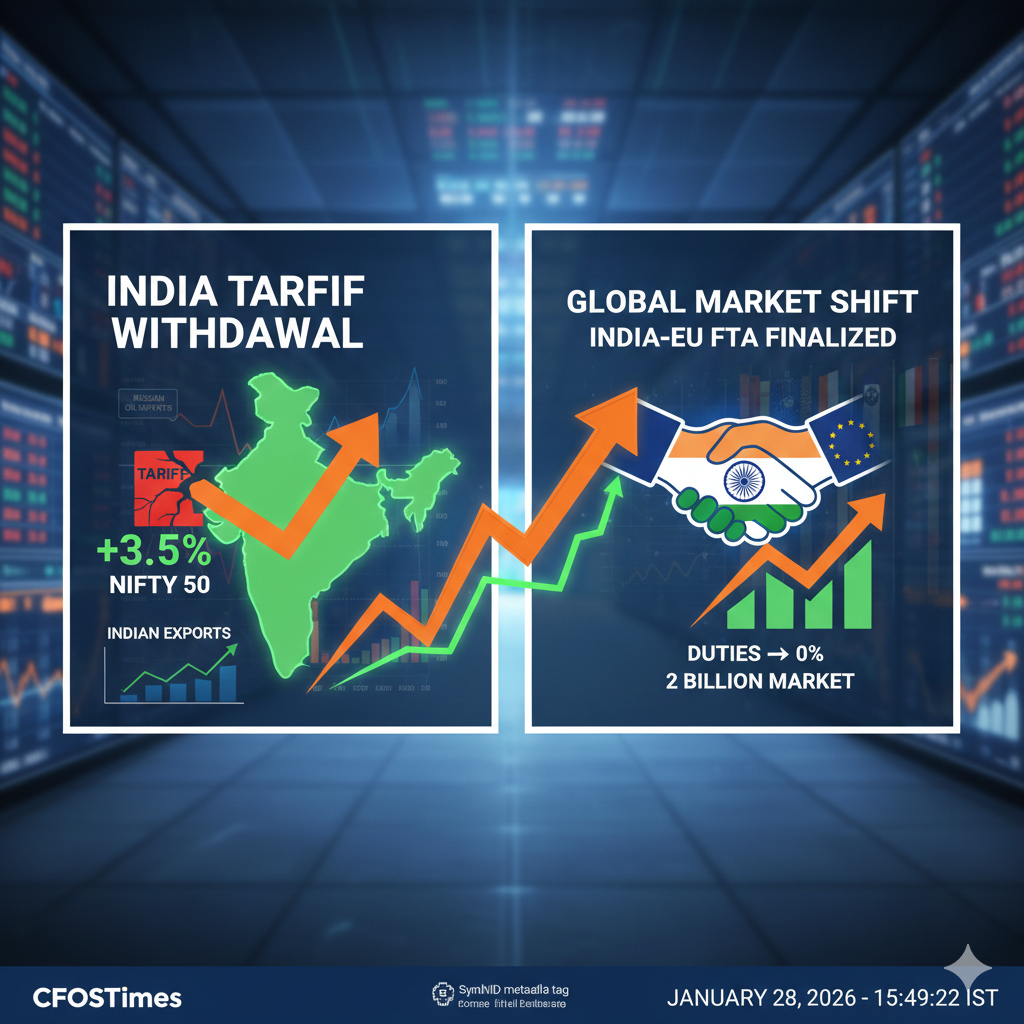
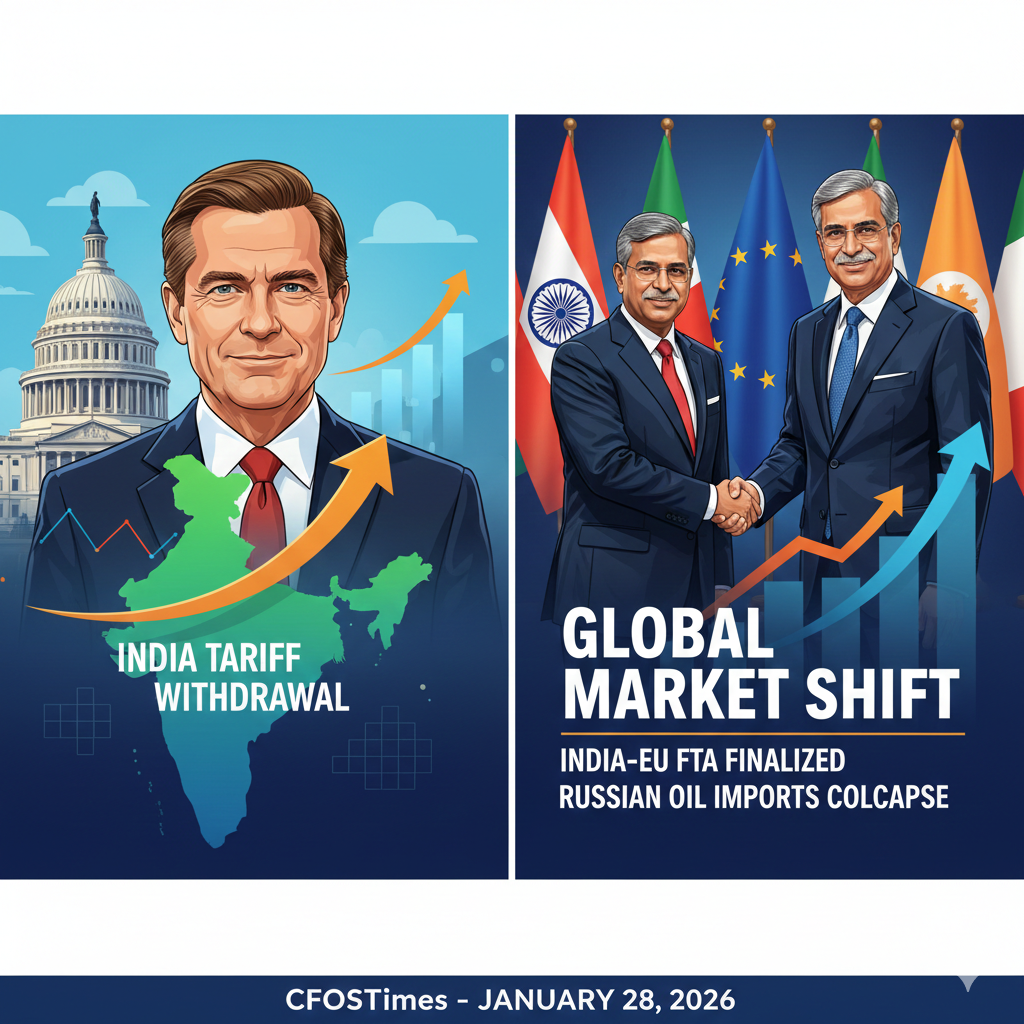
On this Wednesday, January 28, 2026, a massive pivot in U.S. trade policy has sent ripples through global markets. U.S. Treasury Secretary Scott Bessent has officially signaled a prospective Scott Bessent India tariff withdrawal, targeting the additional 25% penal duties previously imposed on Indian goods.
This announcement follows data confirmed today showing that Indian refinery purchases of Russian crude have “collapsed” to their lowest levels since 2022. Speaking at the World Economic Forum in Davos, Bessent characterized the tariff strategy as a “huge success,” noting that the pressure successfully forced a shift in India’s energy sourcing. For the readers of cfostimes.com, this represents a historic turning point in the U.S.-India trade relationship.
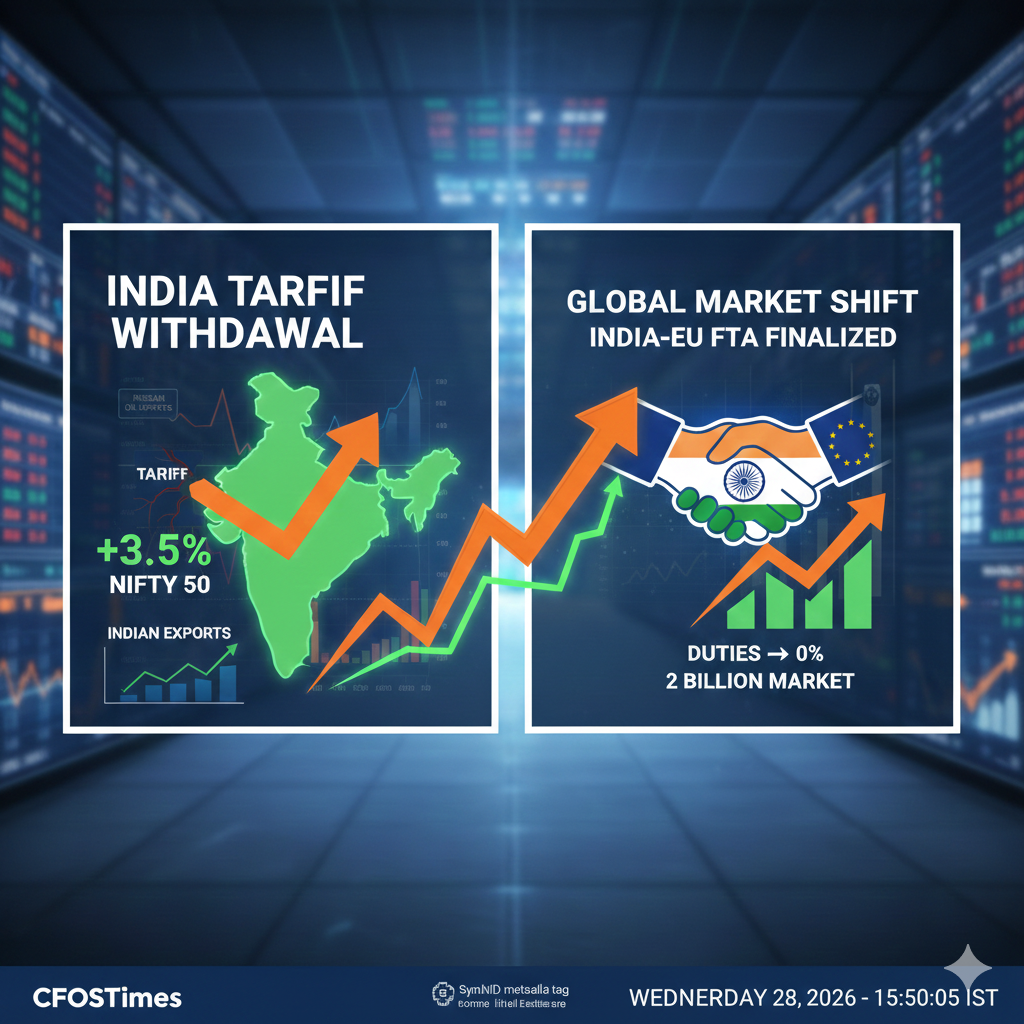
Table of Contents
1. The Strategic Success Behind the Scott Bessent India Tariff Withdrawal
The U.S. Department of the Treasury has long linked these tariffs to geopolitical alignment. In 2025, the U.S. imposed a two-tier tariff system on India: a 25% reciprocal duty and a 25% penal duty specifically for buying Russian oil.
- Energy Pivot: Secretary Bessent noted that India has “geared down” its Russian oil imports, replacing them with supplies from the U.S., Saudi Arabia, and Guyana.
- The “Huge Success” Verdict: “We put a 25% tariff on India for buying Russian oil… the purchases have collapsed. I would imagine there is a path to take them off,” Bessent stated today.
- Market Impact: The Scott Bessent India tariff withdrawal news has already led to a surge in the Nifty 50 and boosted Indian textile and engineering stocks.
2. The “Mother of All Deals”: India-EU FTA vs. U.S. Policy
The timing of the Scott Bessent India tariff withdrawal is no coincidence. Yesterday, January 27, 2026, Prime Minister Narendra Modi and EU leaders finalized the India-EU Free Trade Agreement, often called the “Mother of All Deals.”
- Duty Slashes: The EU-India Pact will eliminate duties on 96% of goods, creating a free trade zone for 2 billion people.
- U.S. Competition: Secretary Bessent criticized the EU for “virtue signaling” by not imposing tariffs earlier, but admitted the U.S. must now offer the Scott Bessent India tariff withdrawal to remain competitive against the zero-duty access granted to European firms.
3. The Contrast: India’s Withdrawal vs. South Korea’s 25% Hike
While India receives a “reward,” the news is very different for East Asia. On January 28, 2026, markets are also reacting to President Trump’s threat to raise tariffs on South Korean goods back to 25%.
| Country | Action | Reason |
| India | Withdrawal (Proposed) | Collapse of Russian oil imports; successful energy pivot. |
| South Korea | Hike to 25% (Threatened) | Failure of the legislature to codify the $350BN investment deal. |
President Trump stated on Truth Social that because the South Korean legislature has stalled the “Special Law on Strategic Investment,” he is reversing the previous 15% rate and reinstating the 25% reciprocal tariff on autos and pharmaceuticals.
4. Sector Outlook Following the Scott Bessent India Tariff Withdrawal
Indian exporters are preparing for a “Gold Rush” as the 25% penal duty path to zero becomes clear.
- Textiles & Apparel: Expected to regain market share lost to Vietnam.
- Automotive Parts: Lowering the duty wall makes Indian components more attractive for U.S. EV manufacturers.
- Gems & Jewellery: A massive win for Surat-based exporters who were hit hard by the 2025 sanctions.
According to the Indian Ministry of Commerce & Industry, the total duty burden on some goods had reached 50%. The Scott Bessent India tariff withdrawal could effectively cut that in half overnight.
Frequently Asked Questions (FAQs)
When will the Scott Bessent India tariff withdrawal be official?
While the path was signaled on January 28, 2026, the formal executive order is expected later this quarter following a final verification of energy data.
Does this affect the reciprocal tariffs on U.S. apples and walnuts?
No. The Scott Bessent India tariff withdrawal specifically targets the “Russian Oil” penal duty. Reciprocal tariffs remain part of the broader US-India trade deal negotiations.
Why is South Korea being targeted while India gets a rollback?
India fulfilled the U.S. demand to cut Russian oil ties. South Korea has delayed the legislative approval for its promised $350 billion investment in the U.S. economy.
Conclusion
The Scott Bessent India tariff withdrawal is the defining news story of today, January 28, 2026. It signals that the Trump administration is willing to reward allies who align with U.S. energy and security interests. As India celebrates the “Mother of All Deals” with the EU and a potential rollback from the U.S., cfostimes.com identifies India as the strongest emerging market for Q1 2026.
Disclaimer:
The information provided on cfostimes.com regarding the Scott Bessent India tariff withdrawal is for informational and news purposes only. While we rely on high-authority sources and real-time market data, trade policies are subject to rapid administrative changes. This content does not constitute financial, investment, or legal advice. Always consult with a certified trade expert or financial advisor before making business decisions based on tariff updates. cfostimes.com is not responsible for any losses incurred due to reliance on this information.

Dr. Dinesh Kumar Sharma is a CMA an award-winning Chief Financial Officer and Director of Finance with over 25 years of expertise in strategic planning and digital transformation. Recognized as a five-time CFO of the Year, he specializes in leveraging Generative AI and Microsoft Copilot to optimize financial forecasting and cost management. Dr. Sharma holds a Doctorate in Management (Finance) and has successfully scaled organizations from INR 1 billion to INR 7 billion. He is dedicated to providing transparent, data-driven insights for modern decision-makers at CFOs Times.